Tag: Humor

May: No Reason and All the Reasons

May is here again. This is the true end of the year. May is supposed to be spring but it’s actually harvest season. We see what has survived and what has grown. We cull what we can. We return year after year to witness the fact that time has continued to move.

Every year I’m surprised, although I own and use a calendar. Several, in fact. Still, I’m flattened by the rush of endings and the gatherings stacked atop one another. Cut off one celebration and two grow back in its place, fastening ever more ceremonies around your neck like beautiful cursed jewelry.

May gathers up loose threads with brassy pomp and circumstance before summer upheaval arrives with its wet bathing suits.

May is a complete disaster, is what I’m saying. Just look at the inside of my car if you need proof. My Toyota is a rolling evidence locker. A midden heap.

The rest of you, though? You look great. Hydrated and moisturized while you’re winding down, as it were. I salute you. May your linen pants remain crisp and your drinks be as lemon-wedged as you wish.

Me? I’m choking down noises that sound like a 1987 Buick trying to merge while going uphill.

I’m not cute enough to be winding down. May is about endings. Lasts and finals. All I can do is listen to one of my sons tell me that by the time he leaves for college, 90% of our time together is done. I’m not checking that math, thanks, because I’m busy remembering carrying him in after he fell asleep in the car, all dead weight and impossible trust

At night I collapse onto the couch so dramatically that heretofore missing objects launch out of my bra upon impact. Bobby pins, receipts, Cheez-Its, Chapsticks with missing caps. I am not proud of this, but leave it here for future historians who may appreciate the data.

I almost just typed, “Still, I love this time of year.” But I don’t. I mean, I recognize the ache of it, even if it knocks the wind out of me. I recognize that sense of subjective slow motion when something is ending. I recognize that my children have become themselves gradually, then all at once. That they have developed complex, glorious, kind lives, and I get to celebrate and make banana bread for them. No-reason banana bread. All-the-reasons banana bread.

Mostly though, it’s because I’m overbuying bananas these days. They darken as we rush to and from events. I always think we’re a household that will eat many bananas. We are not. We are a household that transforms bananas via neglect into baked goods.

We recently played Jackbox as a family. The prompt was “What is the name of a horse you wouldn’t bet on?” I answered “Last Place Monty,” which got me an appreciative snort from the kids, a noise I will cherish, to some extent. One child answered, “Beefs Wellington.” That won. The next day he wandered into the kitchen and lamented, “I should have gone with ‘Thelonius Glue, Sr.’”

There are entire sections of motherhood no one adequately explains beforehand, including the fact that one day your children may become funnier than you, and that you will feel a piercing gratitude for that.

Every week I begin my planning journal by writing “Do not waste your precious timing giving a single crap about what anyone thinks of you.” This is excellent advice that is fundamentally incompatible with motherhood. There are a few people whose opinions matter to me. My husband. My kids. The dog who watches all of us in case we sneeze weirdly and he needs to retreat. The cashier who sells me bananas when he absolutely should know better at this point.

Loving these people (not the cashier. Ok, maybe the cashier. Hey, Jerry.) requires presence, vigilance, mood-monitoring, remembering who needs new shoes and what size, and who suddenly likes bananas again.

And every May, no matter how tired we are or what strange treasures are embedded in my underthings or in the Toyota’s backseat, we all somehow find our way home. Banana bread. Better versions of jokes. It’s some holy version of “WTF.”
Spines, NyQuil, and Staring At the Ceiling

What I Read February 2026

For a few days in February, my God-installed, non-award-winning back and intercostal muscles decided to spasm up and shut down operations. I was horizontal against my will, which is the least fun way to be horizontal. I did not enjoy this real-world lesson in what intercostals are, but I did get to spend a not-insignificant amount of time staring at the ceiling like it’s a limited series.

Just as my spine stopped trying to yeet my head down the hallway like a bowling ball, I got sick. Just like the rest of the family, only they all got it before I did.

So now I have this painful, unproductive cough, which my back is like NO, DO NOT. (You may insert your own “your writing is also painful and unproductive…NO, DO NOT” joke here. First prize is one underwhelmed “Good One, Mild Heckler” from me. Don’t spend it all in one place.)

Because of all that, this intro section is clearly going to be a bit of a wild ride, plus or minus one Mr. Toad. Whatever. It’s fine. If the intro licks a doorknob, just pretend you didn’t see it.

ANYWAY. A couple fingers of NyQuil in, and after my fourth attempt to roll over without sounding like a two-pack-a-day rusty door hinge, I started thinking about whether there might be some clever thread tying together the books I read this month. At the same time I was bellyaching about my back — *insert celestial music*

This month’s reading stack is about spines. Spines let us move through the world without collapsing into a soupy mess.

Look, I’m sticking with this premise, even if I have to force it a bit (consider it artistic chiropractic).

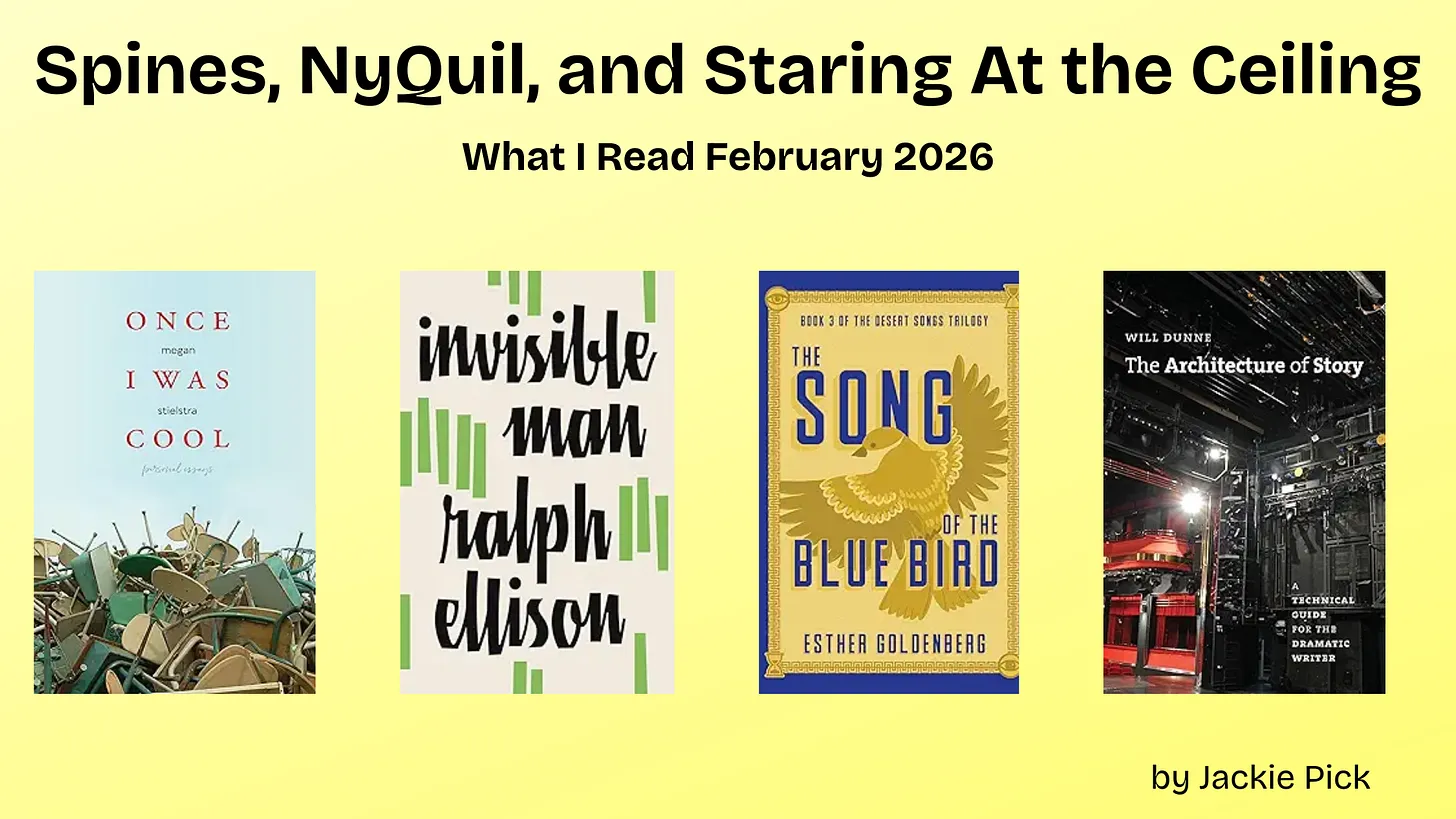
A man tries to stand upright in a world determined not to see him. A woman wonders what remains when cultural and personal scaffolding falls away. In another story, women hold lineage like vertebrae across generations. And in a craft book, writers are reminded that stories need structural, thematic, and other spines, and are shown how to build them.

These books also address questions of dislocation, power structures, self-determination, appearance versus reality, and the social codes that buoy and bruise us.

Which is all just to say, here are the books I enjoyed enough to finish this month:

  • Once I Was Cool: Personal Essays by Megan Stielstra
  • Invisible Man by Ralph Ellison
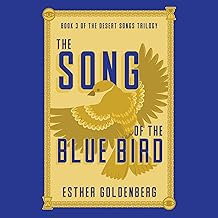
  • The Song of the Blue Bird by Esther Goldenberg
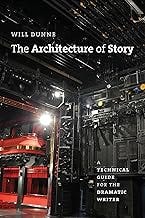
  • The Architecture of Story: A Technical Guide for the Dramatic Writer by Will Dunne

Note: For sanity and scale (mine, yours, and the internet’s), what follows are the openings of each review. Full versions are linked below.


Once I Was Cool: Personal Essays by Megan Stielstra

Once I Was Cool: Personal Essays

Cool is elusive and requires a certain indifference to what other people think. That’s extremely difficult to achieve for people like me who spend a certain amount of time thinking about what other people think. (Perils of the job.)

Which is to say: I am not cool. And, unlike Megan Stielstra, I may never have been.

Once I Was Cool lives in that gap between who we thought we were and who we are now…

(continued here)


Invisible Man by Ralph Ellison

Invisible Man (Edition 2) by Ellison, Ralph [Paperback(1995£©]

We tell ourselves stories about who we are. We tell ourselves that effort will be seen, that talent will be recognized, that identity is something we build and then present to the world.

Invisible Man by Ralph Ellison dismantles that.

The novel follows an unnamed young Black man trying to find his place in a society determined not to see him as an individual…

(continued here)


The Song of the Blue Bird by Esther Goldenberg

The Song of the Blue Bird: The Desert Songs Trilogy, Book 3

History is usually sung in the key of men: their journeys, their covenants, their departures and returns. The women, if they appear at all, are often relegated to the margins, tending the hearth.

The Song of the Blue Bird by Esther Goldenberg shifts the lens and begins where the women have always been: at the heart of survival and the center of the story. These women are far too busy living, enduring, scheming, loving, and adapting to remain marginalia in someone else’s story…

(continued here)


The Architecture of Story: A Technical Guide for the Dramatic Writer by Will Dunne

The Architecture of Story: A Technical Guide for the Dramatic Writer (Chicago Guides to Writing, Editing, and Publishing)

I picked up Will Dunne’s The Architecture of Story while working on my novel and trying very hard to ignore the inner voice that had begun scream-whispering, “You don’t know what you’re doing!”

I was stuck. I had reached Chapter Twelve with the creeping suspicion that Chapters One through Eleven were not only slightly disconnected from Twelve, they might also be slightly disconnected from each other and possibly from any version of “good…”

(continued here)


And there be the February reads. As always, I welcome any recommendations! Read any good books lately?

What Dangles From Your Trailer Hitch (Encore Post)

Bringing back a favorite from the archives, lightly edited for your pleasure.

Every great civilization eventually signals the exact moment it gives up. (See: bread and circuses; phrenology; Gérard Depardieu.)

I encountered what may be our surrender point at a red light.

While stopped, I was running through my usual litany of Big Thoughts (Did I turn off the stove? Did I accidentally Reply All? Will humanity survive the inevitable collapse of late-stage capitalism masked by hyper-niche consumer trends?)when my attention landed on the truck in front of me.

No. Truck implies mere conveyance. This was an iron colossus. One perhaps called The Dominator. Or The Reckoning. Or The Doom Hauler.

Being a lusty all-American vehicle large enough to have its own microclimate should have sufficed, BUT…

dangling from the hitch by paracord was a set of Truck Nuts.

If you are fortunate enough to be unfamiliar, Truck Nuts (or Truck Nutz) are plastic or rubber decorative testicles that people attach to the back of their automobiles.

The vehicular huevos festooning the back of the  —  I dunno, GMC Rumble Thumper? —  bobbed with needless enthusiasm as the engine idled.

These ornamental knackers weren’t even high-quality plastic, just the brittle material of cheap children’s toys that cracks on impact or warps in the sun. Bright blue unapologetic vulgarity.

I stared. I didn’t want to, but like Medusa, these marbles demanded eye contact.

Two questions came to mind:

1. Who is driving this be-nutted behemoth?

2. Just…why?

Naturally, I started profiling the driver. Cargo shorts despite wind chill. Thinks taxes are theft, turn signals are for betas, refers to women as “females,” owns at least two Tapout shirts, and once tried to fight a locker in high school.

When the light turned green, I pulled up next to the…let’s go with Chevy Thunder Tusk…and looked.

Stone-faced. Sunglasses. Holding large iced coffee.

A woman.

A woman who, I could tell with just a glance, has strong opinions about butter boards and somehow manages to be unbothered and deeply furious at the same time.

The Windows 95 error sound pinged in my head.

Question 2 came back. “Just…why?”

Clearly, there’s demand. Like it or not, an entire Truck Nut industrial complex exists, operating, presumably, within the legal parameters of commerce. There are factories and machinery. There is an entire logistics chain ensuring that no motor vehicle in America need remain ball-free. And of course, there are actual adults waking up, pouring coffee into World’s Best Dad mugs, and heading to a job where they debate proper ball-to-bumper ratios.

There was undoubtedly a prototype. Wind tunnel tests. Torque calculations. PowerPoints on market scalability. Some guy insisting, “We’re revolutionizing the industry!”

Enormous vats of melted plastic were poured into molds, cooled, popped free, and sent to a quality control specialist probably named Earl, who gave each a light tug to ensure structural integrity.

Then and only then were shrink-wrapped pallets of these faux family jewels distributed to gas stations, online marketplaces, and that one hardware store where someone’s always grilling hot dogs in the parking lot.

A marketing team surely worked on branding. Tough Nuts for Tough Trucks! Don’t Be a Ball-less Hitch! Freedom isn’t Free — And These Are Only $24.99!

All of this resulted in the owner of the Ford Fee-Fi-Fo-Fummer in front of me slapping down actual money. After purchase, they knelt behind their truck and tied these orbs of virility into place.

I remind you we once wrote the Constitution, built Chicago (twice!), and sent humans to the moon.

I remind myself that I used to write about civic responsibility, democracy, and motherhood.

And yet, here we are.

Still, was there meaning in these petrochemical gonads? Irony? Prank? Postmodern critique of gender norms? Radical rejection of patriarchal tropes through appropriation of male genitalia?

The social contract as envisioned by Rousseau was not designed for this. Democracy, human rights, collective dignity? Yes. Plastic testicles on the back of a Toyota Titan Howler? Absolutely not.

Hobbes believed life without government was “nasty, brutish, and short.” I generally agree, but argue that life with government has somehow produced a scenario where I’m stuck in traffic behind a Jeep Inferno Stallion, eyeball-to-clangers.

I cannot point to the exact section of the social contract that discourages such a thing, but I assume it’s located in the part about not making public spaces unbearable for everyone else. Or maybe tucked into an addendum called “This Should Really Go Without Saying.”

But if the driver in front of me didn’t care about the affixed Truck Nuts on her Honda Oblivion Rover, then the entire framework of cultural semiotics disintegrates. They mean nothing.

And if they aren’t anything, nothing is. Everything just sways pointlessly.

Perhaps material offers meaning. After all, there is something grotesquely poetic about the fact that the fake gonads are plastic. Plastic is eternal.

Glaciers will melt, cities will sink, and centuries from now when the Great Plains are waterfront property, an archaeologist —  probably also named Earl  —  will stumble upon slightly cracked, sun-bleached Truck Nuts. He’ll turn them in his hands and ask, “What god did these people worship?”

It’s not an unreasonable question. What else could they be other than an object of reverence? Is this who we are? Cheap, crass, oscillating as if to measure the time we have left before the entire country embraces hollow spectacle under the hazy guise of “I’m just asking questions”?

Or maybe we worship the in-your-face part.

The woman in the truck zipped off with the patriarchal baubles wobbling behind her, she and they blissfully unaware of my Big Thoughts.

I sat there, eating her proverbial dust, realizing two things:

  1. You cannot parody a culture that’s already doing it for you.
  2. At some point Truck Nuts will come factory-installed. Standard.

And only Earl will understand the horror.