I read three books this month. “Only” three, because the page count of one of the books triumphed over my ambition to get cozy and read anywhere between 5 and 43 books. Look, as you already know if you’ve ever wandered even accidentally into my writing, I am extremely busy. Doing what, you ask? Fretting about how busy I am, which is its own full-time job. It’s exhausting and inefficient, but it’s a living. Now, please mind your business (after you finish this piece, thanks.)
One of these books was Don Quixote. A famously long book (900+ pages! In a row!) about a person who reads too much and begins to confuse stories with reality. Any of you who are heavy readers probably relate.
My second read was Cultish, which is about how language creates meaning, belonging, and identity, and how quickly those things can curdle into manipulation.
The third was First Person Singular, a collection of stories in which Haruki Murakami does his thing. Things happen, or don’t. Or maybe they do, but in some weird emotional vapor. The narrators themselves often seem unsure what, if anything, just occurred. Then, more often than not, they decide that if an event did have meaning, it probably wasn’t consequential. And then The End. Sir? Excuse me? And also, this feeling I have at the end of each story isn’t necessarily unpleasant. Whyyyyy?
In all three, things happen, and they happen with juice. Not literal juice, in case any of you folks are in a “well, actually,” mood, although if you’re talking about cults, Kool-Aid will eventually burst in via a non-load-bearing wall.
Which is all just to say, here are the books I enjoyed enough to finish this month:
Don Quixote by Miguel de Cervantes (Translated by Edith Grossman)
Cultish: The Language of Fanaticism by Amanda Montell
First Person Singular: Stories by Haruki Murakami, translated by Philip Gabriel
Note: For sanity and scale (mine, yours, and the internet’s), what follows are the openings of each review. Full versions are linked below.
Oh sure, let me just take on a 900-page canonical, picaresque novel. That’s a reasonable response to insomnia, especially given what all that reading famously does to Don Quixote himself.
Uh oh.
Still. I did it. One must have standards, even while abandoning common sense. I promised myself I would watch Man of La Mancha once I finished, a show I have somehow avoided my entire life, despite being the kind of person who should have already seen it.
Also, I get to use the word picaresque. And now you do, too. Congratulations.
Janice from your high school PE class has emailed you. She’s very excited. She wants you to join something, you girlboss, you. Details about that something are murky, but it will change your life. Act fast.
If your gut reaction to this is “ew” and that “ew” is unrelated to Janice serving a volleyball directly into your face during the volleyball unit, you may have good reason.
Recently, I chatted with someone I’d done a show with years ago, and we started talking about rehearsals. At some point I said, “Remember when I got yelled at for moving the chair?”
He did not remember this.
I remembered it very clearly. During a tech rehearsal, I’d moved a chair while trying to clear the stage between scenes because the person assigned to move it hadn’t done it. The director growled, “DON’T MOVE SET PIECES THAT YOU’RE NOT ASSIGNED TO.” It was mortifying. I don’t like being yelled at, even if I have committed some kind of theatrical felony. I may have cried a little backstage, facing a corner and pretending I was absolutely not crying and just liked looking at walls.
According to everyone else, though, this never happened. Or if it did, it was no big deal. No one remembered the chair. Or the yelling. Or my belief that I had ruined everything.
I did not enjoy realizing that a moment so clearly part of my theater experience seemed not to exist anywhere else at all.
Hello and other pleasantries to new followers and the brave souls who have been tolerating my nonsense for quite some time.
A reminder and an announcement. I produce two categories of posts:
A sort of high-octane humor that usually ends with me typing in all caps and you wondering whether you’ve accidentally subscribed to the ramblings of an unusually literate honey badger.
Book reviews.
Book reviews are published monthly as “The Folio.” They begin with an attempt at a witty introduction and segue into a more measured discussion. These reviews are longer than advisable, and this, I am aware, can be a turn-off.
Am I trying to turn you on? Certainly, but only to using your library card. Anything else would be unseemly.
I am attempting to keep the reviews aligned with my predilection toward absurdity. Who doesn’t love a slightly deranged, funny book review? PUT YOUR HANDS DOWN. THIS IS THE INTERNET. I CAN’T SEE YOU AND ALSO IT WAS A RHETORICAL QUESTION.
Yes, occasionally, seriousness is unavoidable, especially for the sake of basic human decency. For example, books about war, grief, trauma, or any of the Chicken Soup for the Soul series.
But Writing Reviews That Must All Be Taken Seriously is not always enjoyable. If I must always be properly serious, I’ll run around the town square bellowing “LOOK UPON MY CREDENTIALS, YE MIGHTY!” (which is, incidentally, the fastest way to clear a town square).
Generally, I see no reason to pretend that book reviews should be written in the hushed tone of someone narrating a documentary about endangered sea turtles.
Instead, I’m determined to write the kind of book reviews I’d want to read. Irreverent, digressive, somewhat useful, and not especially academic. When writing these pieces starts feeling like homework, I suspect reading them feels the same. (See review of Terry Pratchett’s book below.)
This is a process. I must first declare independence from the Good Scholar mindset, which is as persistent as mildew and probably smells like it as well.
We’ll see if this works. Forecast: probably not, but to be fair, optimism and I maintain a long-distance relationship.
Anyway, welcome. Or welcome back. Or Welcome Back, Kotter.
Signed, Epstein’s Mother.
I attempted hedonism with my reading this month, which is a pretentious way of saying I tried to read purely for pleasure. Most of the books cooperated. Not Fever Dream, which was an absolute miscalculation on the “fun!” reading scale. It was alarming, but, to be fair, exactly as alarming as promised. (I mean, the title isn’t Sweet Dreams and No Trauma Here.)
This was supposed to be my no-apocalypse month. And while there wasn’t a climate disaster in the bunch (I’ve tended to accidentally read a lot of those this year, if one can accidentally read anything to the end), Fever Dream did slip in poisoned groundwater and the creeping suspicion that everything is contaminated.
As in every month, I tried to find a coherent, unifying thread to connect the books I’d read. Something elegant and unassailable, like a particularly clever (and attractive!) spiderweb. Something that would make me sound like I’d been preparing a rigorous syllabus rather than just reading while eating toast.
The toast, for the record, was not entirely uninspirational.
At first, I thought the unifying theme was “Overthinking,” which is my preferred pastime. Every narrator here is the sort of person who can transform an ordinary moment into an ontological exploration through sheer sustained attention. These are books about people who can’t let a single thought pass unexamined. I recognized them immediately. I am Spartacus.
Just as I was congratulating myself on having found a thesis, another potential theme popped into mind. These books are also about “The Not-Necessarily-Horrific Coming Apart of the Well-Ordered Life.” Which, okay, wordy. All these books involve trying to build a manageable life, only to discover that order is a losing battle. Even the simplest lives can turn chaotic if you pay them too much attention. Or not enough. These books have both.
I spent significant time trying to choose which of these themes to highlight. Overthinking? Everyday order derailment? Eventually, I remembered this is not English Lit 201: Advanced Book Review Blogging and Merriment. No one is grading me. No one even asked for this. (Why didn’t you ask for this, by the way?)
So consider this month’s selections a set of reminders: that our minds are weird and perilous places, that “normal” is perhaps a myth, and that occasionally you will read something so funny, real, and/or unsettling that you won’t even care about the toast crumbs taking up residence down your shirt.
Which is all just to say here are the books I enjoyed enough to finish this month:
A SLIP OF THE KEYBOARD: COLLECTED NON-FICTION BY TERRY PRATCHETT
Terry Pratchett calls writing “the most fun you can have by yourself.” It’s a throwaway line, but like much that Pratchett lobbed at the world, it is three things at once: it’s funny, it’s self-deprecating, and it’s true.
This collection includes essays, speeches, introductions, and odd bits of reflection. It covers everything from fantasy literature to mushroom picking to Alzheimer’s. It’s brimming with the idea that the ordinary world is weird and interesting. There’s also a bracing indignation aimed squarely at deserving targets, yet even his fury is grounded in compassion.
Here you’ll find Pratchett in fine form, gleefully pricking the balloon of literary snobbery. “Where do you get your fantastic ideas from? You steal them,” he writes. “You steal them from reality. It outstrips fantasy most of the time.”(N.B. This is why writers keep notebooks: to record all the implausible things real people say and do). And you get the sense that saying this felt like slipping a whoopee cushion onto the seat of every Very Serious Writer at some awards banquet.
One of the pleasures of this collection is watching him circle the same conviction again and again: writing, for all its challenges, is meant to be enjoyed. In Chapter 12, he advises writers to amuse ourselves first, because if you’re not having a good time, your readers won’t either. (It sounds obvious until you remember how many books seem to be written purely as acts of flagellation, self or otherwise.) This spirit thrums through every piece. There’s a giddy undercurrent that never tips into preciousness or stupidity. It’s radically sincere and radically human.
Of course, the book isn’t all winks and asides. The essays move into the time after his Alzheimer’s diagnosis, and there is a sharpening. The humor stays, although it can get a little dark, but there’s an urgency, especially as he discusses assisted dying and the politics of autonomy. He had no intention of squandering any of his time on politeness or bromides.
It’s also worth noting how nimble he is. Pratchett can write equally brilliantly about dismantling the idiocy of genre snobbery as he can about daiquiris, and it all feels grounded in what is very clearly his voice and worldview. If you could distill a giggle, a guffaw, a groan, a raised eyebrow, and a perfectly aimed lightning bolt into a single human being, I’d like to think we’d get something very close to Terry Pratchett.
Standouts are most of them, but I particularly loved: “2001: The Vision and the Reality”, “The God Moment”, “Doctor Who?,” and “A Week in the Death of Terry Pratchett.”
Highly recommended. You don’t have to be a Discworld devotee to appreciate this. (I haven’t read them yet.) But you probably should care about books and stories and people and the planet. And if there’s an afterlife with any good sense, may it have a library big enough for him, a comfortable chair, and a hat no one is foolish enough to pinch.
Some of us (ME!) want the laugh. As a child, I’d sneak VHS tapes of Monty Python and Saturday Night Live, memorize sketches, and reassign myself all the best roles. I mentally cast myself as Madeline Kahn in everything she ever did.
So when beauty queen and I Love Lucy-obsessed Barbara Parkerrealized she’d rather have the punchline than the pedestal, I got it. She wanted to be in the room where the funny happened. Correction: she wanted to be the funny happening. And good for her. Beauty was/is a far more economically efficient trait.
Nick Hornby’s Funny Girl follows Barbara as she abandons the pageant world and reinvents herself as Sophie Straw, a comedically ambitious, photogenic young woman determined to become the next Lucille Ball. She moves to London, lands a lead in a new BBC sitcom almost immediately, and finds herself at the center of a cultural moment. This may sound like the setup for a frothy star-is-born tale, and it is. It’s also well done.
At its best, it’s a warm backstage novel with plenty of nostalgia for 1960s London and classic, frothy sitcoms. The first section snaps. Sophie’s introduction to the world of television is filled with biting dialogue, insecure creatives, and writing-room banter (which is arguably the best part of the book). Hornby nails the way brilliance and bitterness coexist in a creative team, as well as the cranky machine that seems to have been the BBC. I would happily read an entire novel that never left that room.
Once the sitcom takes off and Sophie settles into her role as national darling, the narrative zooms out. We get more focus on her coworkers: writers Bill and Tony, who steal scene after scene (especially Bill!). They embody one of the novel’s central tensions: should comedy comfort or provoke?
The “funny” dissipates into complexity, and it mostly works. Hornby’s wonderful at dialogue, even better at capturing the feeling of being slightly out of sync and by being ahead of your time. Funny Girl is like one of those rubber playground balls: bouncy and liable to knock you in the face when you least expect it. Hornby captures much of the texture of 1960s television: the starchy formality, creative constraints, looming cultural shifts.
What I loved most — and what I wanted more of — was the joy of collaboration, the weird alchemy of making something funny with other people. That’s where the book shines. Not in fame or romance or the idea of being “the one girl,” but in the magic of a room full of smart, neurotic misfits trying to make each other laugh.
If there’s a flaw, it’s the one that afflicts many long-running series. Eventually, there’s a sense that a wrap-up should have come sooner. Also, the book never quite reckons with the sexism it documents. That might have been thrilling as well, but a book cannot be all things to all readers.
When this book lands, it lands. It gets the weird intimacy of artistic collaboration. It gets the rush of writing a good bit. It gets the long slide from being new and bold to just being there.
Perfect for summer. It’s sweet and tart like lemonade, and just as delightful.
Most of us were raised on a diet of artificially flavored found-family stories. That most cherished of modern fables in which a group of charming misfits (orphans, strays, emotionally stunted baristas, etc.) band together and discover that what really matters isn’t who raised you. (See also: The Brady Bunch, those sunny-eyed avatars of family bliss. Fictional. Sanitized. Immortalized on lunch boxes.) Somewhere along the way, these found families become closer than real families.
Cue the swelling music. Hugs all around.
Enter Run for the Hills, Kevin Wilson’s contribution to the genre, which, thankfully, avoids nearly all of the above. It is not randomly peopled with inexplicably irrepressible eccentrics who “just need each other.” What it is, instead, is a not-saccharine-yet-still-positive, more ambivalent version of found family.
It starts with Mad Hill, a woman living a self-contained life on her mother’s farm, doing a great job avoiding the complicated legacy of her absentee father and minding her emotional business like a professional. That is, until her half-brother Reuben shows up. His plan is to track down the man who abandoned them both, and see if a couple of other step-siblings are up for meeting, if not joining the adventure. The sudden reveal of a half-brother, his PT Cruiser, other siblings, and this whole nutty scavenger hunt is…a lot for Mad to take in. Mad does not want to go. She says yes anyway. This is what we call family obligation, and also improv training, which sadly has no place in this book at all.
What unfolds is a road trip that’s more emotional audit than grand adventure. Wilson isn’t interested in big plot mechanics or over-processed closure. These siblings don’t know each other. All they have is blood and disappointment and a half-formed instinct to care. Over the miles, something resembling a bond starts to form because they decided to try.
The entire trip is a glorious, laugh-out-loud exercise in restrained dysfunction among truly good people.
Wilson writes with enormous empathy and just the right amount of weirdness. The book is emotionally resonant, highly enjoyable without begging for a laugh track or a piped in “awwww.”
After a carefully paced journey, the final pages may feel slightly soft, a quiet, gentle roll to a stop for some readers. Look, sometimes road trips end and sometimes they just keep going.
So, no, this is not the Brady Bunch. It is not about the ideal family, or even the fully-healed one. It’s about the possibility that choosing to remain in proximity to others, despite discomfort or history, is its own kind of commitment. And there is a lot of fun to be had in that.
Most people will do almost anything to avoid being alone with their thoughts. They will join clubs. They will cultivate elaborate social obligations. They will distract themselves with devices whose primary purpose is to obliterate solitude (see: iPhone, pickleball). Claire-Louise Bennett’s Pond is a testament to the opposite impulse: the deliberate, even defiant choice to pay attention to one’s mind. Where a banana left out becomes memento mori.
Reading Pond feels like showing up ten minutes late to a strange, luminous experimental film. You stand there, half-certain you’ve missed the part that explained everything, until you realize there is no part like that. You are simply inside someone else’s mind, and you get to stay.
In her debut collection, Claire-Louise Bennett assembles 20 fragments, vignettes, and near-monologues narrated by a semi-reclusive woman living alone on the edge of a village in the west of Ireland. She is never named; she is quite selective about what she shares about her exterior life. What she does share with abandon is a torrential, exhilarating interiority. Our narrator has a mind exquisitely tuned to its thoughts. This isn’t stream-of-consciousness, it’s a waterpark.
What is Pond about? Well, there isn’t much about here. No driving plot, no clear progression. But I’d argue there’s a lot of “there” there. There is an astonishing amount of noticing. Jeannine Ouellette (among others, but I like her approach very much) talks about paying attention as a radical act, an act of devotion, an act of “the most powerful writing practice you can cultivate for yourself.” Pond proves that. Each piece zooms in on a moment, an object, a mood. “Morning, Noon, & Night,” for example, imbues the most basic of breakfast foods with something close to rapture. Bennett’s descriptions are precise and saturated with significance. It’s Walden if Thoreau were a woman living alone in Ireland, interested in cooktop knobs, and quite possibly happier for it.
Bennett sounds like a dear friend who overshares with deep self-awareness while you sit and watch her “do her thing.” Take this line:
“English, strictly speaking, is not my first language by the way. I haven’t yet discovered what my first language is so for the time being I use English words in order to say things.”
This book requires a carving out of uninterrupted time. (Which is to say, this is probably not the book to read in five-minute increments between checking email.) But it is unmistakably alive . Prickly, even. It is also, in its way, a challenge: Who among us is willing to be this honest about what goes on in our heads when no one is looking? Most people can’t stand a single unscheduled thought. This book contains nothing but.
If you want to be reminded that noticing is itself an art form, then I say yes and yes again.
This is a book you absorb, like a symphony or a toxin, depending. It’s short, disorienting, beautifully written, and unpleasant in the best way.
It is called Fever Dream, which is helpful, as the entire experience reads like the kind of dream you’d have after eating something you should not have eaten at a charity luncheon.
At first glance, this slim, unassuming volume looks harmless. You think, “Oh good, I can read this in a day.” Which you can. What you won’t expect is to spend the evening staring at your water glass, wondering if it has ever tasted quite so chemical.
The premise is simple: Amanda is dying. A boy named David (or perhaps a child-shaped presence named David), who may be real or may be the embodiment of Amanda’s crippling maternal worry or the result of illness, interrogates her as she drifts in and out of narrative coherence. She is trying to explain what happened. He is trying to hurry her along.
Early on, Amanda introduces the concept of “rescue distance” — the invisible, ever-changing rope between her and her daughter that represents how far her daughter can be while Amanda is still able to keep her safe.. She recalculates the rescue distance constantly depending on terrain, proximity, and possible threat. The “rope” tugs or goes slack, and both states feel awful for different reasons. It is one of the best metaphors for motherhood I’ve ever read, a reminder that parenthood is mostly the exhausting calculation of invisible risks.
Something is wrong, not just in Amanda’s mind, but in the rural Argentine town she’s visiting. The land is poisoned. Children are sick. Animals are dying. There’s a woman who might be a witch, and a boy whose soul might have been split or transformed. Or perhaps he was just traumatized. Schweblin doesn’t lean too hard into explaining the supernatural elements that vibrate in the background. That’s not where the horror lives.
The horror is in the groundwater and the gossip and the things the residents agree to pretend not to see. This town is rotting.
Structurally, the book is a conversation braided with memory, braided with something that may or may not be happening in real time. Whether David is present or imagined is irrelevant in this claustrophobic fever-dream-within-a-fever-dream. One minute you’re in a waiting room with Amanda, the next, you’re on a farm with Amanda and dead animals and sick children.
Megan McDowell’s translation carries it beautifully. It’s sparse, urgent, and devoid of unnecessary hand-holding.
As for the ending: it puzzles with an elegant disregard for the readers’ expectations.
Fever Dream is an exquisitely crafted conjoining of anxiety, dread, and maternal devotion. It is disorienting and unforgettable.
It’s motherhood rewritten as slow-burn horror.
And thus went June. I’m excited for my July reads, and as always, I welcome any recommendations! What’s in your TBR pile?
Breakdowns, Breakthroughs, and a Goldfish Named Whitney Houston
This month, I read four books about breakdowns of sorts. While that sounds grim, I promise these were often humorous and generally optimistic. “Breakdown” implies something was once intact and now is no longer. These books suggest that “breakdown” does not equal the end. Sometimes it’s the tender beginning of something else.
These are stories of things coming undone: society, bodies, the workplace, the environment, systems. These don’t just stick the landing, they explode midair and rain glitter.
We get literary dispatches for the end of the world, warnings about how we should treat each other, books saturated with decadent language. Stories devastating and hilarious while documenting intimate unravelings of identity, patience, biodiversity, decency, and workplace norms. There is a book by Margaret Atwood, which means I am contractually obligated to use the word “prescient.” She is classy enough to not use the words “told you so.”
What ties them together isn’t just maddeningly well-rendered unravelings. It’s what’s left standing: language, connection, morality, ghosts, and sharp humor. These books are about the things that break and the tiny, glowing bits that survive the wreckage.
Which is all just to say here are the books I enjoyed enough to finish this month:
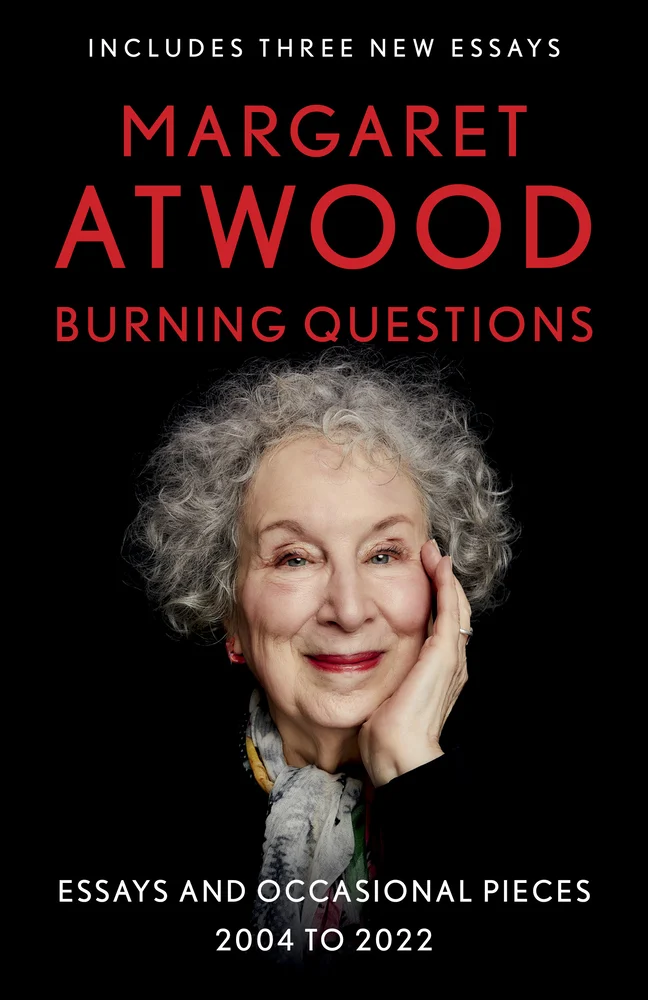
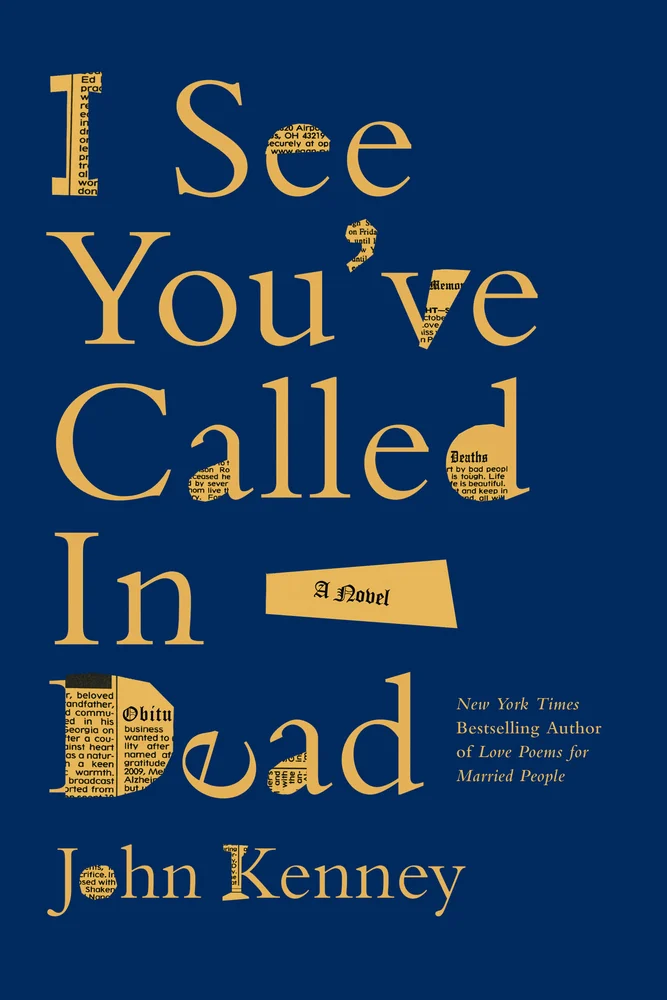
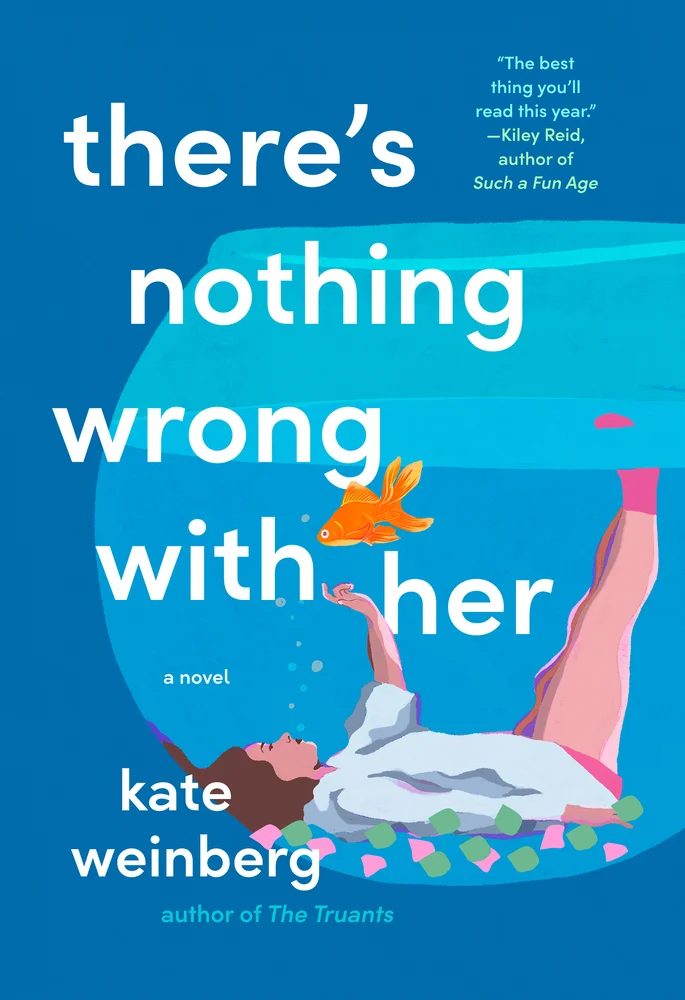
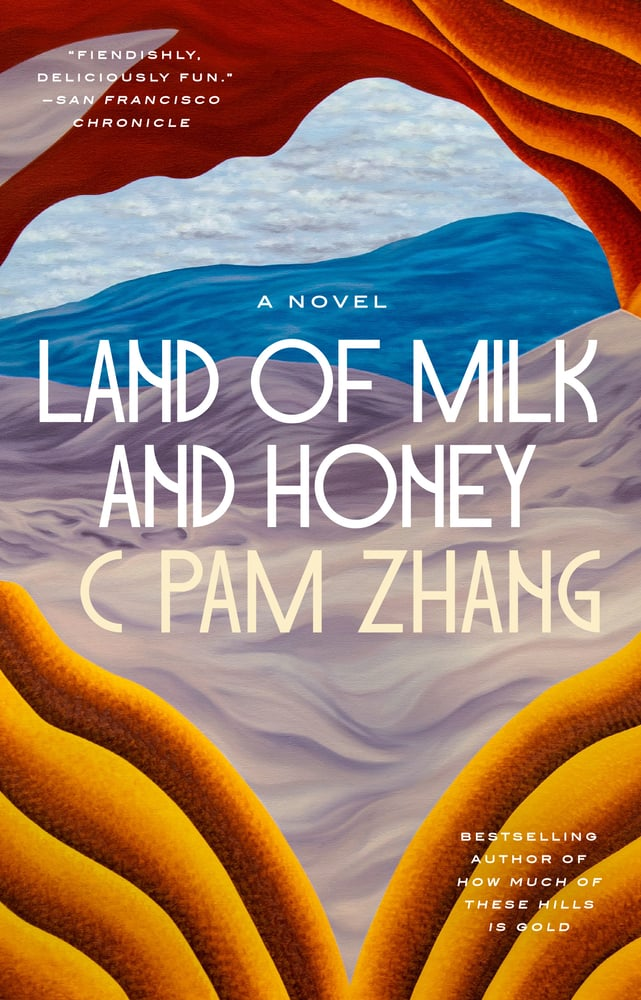
Burning Questions by Margaret Atwood I See You’ve Called in Dead by John Kenney There’s Nothing Wrong with Her by Kate Weinberg Land of Milk and Honey by C Pam Zhang
What happens when a literary demigod has the nerve to be brilliant, funny, and absolutely right.
Early in the introduction to this magnificent mini-behemoth, Atwood poses a question: Why the title? In other words, what are the burning questions? As if anyone reading a book of essays in the year of our collective undoing requires an explanation. Still, she names a few of the flames: the planet, the economy, democracy, justice, decency, survival. This is not, one suspects, an exhaustive list. She calls these issues “urgent,” which is putting it politely.
With sharp humility she writes, “These are some of the burning questions I’ve been asked, and have asked myself…Here are some of the answers. Or should I say, some of the attempts.” She follows that with a reminder: “That’s what essay means, after all: an attempt. An effort.”
An invocation tucked into a derivation.
What follows is two decades of Atwood being Atwood: brilliantly observant, ruthlessly precise, funny in a dagger-behind-the-teacup way. It’s an impressive scope of inquiry: The mythology of trees, feminism, the art of giving advice (spoiler: don’t), Anne of Green Gables, being Canadian, and of course, The Handmaid’s Tale, which she now has to explain to increasingly horrified readers that speculative fiction has ceased being entirely either.
Atwood renders these burning questions manageable. Enjoyable, even, like a well-arranged closet of catastrophe. She’s writing because she notices and she cares.
Each piece is an anchored moment: a response to a speech invitation, a news event, a book release, a sense that something needs saying. Each is like sitting across from someone at dinner who has ordered something far more interesting than you and is generous enough to let you taste it.
My personal favorite is “Five Visits to the Word-Hoard,” a love letter to language and process. Writing tips include: If you’re blocked, change the tense or the point of view. If you have a headache, go to sleep. Honestly, the best advice I’ve ever gotten while horizontal. (OH, BEHAVE)
If you have not read Atwood’s nonfiction, this will be a newfound gem. There’s a mythic wisdom to her. She’s fiercely protective of Earth, of words, of history, of Canada, and yet she is never precious. Burning Questions is not her manifesto. She simply names things. Language, power, writing, what it means to live in the moment before history is history.
If you have read her nonfiction, you’ll recognize the voice: generous, skeptical, and clear. And curious. Always curious. Because, the essay is not a final word. It is the beginning of a conversation.
We’ve all suffered the slings and arrows of an accidental “Reply All.” Or sent a group text meant for one person. It’s a uniquely modern humiliation to discover you’ve shared something private with everyone including Janice in HR. Worse if it was something juicy about Janice in HR.
Now imagine doing this intentionally. Or, more precisely, in a haze of Scotch. Welcome to I See You’ve Called in Dead, a howlingly funny and sweet novel that takes everyday digital self-sabotage and escalates it to an existential crisis about the deep weirdness of being alive.
Bud Stanley is an obituary writer and midlife smoldering crater in a slow, sarcastic freefall. In other words, Bud has problems. After one bad date and enough Scotch to embalm a small elk, Bud pens his own obituary. It’s full of wonderful claims like performing open-heart surgery on himself and dying in a hot air balloon accident. Then he hits send, pushing the obituary out to the world. This leaves him in a bureaucratic no-man’s-land: he’s professionally dead per the computer system at work, and also still alive enough to get called into his bosses’ offices for reprimand. Worse, his employer isn’t sure if they can revive him in the system, at which point they will fire him for this massive breach of protocol and taste.
Now Bud is in a kind of limbo both on paper and in spirit.
What follows is a man trudging through thick malaise in search of an exit. Bud starts attending strangers’ funerals and partaking in other life-affirming activities. Along the way, he’s nudged forward by a small cast of supporting characters who represent various shades of vitality: Tim, best friend who steals every scene and never falls into cliche; Clara, a funeral-loving free spirit; and Leo, the grade-school neighbor who is seven-going-on-Stanley-Tucci. I’d say Leo was my favorite character, but they are all my favorites and I’m not choosing among them.
Kenney doesn’t waste time pretending grief is poetic or that midlife is some golden era of reinvention. But he also doesn’t turn it all into a joke. Kenney understands the architecture of comic prose (the man has a Thurber Prize!) and the human condition that fuels it. Bud’s sarcasm is a coping mechanism, not a gimmick. The writing is funny and occasionally sad, but not self-pitying. At the beginning, it felt like the timeline did a little cha-cha, but that gets sorted out very quickly.
Is this a midlife crisis story? Perhaps, but it’s not the kind where someone runs a marathon or takes up improv. Bud doesn’t “reinvent” himself. He barely reinflates. What he does do (with much sarcasm and some trepidation), is begin to engage with life.
I See You’ve Called in Dead reminds us that it’s possible to be deeply lonely, moderately functional, and still worth loving. The reluctant act of staying somewhat present in one’s own life has meaning. And sometimes eulogies are wasted on the dead.
And that weird process of staying alive? Turns out it’s a group project.
The delicate art of being ill in a society that puts a lot of effort into not believing women.
A locked room mystery where the locked room is your own body and the mystery is why no one can figure out what (if anything) is wrong with you. Kate Weinberg’s There’s Nothing Wrong with Her is about solitude, rage, memory, creativity, and the fragile scaffolding that holds a person together.
The title is not just ironic, it’s the whole diagnosis. It’s also very much like being a woman
Here’s the thing about being low-grade, vague, hard-to-diagnose sick: Everyone thinks you’re fine. You look fine. You say, “I’m okay,” because saying “I’m falling apart in slow motion” is, frankly, a buzzkill.
The body becomes suspect and the mind is no longer fully reliable. What follows is often isolation. Not the good kind, the kind assigned by a world that distrusts women and women’s pain.
Vita (a name that would feel heavy-handed if it were in a different author’s hands) Woods is a podcast producer who loses nearly everything when a strange illness leaves her unable to climb stairs, hold a conversation, or distinguish one blurred afternoon from the next. She becomes a ghost in her own life. Sure, people are concerned, doctors can’t figure it out. Her boyfriend (a doctor!) is “supportive” in the same way a traffic cone is supportive — it’s there but it’s not really doing much.
She is stranded in her body, in bed, stuck in what she calls “the Pit”: a place of exhaustion, semi-consciousness, and memory where reality often fuzzes out then returns in sharp relief.
The novel mostly takes place within the confines of Vita’s home, her body, her brain. That should and sometimes does feel claustrophobic, but can also feel expansive when secret compartments open in Vita’s mind. There’s a Renaissance poet/ghost named Luigi da Porto who holds delightful conversations with Vita, teasing her and understanding her better than her boyfriend seems to. There’s a goldfish named Whitney Houston who may or may not be a stand-in for the weird nature of time and memory when you are ill. There’s a look at how the mind deals with boredom and stretches of time, of course, because when your world shrinks, the brain gets very inventive.
Vita’s upstairs neighbors, a grieving piano teacher and her charismatic tenant, serve as unexpected lifelines, pulling her attention upward both literally and emotionally.
It’s a book of in-betweenness, and Weinberg captures these spaces beautifully. Time slows down, then forgets itself.
This book is weird. It’s brilliant. It’s a little mad in exactly the way being sick for too long makes you mad. The boredom gets loud. The silence gets mean. Your own mind becomes a snarky roommate with a penchant for cruel flashbacks. The tone ricochets between funny, sorrowful, and furious, capturing what we think about when all we can do is sit still and try to piece together words and memory, even when our brains feel like unspooled VHS tape.
There’s Nothing Wrong With Her is not a protest novel, but it is a political one. To write about an ailing woman stripped of narrative control, credibility, and energy, and to insist that her version of reality matters, is a quiet and necessary rebellion.
It’s a standout. I’ve never read anything quite like it.
I really didn’t mean to pick up another climate disaster novel. But I did. And oh, this book is so beautiful and devastating it steams off the page.
Due to some very bad science in America, most of the Earth is covered in smog. Crops fail. Biodiversity collapses. What little food remains looks and tastes gray. The world starts to choke on its own hubris.
It’s not a great time to be a chef, like our narrator is. As America slams its borders shut, it is not a great time to be out of the country, like our narrator is. If you are Asian-American, like our narrator is, you are shuffled to the bottom of the returnee list. She is effectively stuck.
So she lies about her credentials as she applies for a chef job on one of the last smogless places on Earth: a remote mountaintop colony in Italy. Yet, in her application, she writes truthfully, “I will faithfully perform any task within reason and with dignity.”
In fiction, this is a flare gun to the gods which says: “Please test this.”
(N.B. Throughout the book we see how survival and truth can repel each other in drastic situations, and how much living and truth can cling.)
The mountaintop is a private country owned by a wealthy man with a god complex who has amassed massive stores of seeds, livestock, and deep freezers filled with once-extinct and going-extinct species. Animals hung in the deep freezer two-by-two while the rest of us eat mung-protein-soy-algal government flour. It’s a dystopian Noah’s Ark.
Aida, the only main character with a name, is the employer’s daughter, a geneticist who runs the secret labs and revives what maybe should have stayed lost. She is also what we commoners might call “a foodie.” Aida and her father (“the employer”) say they are trying to rebuild/save humanity, with an alley-oop from the world’s wealthiest.
The narrator is hired to seduce these potential investors. Food is but part of the bait. She is bait in another way. But not how you are thinking.
For a book set in the thick fog of collapse, the language is dazzling. The prose is a tasting menu: precise, ornamental, and full of unexpected flavor.
Zhang offers no subtlety in the distinction between lushness and rot, between those who live and those who die, between those who get seconds and those who starve. All the appetites in the book are sensuous and fairytale-like.
The novel is not subtle in its moral juxtapositions. But then, neither is extinction. The employer — a composite of every charismatic autocrat, every disaster profiteer — believes his wealth confers both survival and vision. Luxury and its skewed version of altruism are not spared judgment here, but it is complicated. It is violent and virtuous. Deprivation and depravity of every sort thrive. This book is a panic window into the terrifying human inability to form community under pressure. A survivable planet is one of trust and equity. This is not that planet.
There’s a love story throughout, but the sensuality turns in on itself, becoming something numbing. For a book so full of flavor, it is also deeply desensitizing. Heavy. Slow. Holy. And like all things that present as holy, sometimes we need to look away.
Still, how can you resist a line like this: “And that is how, in the depths of that surreal country in a flavorless world, I discovered, among various fruits, vegetables, and animals believed extinct, the last specimen of my professional pride. Shriveled, squashed — but extant.” (p.29)
Land of Milk and Honey is slender, but it’s hardly a light read. This book asks you to look at something beautiful, and then stay there when it turns monstrous. It wants you to crave, and then to feel gross about craving.
It is a book about who has the privilege to choose, and often it’s not pretty either way. However, apocalypse is not à la carte. It’s a prix fixe situation. You get what’s on the menu.
Read any good books lately? Please share in the comments!




 Jackie Pick