Breakdowns, Breakthroughs, and a Goldfish Named Whitney Houston

This month, I read four books about breakdowns of sorts. While that sounds grim, I promise these were often humorous and generally optimistic. “Breakdown” implies something was once intact and now is no longer. These books suggest that “breakdown” does not equal the end. Sometimes it’s the tender beginning of something else.
These are stories of things coming undone: society, bodies, the workplace, the environment, systems. These don’t just stick the landing, they explode midair and rain glitter.
We get literary dispatches for the end of the world, warnings about how we should treat each other, books saturated with decadent language. Stories devastating and hilarious while documenting intimate unravelings of identity, patience, biodiversity, decency, and workplace norms. There is a book by Margaret Atwood, which means I am contractually obligated to use the word “prescient.” She is classy enough to not use the words “told you so.”
What ties them together isn’t just maddeningly well-rendered unravelings. It’s what’s left standing: language, connection, morality, ghosts, and sharp humor. These books are about the things that break and the tiny, glowing bits that survive the wreckage.
Which is all just to say here are the books I enjoyed enough to finish this month:
Burning Questions by Margaret Atwood
I See You’ve Called in Dead by John Kenney
There’s Nothing Wrong with Her by Kate Weinberg
Land of Milk and Honey by C Pam Zhang
Let’s begin.
BURNING QUESTIONS BY MARGARET ATWOOD
What happens when a literary demigod has the nerve to be brilliant, funny, and absolutely right.
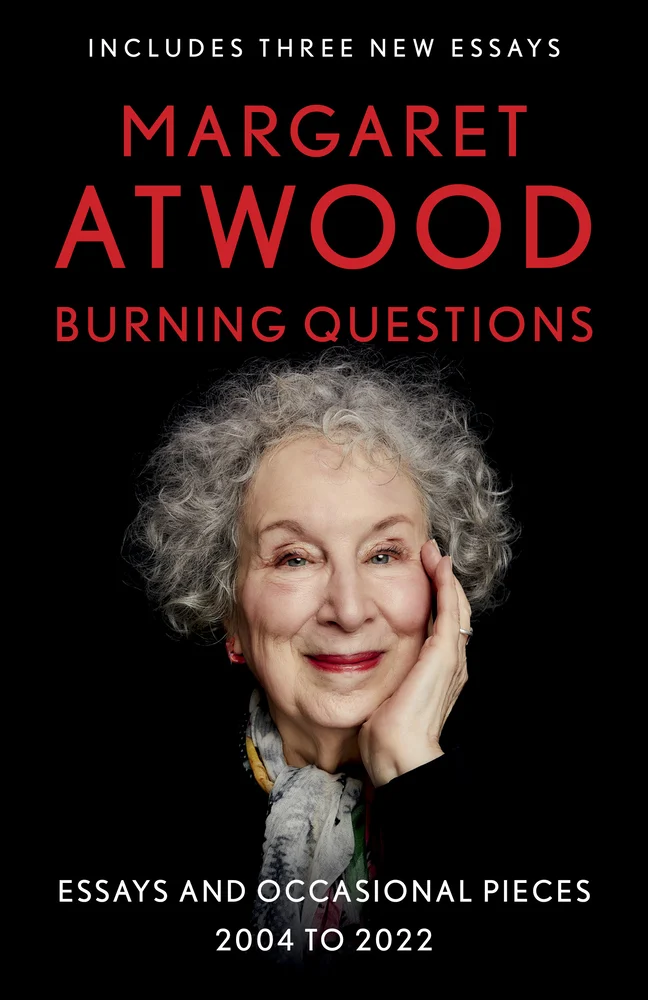
Early in the introduction to this magnificent mini-behemoth, Atwood poses a question: Why the title? In other words, what are the burning questions? As if anyone reading a book of essays in the year of our collective undoing requires an explanation. Still, she names a few of the flames: the planet, the economy, democracy, justice, decency, survival. This is not, one suspects, an exhaustive list. She calls these issues “urgent,” which is putting it politely.
With sharp humility she writes, “These are some of the burning questions I’ve been asked, and have asked myself…Here are some of the answers. Or should I say, some of the attempts.” She follows that with a reminder: “That’s what essay means, after all: an attempt. An effort.”
An invocation tucked into a derivation.
What follows is two decades of Atwood being Atwood: brilliantly observant, ruthlessly precise, funny in a dagger-behind-the-teacup way. It’s an impressive scope of inquiry: The mythology of trees, feminism, the art of giving advice (spoiler: don’t), Anne of Green Gables, being Canadian, and of course, The Handmaid’s Tale, which she now has to explain to increasingly horrified readers that speculative fiction has ceased being entirely either.
Atwood renders these burning questions manageable. Enjoyable, even, like a well-arranged closet of catastrophe. She’s writing because she notices and she cares.
Each piece is an anchored moment: a response to a speech invitation, a news event, a book release, a sense that something needs saying. Each is like sitting across from someone at dinner who has ordered something far more interesting than you and is generous enough to let you taste it.
My personal favorite is “Five Visits to the Word-Hoard,” a love letter to language and process. Writing tips include: If you’re blocked, change the tense or the point of view. If you have a headache, go to sleep. Honestly, the best advice I’ve ever gotten while horizontal. (OH, BEHAVE)
If you have not read Atwood’s nonfiction, this will be a newfound gem. There’s a mythic wisdom to her. She’s fiercely protective of Earth, of words, of history, of Canada, and yet she is never precious. Burning Questions is not her manifesto. She simply names things. Language, power, writing, what it means to live in the moment before history is history.
If you have read her nonfiction, you’ll recognize the voice: generous, skeptical, and clear. And curious. Always curious. Because, the essay is not a final word. It is the beginning of a conversation.
I SEE YOU’VE CALLED IN DEAD BY JOHN KENNEY
Officially (?) Dead, Mildly Functional
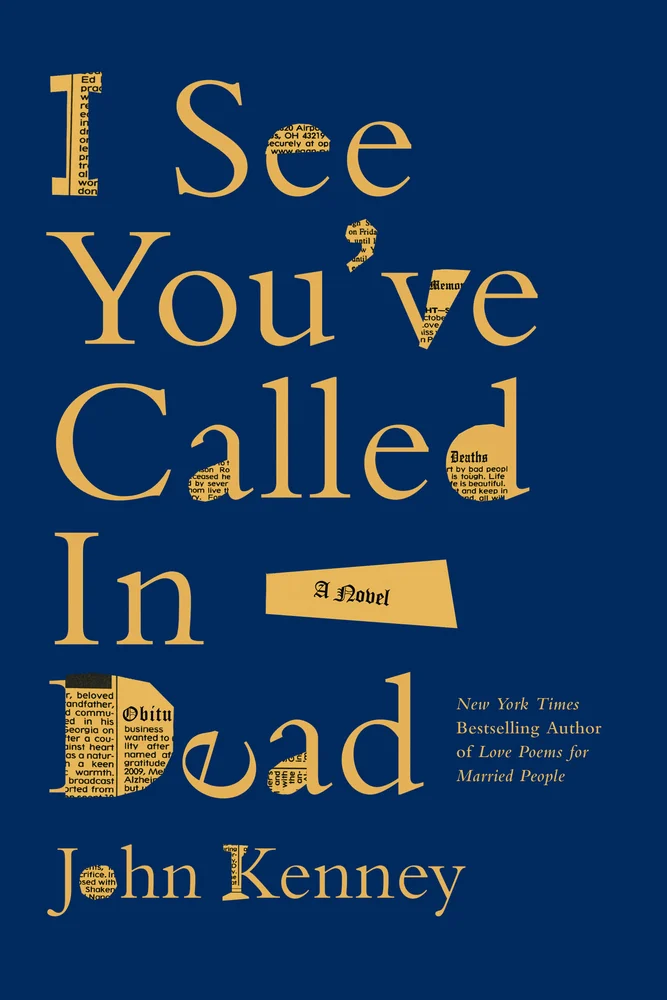
We’ve all suffered the slings and arrows of an accidental “Reply All.” Or sent a group text meant for one person. It’s a uniquely modern humiliation to discover you’ve shared something private with everyone including Janice in HR. Worse if it was something juicy about Janice in HR.
Now imagine doing this intentionally. Or, more precisely, in a haze of Scotch. Welcome to I See You’ve Called in Dead, a howlingly funny and sweet novel that takes everyday digital self-sabotage and escalates it to an existential crisis about the deep weirdness of being alive.
Bud Stanley is an obituary writer and midlife smoldering crater in a slow, sarcastic freefall. In other words, Bud has problems. After one bad date and enough Scotch to embalm a small elk, Bud pens his own obituary. It’s full of wonderful claims like performing open-heart surgery on himself and dying in a hot air balloon accident. Then he hits send, pushing the obituary out to the world. This leaves him in a bureaucratic no-man’s-land: he’s professionally dead per the computer system at work, and also still alive enough to get called into his bosses’ offices for reprimand. Worse, his employer isn’t sure if they can revive him in the system, at which point they will fire him for this massive breach of protocol and taste.
Now Bud is in a kind of limbo both on paper and in spirit.
What follows is a man trudging through thick malaise in search of an exit. Bud starts attending strangers’ funerals and partaking in other life-affirming activities. Along the way, he’s nudged forward by a small cast of supporting characters who represent various shades of vitality: Tim, best friend who steals every scene and never falls into cliche; Clara, a funeral-loving free spirit; and Leo, the grade-school neighbor who is seven-going-on-Stanley-Tucci. I’d say Leo was my favorite character, but they are all my favorites and I’m not choosing among them.
Kenney doesn’t waste time pretending grief is poetic or that midlife is some golden era of reinvention. But he also doesn’t turn it all into a joke. Kenney understands the architecture of comic prose (the man has a Thurber Prize!) and the human condition that fuels it. Bud’s sarcasm is a coping mechanism, not a gimmick. The writing is funny and occasionally sad, but not self-pitying. At the beginning, it felt like the timeline did a little cha-cha, but that gets sorted out very quickly.
Is this a midlife crisis story? Perhaps, but it’s not the kind where someone runs a marathon or takes up improv. Bud doesn’t “reinvent” himself. He barely reinflates. What he does do (with much sarcasm and some trepidation), is begin to engage with life.
I See You’ve Called in Dead reminds us that it’s possible to be deeply lonely, moderately functional, and still worth loving. The reluctant act of staying somewhat present in one’s own life has meaning. And sometimes eulogies are wasted on the dead.
And that weird process of staying alive? Turns out it’s a group project.
THERE’S NOTHING WRONG WITH HER BY KATE WEINBERG
The delicate art of being ill in a society that puts a lot of effort into not believing women.
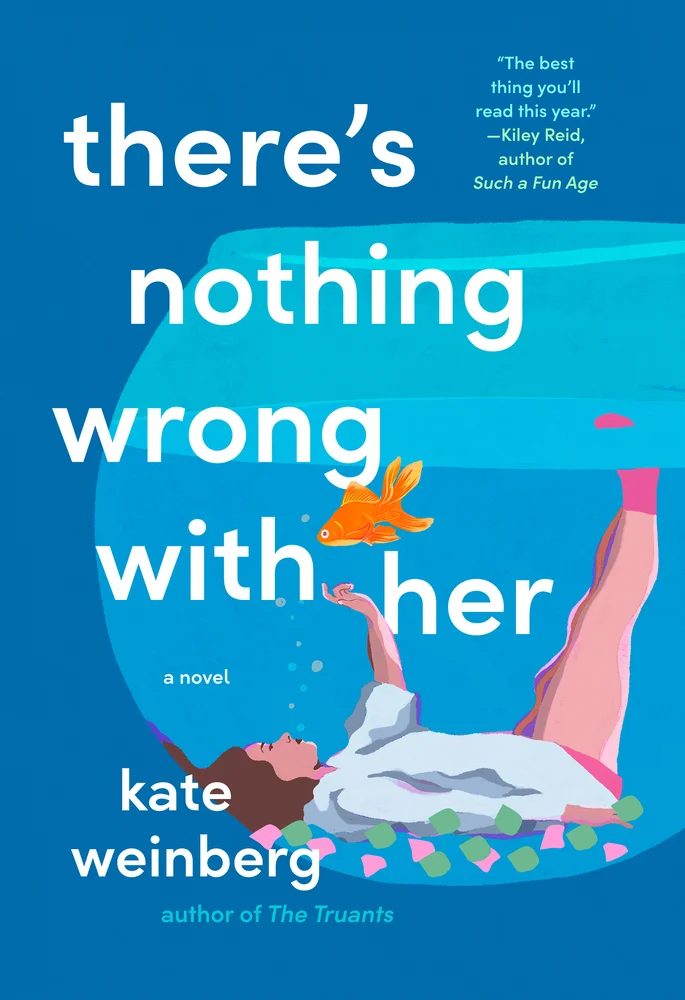
A locked room mystery where the locked room is your own body and the mystery is why no one can figure out what (if anything) is wrong with you. Kate Weinberg’s There’s Nothing Wrong with Her is about solitude, rage, memory, creativity, and the fragile scaffolding that holds a person together.
The title is not just ironic, it’s the whole diagnosis. It’s also very much like being a woman
Here’s the thing about being low-grade, vague, hard-to-diagnose sick: Everyone thinks you’re fine. You look fine. You say, “I’m okay,” because saying “I’m falling apart in slow motion” is, frankly, a buzzkill.
The body becomes suspect and the mind is no longer fully reliable. What follows is often isolation. Not the good kind, the kind assigned by a world that distrusts women and women’s pain.
Vita (a name that would feel heavy-handed if it were in a different author’s hands) Woods is a podcast producer who loses nearly everything when a strange illness leaves her unable to climb stairs, hold a conversation, or distinguish one blurred afternoon from the next. She becomes a ghost in her own life. Sure, people are concerned, doctors can’t figure it out. Her boyfriend (a doctor!) is “supportive” in the same way a traffic cone is supportive — it’s there but it’s not really doing much.
She is stranded in her body, in bed, stuck in what she calls “the Pit”: a place of exhaustion, semi-consciousness, and memory where reality often fuzzes out then returns in sharp relief.
The novel mostly takes place within the confines of Vita’s home, her body, her brain. That should and sometimes does feel claustrophobic, but can also feel expansive when secret compartments open in Vita’s mind. There’s a Renaissance poet/ghost named Luigi da Porto who holds delightful conversations with Vita, teasing her and understanding her better than her boyfriend seems to. There’s a goldfish named Whitney Houston who may or may not be a stand-in for the weird nature of time and memory when you are ill. There’s a look at how the mind deals with boredom and stretches of time, of course, because when your world shrinks, the brain gets very inventive.
Vita’s upstairs neighbors, a grieving piano teacher and her charismatic tenant, serve as unexpected lifelines, pulling her attention upward both literally and emotionally.
It’s a book of in-betweenness, and Weinberg captures these spaces beautifully. Time slows down, then forgets itself.
This book is weird. It’s brilliant. It’s a little mad in exactly the way being sick for too long makes you mad. The boredom gets loud. The silence gets mean. Your own mind becomes a snarky roommate with a penchant for cruel flashbacks. The tone ricochets between funny, sorrowful, and furious, capturing what we think about when all we can do is sit still and try to piece together words and memory, even when our brains feel like unspooled VHS tape.
There’s Nothing Wrong With Her is not a protest novel, but it is a political one. To write about an ailing woman stripped of narrative control, credibility, and energy, and to insist that her version of reality matters, is a quiet and necessary rebellion.
It’s a standout. I’ve never read anything quite like it.
LAND OF MILK AND HONEY BY C PAM ZHANG
What’s for dinner when the world is ending
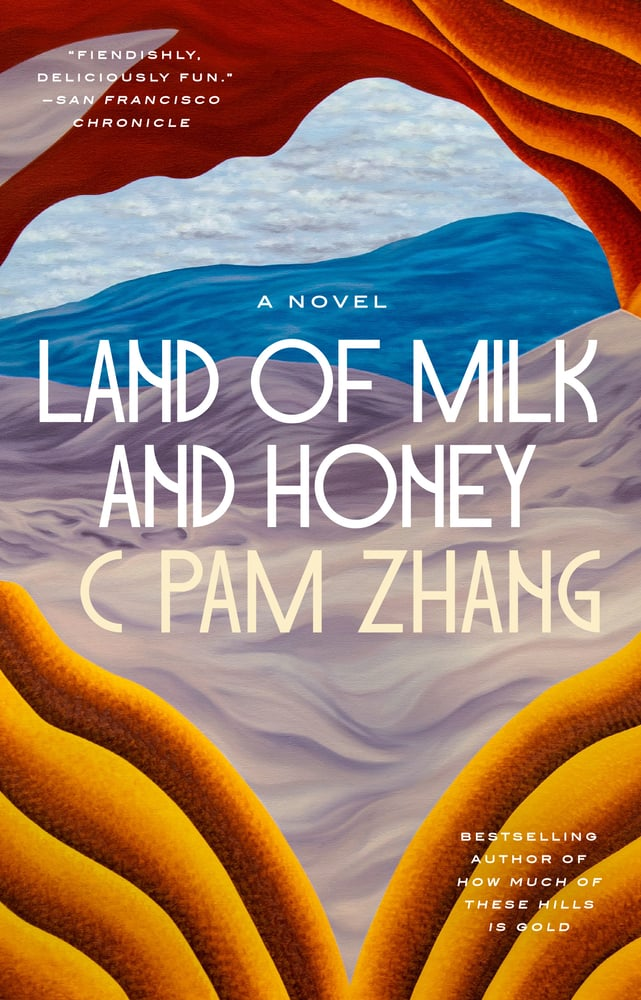
I really didn’t mean to pick up another climate disaster novel. But I did. And oh, this book is so beautiful and devastating it steams off the page.
Due to some very bad science in America, most of the Earth is covered in smog. Crops fail. Biodiversity collapses. What little food remains looks and tastes gray. The world starts to choke on its own hubris.
It’s not a great time to be a chef, like our narrator is. As America slams its borders shut, it is not a great time to be out of the country, like our narrator is. If you are Asian-American, like our narrator is, you are shuffled to the bottom of the returnee list. She is effectively stuck.
So she lies about her credentials as she applies for a chef job on one of the last smogless places on Earth: a remote mountaintop colony in Italy. Yet, in her application, she writes truthfully, “I will faithfully perform any task within reason and with dignity.”
In fiction, this is a flare gun to the gods which says: “Please test this.”
(N.B. Throughout the book we see how survival and truth can repel each other in drastic situations, and how much living and truth can cling.)
The mountaintop is a private country owned by a wealthy man with a god complex who has amassed massive stores of seeds, livestock, and deep freezers filled with once-extinct and going-extinct species. Animals hung in the deep freezer two-by-two while the rest of us eat mung-protein-soy-algal government flour. It’s a dystopian Noah’s Ark.
Aida, the only main character with a name, is the employer’s daughter, a geneticist who runs the secret labs and revives what maybe should have stayed lost. She is also what we commoners might call “a foodie.” Aida and her father (“the employer”) say they are trying to rebuild/save humanity, with an alley-oop from the world’s wealthiest.
The narrator is hired to seduce these potential investors. Food is but part of the bait. She is bait in another way. But not how you are thinking.
For a book set in the thick fog of collapse, the language is dazzling. The prose is a tasting menu: precise, ornamental, and full of unexpected flavor.
Zhang offers no subtlety in the distinction between lushness and rot, between those who live and those who die, between those who get seconds and those who starve. All the appetites in the book are sensuous and fairytale-like.
The novel is not subtle in its moral juxtapositions. But then, neither is extinction. The employer — a composite of every charismatic autocrat, every disaster profiteer — believes his wealth confers both survival and vision. Luxury and its skewed version of altruism are not spared judgment here, but it is complicated. It is violent and virtuous. Deprivation and depravity of every sort thrive. This book is a panic window into the terrifying human inability to form community under pressure. A survivable planet is one of trust and equity. This is not that planet.
There’s a love story throughout, but the sensuality turns in on itself, becoming something numbing. For a book so full of flavor, it is also deeply desensitizing. Heavy. Slow. Holy. And like all things that present as holy, sometimes we need to look away.
Still, how can you resist a line like this:
“And that is how, in the depths of that surreal country in a flavorless world, I discovered, among various fruits, vegetables, and animals believed extinct, the last specimen of my professional pride. Shriveled, squashed — but extant.” (p.29)
Land of Milk and Honey is slender, but it’s hardly a light read. This book asks you to look at something beautiful, and then stay there when it turns monstrous. It wants you to crave, and then to feel gross about craving.
It is a book about who has the privilege to choose, and often it’s not pretty either way. However, apocalypse is not à la carte. It’s a prix fixe situation. You get what’s on the menu.
Read any good books lately? Please share in the comments!

 Jackie Pick