The first time the basement flooded, the twins were babies and sleeping unpredictably. The second time the basement flooded, the twins were toddlers and doing everything unpredictably. The first flood felt like a natural disaster; the second, a betrayal.
Before the first flood, the basement was mine, a chamber crowded with paused ambitions and ghost versions of myself. Then came the water, the local infrastructure unable to keep its promise. The basement transformed into a mausoleum of academic endeavors, professional files, suspended projects, mementos of a me I barely remembered — proof of a time before my job title was “Mama.”
Movers sent by the utility company kept a reverential silence as they engaged in a liturgical removal of my ruined things, including a waterlogged notebook filled with the minutiae of early parenting — eating, diapers, naps — entered and never referenced again. They lowered their eyes as I peeled the boys’ first ultrasound image from the ruins of a sodden cardboard box.
There was shame in the mess and the loss, in the casual way I’d let things slip. I’d intended to archive everything, a task perpetually deferred. Sleep-deprived months had messed with my memory, threatening to make me my own unreliable narrator. I needed to cache my life. But I was tired, and the basement’s separation from the daily hubbub allowed me to postpone the task.
The first flood washed away the luxury of later.
New carpet, new drywall, a serious dehumidifier, and the basement soon once again housed all my somedays and speculations. Scribbles, fleeting notes, seedlings of ideas jotted down and shelved for when the twin-induced chaos settled.
Then a frozen pipe burst, unleashing a second deluge vindictive in timing and intensity. Water pooled in the ceiling and came out through the light fixtures onto my notebooks and shelves.
This time, there was no help. I faced the wreckage alone, sorting and tossing debris. With every wet, heavy shift of weight, the floor let out a slow, desperate squelch, causing the boys to giggle uncontrollably.
The twins, now toddlers and agents of chaos in their own right, tried to help. I’m sure I made a “two-by-two” joke to my husband as we lugged things and monitored the boys. They swept through the first floor in their own tide of arms and legs and wild purpose.
We relocated my work-and-dream space to something far from the basement, smack-dab in the middle of the rough-and-tumble of daily life. I have since been constantly accessible, perpetually distracted, and witness to all goings-on.
August, once a month of idle heat, is now a hot press.
This, all of this, used to be contained within early September, but September bursts backwards now and here. Now August is a month of asynchronicity, denial, and frenzy, trying to be all things in the moment and in preparation. In that way, it is motherhood, it is a career, there’s never enough, we’re doing it wrong, something always gives as the calendar never ceases demanding and trying to suffocate not just with heat but with anticipation.
I no longer irritatingly wax nostalgic about starting school the Tuesday after Labor Day. They don’t need to hear that when it’s 96 degrees when I pick them up after the first day and the twins’ August birthday is lost in the whirlwind of first days of school and its adjustments and expectations.
I don’t tell them about pouring over the back-to-school issue of Seventeen with its plaid skirts and matching heathered sweater and knee socks if you were into that preppy thing.
And in 2024, I fought hard to go with it. Be in the moment and be utterly prepared for the deluge of emails that ask in some sort of wide-eyed incredulity “Can you BELIEVE it’s back to school? Can you BELIEVE we’re almost, nearly, sort of at the beginning of the end of August?”
Can you BELIEVE life is grabbing you by the shoulders and spinning you like it’s your turn at Pin-the-Tail on the Donkey? And yes, you’re blindfolded. And yes, you’re probably also the donkey?
Yes. I can. And still, I am astonished.
Which is why:
We went for more celebratory scoops of ice cream than I can say without shame to mark sweet (sometimes gleeful) goodbyes and tentative hellos.
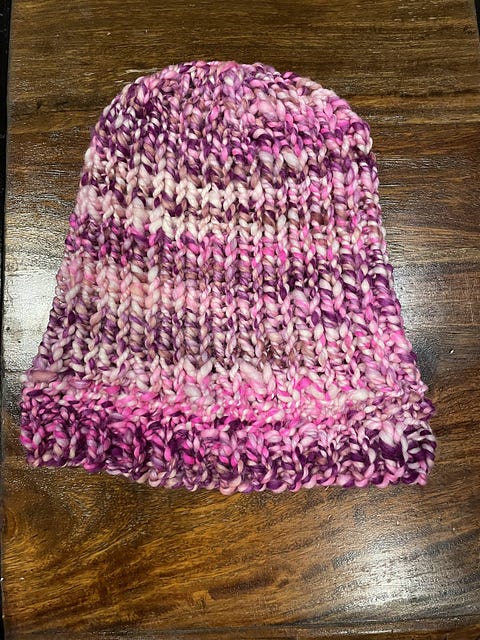
I picked up knitting again, unsure if it’s to mark days, to leave a little something behind, or just enjoy irregular and occasionally ill-fitting accessories. Still, the repetition allows for bursts of creative energy and a renewed supply of cuss words, both well-established and original. (Thanks, Accidental Creative).
I’m excited to be writing reviews on Reedsy, and why I’ve been waiting for the kids to go back to school to begin.
Opportunities have to present themselves before I realize I want them.
My husband and I became experts on things like “over-rotation” and “shotput form” and “optimal coverage levels for Speedos” from our very comfortable couch while we watched the Olympics.
My family played too many games of poker and laughed to tears when one child played several hands without even looking at his cards. And won.
We bent the rules of Scrabble a bit, leading the never-to-be-topped, entirely gonzo playing of “oabunwad.”
I’ve let go (almost) of the stress of packing for vacation, releasing the need to compensate for the time both boys, much younger, forgot to pack pants. Or the year I left the swim bag at home, the one with the suits they’d actually remembered to pack.
This was the Year of the Traveling Tomato, so labeled because we’d purchased a tomato, a perfect specimen, before our annual end-of-summer trip. We didn’t eat it, so we brought it along, where it sat, untouched, only to be brought home again — sort of juicy, red, hard-to-mail Flat Stanley that didn’t go anywhere. Which makes it nothing like Flat Stanley, I suppose.
I will always keep the playlists we make every year for this same trip, although I may quietly remove my husband’s choice of a rousing version of “I’m A Little Teapot.”
When, on the beach, my son, taller than me, called out to me in his deep voice, “Mom! Watch me throw!” as he played frisbee with his father, I lived every parenting moment ever in that second. Past, present, future.
My heart struggled to find rhythm again when they went back to school, just as three months earlier my brain struggled to find a rhythm when they finished school. No fear, though, because we got a call from the school nurse about 0.3 seconds after school started.
I am overwhelmed and underwhelmed.
There will be no counting of how many summers like this remain. Here, things will always be counted in empty ice cream cups.
Here are some splashes of marvelous from August, 2024
Like most subscribers, I am a little (so very much) behind in my New Yorker reading. I just got around to the July 21 edition. This story is unbelievably good.
And finally, look, Spotify surprises me every once in a while and this popped up and now every morning I’m “ba ba ba BA ba BA babababa!” and I can no longer just look out a window and think my thoughts:
Sorry I’m late. Vacation, then back to school, illness, busy-ness and WHAT DO YOU MEAN YOU DIDN’T EVEN NOTICE I’M A FEW DAYS LATE WITH THIS POST?
Fine. I won’t pay the late fee then.
Let’s start with some good news, because I believe in having dessert first: I’m now writing book reviews for Reedsy, and I’m beyond excited!. Fret not, my reviews will also still appear in the usual places: Here. Over there. Yonder. Maybe even scribbled on a crumpled piece of paper, locked in a dusty museum chamber, to be discovered centuries from now.
Which is all just to say that those of you who wanted MORE places to read my brain blarps? Wish granted.
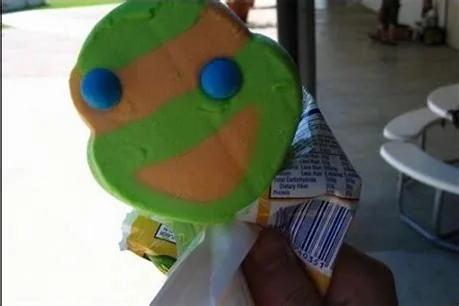
I am coming to terms with the fact that summer as an adult is nothing at all like summer for children or teens or even college students. It’s not months of freedom and relaxing and doing what we want. There’s no time for me to go running around after the ice cream truck (neighbors, you’re welcome!) And, in a plot twist as horrible as and then I woke up, there’s less time for me to read than during the school year. My inner Veruca Salt is stomping around, demanding TIME, SPACE, QUIET, COZY UNHUMID NOOKS, AND TEENAGE MUTANT NINJA TURTLES ICE CREAM BAR, but that’s not how this summer panned out.
And that’s ok. I finished five books I can talk about now, and multiple (*bats eyelashes coquettishly*) ARCs (Advanced Reader Copies) and alpha- and beta-reads that I will be able to share with you soon enough. Trust me when I say that there are some really excellent books to be released in the next year or so and I can’t wait to talk about them with you.
These are the books that I enjoyed enough to finish in the last month:
Fallen Spirits, the second installment in the Mind Monsters series by Diane Hatz, is a gloriously offbeat fusion of satire and sci-fi, perfect for those who enjoy sharp humor and gleeful absurdity. (Also space-time disruptions! Beings from other realms! And possibly the end of the world!)
We reunite with the beleaguered and somewhat bewildered Alex as her life implodes then intersects with that of the lost and endangered Crystal, a woman who seems to be at the mercy of some metaphysical shenanigans. Alex embarks on a cross-country journey for answers and a chance to find anything that might help her crawl out of the wreckage that is her life.
Along the way, she encounters unforgettable characters, like JT, a power-hungry mogul whose craven need for omnipotence imperils pretty much everyone. I’d also like to give a friendly wave to Dr. Max, one of Hatz’s many delightful secondary characters into whom she breathes life with a few keystrokes.
At its heart, Fallen Spirits is about hitting rock bottom, scrambling up again (and again), and just maybe believing in something — whether it’s oneself, community, or unseen guiding forces.
Hatz incorporates these deeper themes into a fast-paced story that is as thought-provoking as it is entertaining. She skewers the moral vacuity of the uber-wealthy elite in scathing commentary on capitalism gone awry. Hatz’s narrative voice is incisive, sarcastic, and a lot of fun. She is also gifted in what I believe to be an underrated skill: ending chapters well. Each “button” works, and putting the book down is a struggle because we just want to see what could possibly happen next.
Word of warning: if bodily functions — even when used satirically — are not your cup of tea, you will want to approach this with extreme caution.
If you’re looking for a full-speed-ahead slipstream novel that cheekily challenges conventions while exploring the power of belief, Fallen Spirits is the book for you.
This novel is a fever dream set afire with a postmodern match.
Oedipa Maas, ordinary California housewife, becomes the executor of her ex-lover’s estate, a task that quickly thrusts her into a bizarre labyrinth of centuries-old conspiracies, and reality soon seems to slip through her fingers.
Pynchon’s novel is dense, surreal, and mind-bending. It’s quite a trip and you may need a DIY conspiracy board to make sense of it all.
The Crying of Lot 49 intentionally doesn’t aim to fully develop its characters. Pynchon is here to play with form rather than character development, twisting narrative to near disorientation. His prose is playful, almost entirely brilliant, and underscored with pain. It’s a nutrient-dense cocktail of words that’ll mess you up in the best possible way.
Pynchon taps into not only a wobbly paranoia, but also a sense of how lost we can feel in a stubborn country of lonely souls pointing fingers at each other.
The novel is also about the greater dread that nothing is connected, that everything is random and meaningless. And Pynchon takes not a few shots at 1960s counterculture. Even rebels can trap themselves in their own belief systems.
Reality. Just sound and fury, signifying nothing — or perhaps, everything.
Tom Hazard, a man who appears to be in his 40s, has rather inconveniently been alive for over 400 years due to a rare condition that slows his aging. While everyone he knows bustles about living and dying, Tom just…doesn’t. While the world spins on, Tom lives a life of history and solitude. He’s hobnobbed with some historical greats, sure, but immortality-ishness comes with its own set of problems — chief among them being found out, but also the agony of loving and losing and living with for centuries. This isn’t a novel about history so much as a look at time — how it moves, how we cling to it, and how hard and how necessary it is to live in the present.
This book is like a slow, deliberate sip of whiskey — smooth, then burn. The timeline jumps the author makes put us in Tom’s shoes as he increasingly “slips” back and forth in memory. You feel his disorientation as time plays tricks on him, causing him memory headaches. This novel does not shy away from THE BIG STUFF: resilience, fear, regret, mortality, the urgency and blessing of a lifespan. And in the end, it’s the stubborn optimism of it all. It’s a gentle nudge toward living our best lives in this very moment. (It’s also eminently quotable and a lot of fun.)
A quirky, sharp novel about what happens when modern life pushes a creative soul to the edge. Semple critiques absurdities of modern life, particularly suburban conformity, tech culture, and the pressures of social status. The story follows Bernadette Fox, a brilliant but eccentric architect who doesn’t quite fit into the neat little boxes that society — and suburban Seattle — tries to place her in. Bernadette disappears just before her family is to take a trip to Antarctica. Narrated through a series of emails, letters, and documents pieced together by her 15-year-old daughter, Bee, the novel painfully and hilariously pokes at creativity, family, and the lengths people go to maintain appearances or reject them altogether.
The satire hits HARD from the get-go. Bernadette’s reluctance to engage with her community is relatable for anyone who’s ever felt like there was some fun partying going on in a private breakout room during a Zoom. The struggle against absurd norms is the heartbeat of the novel, emphasizing how fricking exhausting it can be to keep up with the Joneses when you don’t even want to be anywhere near that racetrack. But Semple lets us know there’s always a different (hilarious! charming!) path.
A quick side-eye to how some characters — ELGIN — get handed one too many Get Out of Jail Free cards, but that’s a minor quibble in an otherwise deeply resonant, offbeat, well-balanced novel that may make you reconsider wild trips to the end of the earth or lawn warfare.
A thoughtful guidebook/kick in the pants for anyone trying to be creative while the world tells you to go faster, do more, and SMILE while putting nose to grindstone. Despite sounding like something an overenthusiastic AI model would suggest, concepts like “Creative Rhythm” and “Idea Management” are actually quite brilliant, even for non-business creatives like me. He emphasizes balancing focus, relationships, energy, and time to help you generate ideas without burning out or losing quality. It’s something to keep close by and a good reminder that slow, steady, and deliberate make those big moments of creative inspiration possible. Make your creativity bulletproof. I’ll let you know as I buckle down to work on my own book if these ideas are more than inspiration.
I’m off to go figure out my new Reedsy stuff now. Wish me luck. I, a Luddite, stopped keeping up with tech once my iPod Gen 2 gave up the ghost (to the tune of Bubbles by ARTIST). Maybe I’ll reward myself with a quick jog behind the Good Humor truck, should those bells toll for me.




 Jackie Pick