In a word? “Bangarang!”
Ye gods, what excellent books.
This was one of those months when books held fast and made claims on a corner of my inner world. It’s cramped in there and I probably should Marie Kondo the place, but for now, these books are welcome to squat in my brain corners and bring me joy.
This was not just a “hey, nice book” kind of month, but the kind where at least two of these are straight-up shoe-ins for my end-of-year Best Of list.
The silvery thread binding these books together is that they are all about the act of storytelling, how sometimes that’s the only way to get through. Or in. Or out.
I’ve been reshaped by these works.
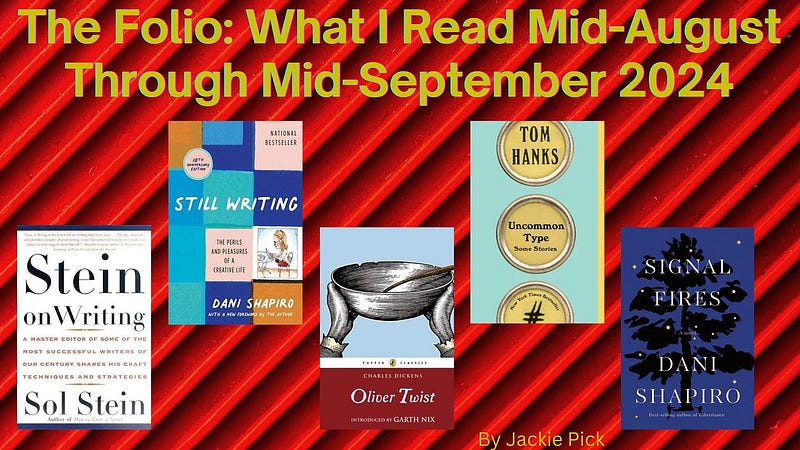
Which is all just to say these are the books that I enjoyed enough to finish in the last month:

James by Percival Everett
If you’re going to take on Twain, you’d better bring the goods.
Percival Everett not only brings the goods, the whole goods, and nothing but the goods — he delivers them with such unapologetic brilliance that you’ll find yourself wondering, ‘How has no one done this before?’ And then you realize — no one else could have done this.
I am thunderstruck.
James is not merely a retelling of Adventures of Huckleberry Finn, it’s a complete reimagining where Jim — now James — steps into the center of the narrative. He is now a man with his own inner life, vibrant with intellect and grappling with the cruel complexities of his life. Cerebral, flawed, painfully conscious of what it means to exist in his circumstances, James becomes a moral force.
Everett critiques both the historical portrayal of Jim in Twain’s original work and contemporary issues of race. The narrative blends humor, satire, pathos, and sharp commentary, with James often confronting his situation with a deep sense of survival, wit, and profound love for his family. It’s brutal and beautiful and fresh.
I marveled at the fullness of James as a character. He is no longer a sidekick, no longer just a figure for Huck to bounce off. He’s no “Mary Sue,” either. He’s deeply human. If this book isn’t immediately welcomed into the American Canon, I’m not sure what would be.
There’s also a lot of philosophy thrown in there because YEAH, THERE IS. And it works. Some folks have expressed displeasure with how the book’s toe-dips into farce seem abrupt. Welcome to literature. Think of it like a journey. A journey on a river of some sort. Where there are twists and turns and sometimes the river is gentle and sometimes… Do we see where I’m going with this?
This is a genre-bending boundary-pusher for sure, and any liberties it takes with the original story are just and satisfying. To tackle Twain requires a certain audacity, and to succeed requires genius. Everett has both in abundance.
There is no doubt that schools will use this as a parallel text when studying Adventures of Huckleberry Finn.
There is also no doubt this will be on my Best Of 2024 list.
Astonishing work.
The Storied Life of A.J. Fikry by Gabrielle Zevin
All towns should have a bookstore, don’t you think?
Island bookstore owner A.J. Fikry is definitely not having the time of his life. Grieving the loss of his wife, struggling to keep his bookstore afloat, self-medicating, bereft of passion and connection. However — hooray! — everything begins changing when a toddler is left in his bookstore. What follows are not thunderous events but a soft, deliberate opening of life.
This is a novel about a community only as flawed and fragile as the people within it, and A.J.’s bookstore becomes the fulcrum for everything: grief, love, indiscretions, second chances. It’s life, piece by tangled piece.
Perhaps by dint of being set in a bookstore, the book celebrates not just the joy of reading but the necessity of it. This sweet novel is a love letter to books, bookstores, and the communities that form around them. It’s well-paced, though it takes a few big leaps in time that might make you a little woozy. Still, the storytelling works beautifully. Zevin is deeply respectful of and never underestimates her audience, a skill also showcased in her Tomorrow, and Tomorrow, and Tomorrow. Zevin’s storytelling is tight and purposeful — there’s not a wasted word or superfluous scene. Every moment builds A.J.’s world and relationships, while also pulling the reader into the life of the bookstore and town, stitched together by books.
The quirky main and secondary characters feel like they’ve stepped out of an exceptionally good sitcom — believable, loveable, and tinged with just enough sorrow to avoid being treacly. Literary references throughout the novel are sweet treats, and A.J.’s book notes are lovely touches. It eventually is made clear who these notes are for and how they tie into the plot, which made me hug the book to my chest. Yes, I’m weird. It’s fine.
Ultimately, The Storied Life of A.J. Fikry is a love story. I’ve said before that all stories are love stories. This one isn’t sappy, disappointing, or cynical. Neither are real jaw-dropping twists here; instead, the story unfolds in small, quiet ways. This book may not cause you to bolt upright, but little moments you enjoyed will stay with you long after you’ve finished.
Zevin’s writing is self-assured, and she trusts the reader to keep up and fill in the gaps. It’s zippy. It’s wackadoo. And it’s a reminder that sometimes, a good book — and a good life — are about those quiet, small moments that happen when you crack things open.
It’s hygge at its finest.
All stories should come with a bookstore, don’t you think? After all, “a place ain’t a place without a bookstore.”
Nothing to See Here by Kevin Wilson
In Michigan earlier this year, I picked up a bag of Limited Edition Cherry Barbecue potato chips. (Stay with me.) They were…peculiar. Sweet, spicy, not quite balanced, all in a way that made me go, “What is happening?” I wasn’t even sure if I liked them. But two sittings later? Gone. Gone like yesterday’s regrets. And here’s the kicker: I’d eat those weird-a$$ chips again fistful by fistful in a heartbeat.
This was not unlike reading Nothing to See Here by Kevin Wilson. At first, it’s strange. This cannot hold up. But it does. You keep reading. You’re hooked. And suddenly you’ve finished the book, wondering what just happened and, more importantly, HOW DID THAT WORK AND WHERE CAN YOU GET MORE?
And by “you” I mean “me.”
I’d read this weird-a$$ book again in a heartbeat.
(*extreme Stefon voice*) Nothing to See Here has (almost) everything — friendship, responsibility, and spontaneous human combustion. It’s strange, dark, and hilarious. Wilson somehow makes these fire children funny and tragic all at once. They’re weird, the narrator is weird. It’s all weird and it works.
After reading a string of heavy, intense novels, Nothing to See Here gave me literary whiplash. Let me tell you, though, I love a funny book that writes its own rules, that’s wholly original, and doesn’t feel like it’s trying too hard to be ultra-cool or different. It just is. Wilson pulls this off.
Our narrator, Lillian, is sharp-tongued, jaded, and just messed up enough to carry a story. She may be even a little much…her vocal fry practically buzzes off the page. And I couldn’t get enough of her.
If I have one complaint, it’s that I wanted just a bit more at the end. A glimmer of what’s next, a sense of where these characters might land after the final page. But then again, that’s life, right? Stories don’t always wrap up neatly.
And that’s the thing — the story Lillian believes about herself is one of failure — she’s convinced that a mistake in high school sealed her fate as a woman with no prospects. Caring for these kids forces her to rewrite that story, imagining herself as someone capable of love and responsibility. Madison, the children’s mother and Lillian’s high school friend, on the other hand, has crafted a flawless public image. Both women’s stories are their emotional shields until they’re forced to confront the truth.
The children’s story is different — they’ve been treated like secrets, their combustive condition dismissed or explained away by crackpot theories. Wilson handles all this with great humor and pathos. It’s crackers and I felt like it shouldn’t work, but good grief, I devoured the book in two sittings.
Sans chips.
The Testaments (The Handmaid’s Tale #2) by Margaret Atwood
Survival. Complicity. Resistance. Power.
It’s BACK, baby. (Kind of.)
Can outrageously great writing elevate an otherwise good book? Yes, it can. Exhibits A and B: Yes, it can. Exhibits A and B:
- “You don’t believe the sky is falling until a chunk of it falls on you.”
- “You’d be surprised how quickly the mind goes soggy in the absence of other people. One person alone is not a full person: we exist in relation to others. I was one person: I risked becoming no person.”
Atwood’s writing remains as sharp as ever, resulting in The Testaments punching above its weight. Did I love it as much as The Handmaid’s Tale? No. The Testaments feels a little like a victory lap, more epilogue than continuation, an attempt to close open loops.
The story picks up 15 years after The Handmaid’s Tale, with three narrators: Aunt Lydia (yes, the one we know and loathe), plus two new characters — Agnes, a Gilead-born girl, and Daisy, a Canadian teenager. Credit where it’s due — Atwood gifts each with a voice that feels real.
Aunt Lydia’s chapters were my favorites. We learn more about Gilead’s power structures and Lydia’s own twisted brand of resistance. Meanwhile, Agnes and Daisy get tangled up in a plot to take down the regime. The stakes are high…or should be. Lydia is fascinating — a judge turned ruthless enforcer turned murkily-motivated saboteur — but I wanted more of the internal fallout as she took on those roles. I WANT MORE RECKONING, please and thank you.
Maybe that’s the point. Maybe Atwood is telling us that authoritarianism rots you from the inside — and that Lydia, like the rest of us, is susceptible and sometimes their fates aren’t satisfying. But oof, I wanted to see more of that rot unfold on the page.
The two teens’ intertwined stories had some moments — like hearing about young brides-to-be inside Gilead — but the stakes didn’t quite hit the way they did in The Handmaid’s Tale. The glimpses of life outside Gilead didn’t pack quite the punch I was hoping for.
Am I unfairly holding The Testaments up to an impossible standard? MAYBE. I wanted more machinations, more urgency, more visceral danger, more fire. The story felt pale next to the original, and the big “reveal” at the end didn’t quite land.
Or maybe I’m numbed because *mumbles something about 2024.*
Honestly, I’d have loved this to be only Aunt Lydia’s story from start to finish (bring in the teens, sure, but through her eyes.)
That being said, there were enough satisfying moments to answer a few lingering questions left over from The Handmaid’s Tale and for me to finish the book (and I’m quite brilliant at not finishing books.)
A worthwhile read for Atwood fans — fanatical and casual.
The Things They Carried by Tim O’Brien
My boys and I read this at the same time. Them for class, me for connection. This is not a book one reads for pleasure, but it is a reminder that sometimes a great book stops being a story and becomes a reflection.
The Things They Carried by Tim O’Brien is a collection of twenty-two interconnected short stories revolving around a platoon of American soldiers during the Vietnam War and the literal and emotional burdens each soldier carries, if only to remember they are human.
This is a demanding read — not because it’s obtuse or buried in authorial swoops and swirls, but because O’Brien splays himself open, unblinkingly and with an honesty that begs for his precise language.
O’Brien uses a blend of autobiographical details and fictionalization to share stories of the haunting complexities of war and its aftermath.
One of the central themes is storytelling — how stories help people cope, give meaning to their experiences, and preserve memory. O’Brien uses his characters to explore the meaning of truth in both war and writing, especially during and after times of extreme conflict. Against this backdrop, we witness (sometimes unwillingly) the worst and best of human nature. It is deep and disturbing, and hoo boy, did it earn its status as a finalist for the Pulitzer.
Read this when you are in a place to do so, if only because the writing and structure are elegant and majestic. But also, read it when you can stomach the violence and sorrow. The title story may be one of the best-crafted pieces I’ve ever read. The non-linear organization of the book is a lot like memory itself — asynchronous, spiraling, sometimes perseverating, sometimes rushing ahead because that’s the only speed one can self-preserve and still tell the truth. But ultimately, even that rushing is just procrastination from confronting the inevitable.
This is also most definitely going on my Best Of 2024 list.
What books have you been enjoying?

 Jackie Pick