Category Archives: Parenting

When Children Break Your Heart


Two days ago we said goodbye to our dog, George. You can read about how ill he’s been here, if you wish.

I won’t go into details of his final days. Or his eleven years. Not now. I’ve been writing between tears, though, trying to capture every detail, every memory, every feeling. That’s been both cathartic and awful. But I need to put it to paper. For someday.

I know that this almost unbearable grief means that we loved George and he loved us. Uncomplicated. Pure. Utterly fuzzy.

It’s been a shit year, personally and politically, but this dog has, as always, been a constant. His moods. His needs. His sweet face. His ability to absorb a hug, sigh, and then put his head back down as if to say, “It’s all going to be ok. Now please let me nap.”

The last 48 hours have clarified how much this dog has woven himself into our hearts, our lives, and our routines.

After dropping the kids off at school today, I put my purse on the counter next to this.
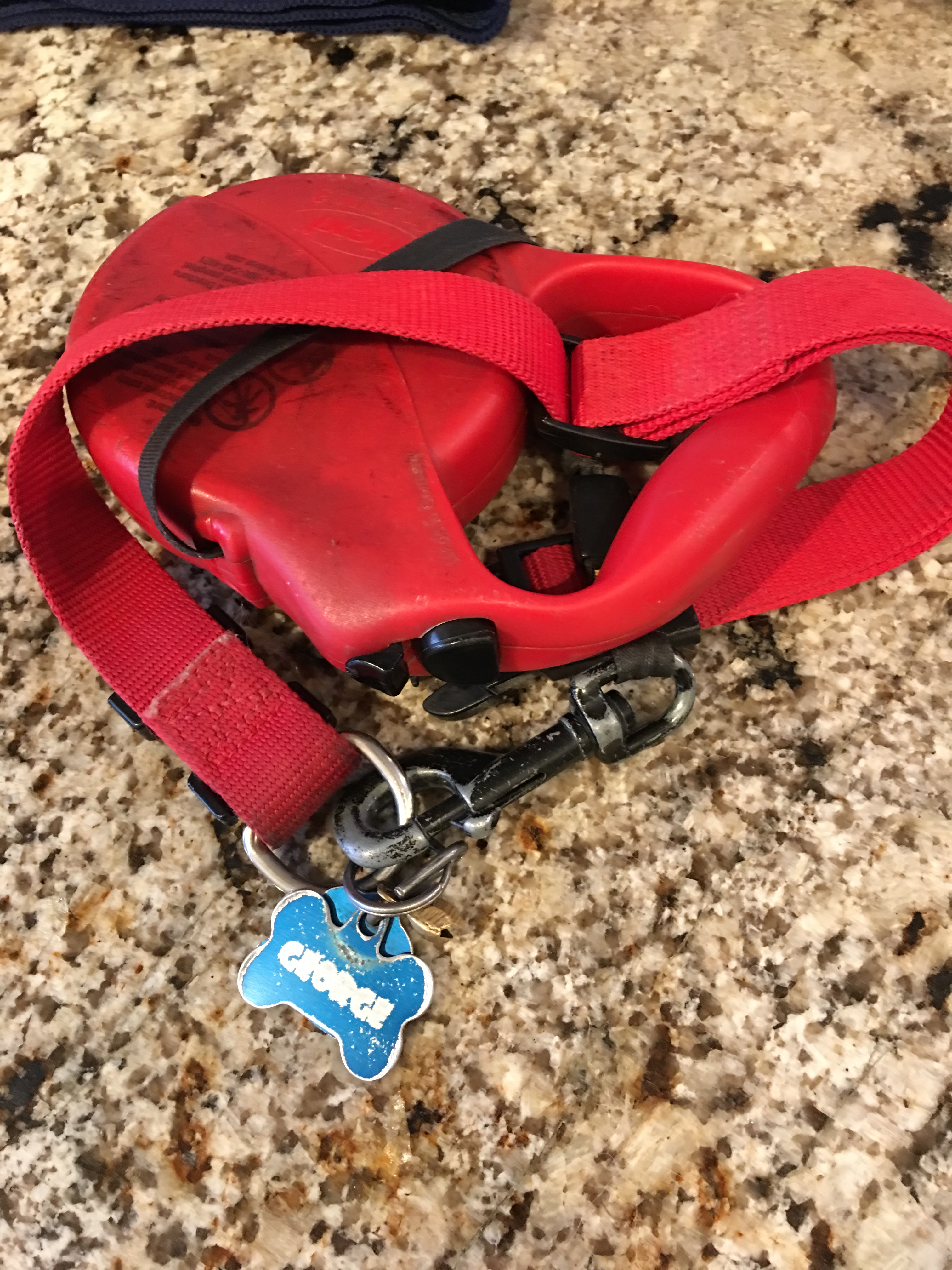
 

I’d been doing so well, too. Looks a little like a heart, doesn’t it?

Right after George passed away, the twins were processing, each in their own way. They wrote a little eulogy on the whiteboard we keep in the play area. I didn’t get a picture before they wiped it away in grief but it said, “George. Born July 4, 2006. Died December 19, 2017. Rest in peace and fuzz.”

My daughter spent a part of her day on Tuesday making a card for her brother.

In case you can’t read Kindergarten, it says “Hope you feel better Logan*. I love you.” That green blob on the left is the dog, and the blue lines with pink dots are his angel wings. Written in the angel wings are “Miss You.”

And that, ladies and gentlemen, is how children break your heart. With their goodness and their grief — I can’t take the credit for the first, and I cannot do much to alleviate the second, but I am grateful for these three little people.

And for a dog who filled these last eleven years with simple love.


*The fact that she spelled it “Login” is the greatest thing ever.

Loaf Pans, Sweet Aromas, and Metaphors in Winter

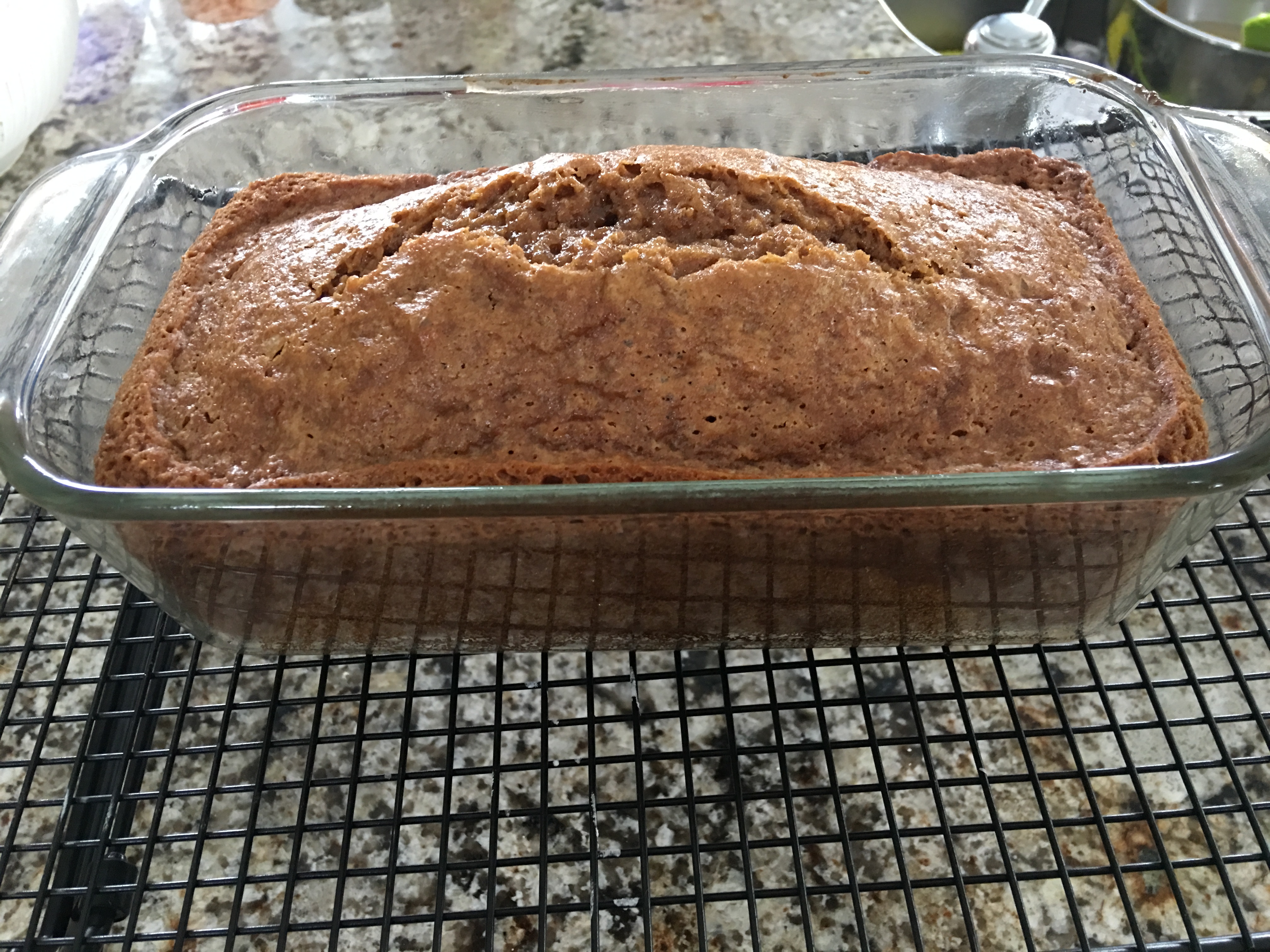
This morning I’m making pumpkin bread, ostensibly for my son who’s home with a cold, but mostly because I want to fill the house with the aroma of ginger, cloves, and nutmeg. Comfort. Care. Sweet.

Of late, the home has smelled of sick dog and not-so-homemade meals. The smells of exhaustion.

The pumpkin bread recipe has different baking times for different loaf pan sizes. 8×4 or 9×5.

My loaf pan, browned from years of lightly greasing and flouring, is 8.5×4.5

No joke.

Not quite here, not quite there. Close enough.

That’s how I feel these days, in this place, at this time. Maybe, in many ways, I always have.

It’s a not-entirely-comfortable feeling. No one wants to feel out-of-place.

No, that’s not right.

Out-of-step. I feel slightly out-of-step. Slightly mis-sized. Needing a little finagling to mingle with the other, uh, loaf pans. A different shelf or a little twisting here and there.

On my counter right now is a beautiful, perfectly baked, aromatic loaf of pumpkin bread. Due to the irregular size, it needed more observing, more tending, more awareness than other loaves…more wiggle room and patience than allowed for in the suggested time ranges. It took more than the 52-57 minutes. It took adjusting the oven. It took years of experience to know by sight and smell when it was close to done, and by the quality of crumb on the toothpick that it was.

There’s a lesson there that I choose to apply to myself on these days when the light is fleeting and the year fades into promises for the future. On these days when we hear no and why and you’ve got to be kidding me, on the days when self-care — the soulful kind, not the chocolate kind — is needed, on the days when the fight for rights and beliefs and humanity seems ever needy and urgent…on these days it’s ok to find the metaphor wherever we can.

Even if the metaphor is that there will always be crumbs.

An Act of Courage

One of my children has been saying he’s a “bad writer” and that he doesn’t like writing. Writing is complex and so emotional that the act can feel like we’re ripping our skin off in public, so I tread carefully on this. Because, really, sometimes I tell myself I’m a bad writer, and often I don’t like writing (particularly the rewriting part, which is about 80% of the writing I do).

He told me yesterday, in an impromptu conversation held at the beach (as most potentially life-altering conversations are) that he wants to write his truths, his story, because that’s the assignment at school, but he doesn’t want to write his whole truth, his deep truth, because it’s going to be judged on some level, and possibly shared. So he picks the stories of his life that aren’t the most profound, most revealing, most forefront. Meaning he doesn’t pick the ripest fruits from the most fertile ground.

And I get it. I said that writing is making yourself vulnerable, and it’s ok to not share those stories yet if he’s not ready. And he may never be. But he should write them somewhere.

He wants to write them. He wants to share, but what’s forefront in his mind are those stories in his young life where he has felt different, excluded, raw, or torn between difficult choices. These are the things that make for real and wonderful writing, and the things that can make for painful moments in childhood (and beyond). These are not the things one necessarily chooses to stand in front of one’s peers and read.

Fortunately, he’s not isolated, he has friends, and he can slough off many difficult situations with more grace than any child should have to muster. He also has perspective and a good heart, and some real skills. I gave him some suggestions on different ways to handle these types of situations. He can choose how he wishes to proceed as he continues on. He will have to write in school. That’s just how it is. He will have to write narratives probably at least through middle school. That’s also just how it is. But he has choices and strategies now.

As a former English teacher and also as a mother, it’s made me wonder about writing and how we teach it, what we expect from our youngest, most vulnerable artists. It also explains why teachers get a glut of “narrative” essays (one of the big three we are required to teach – narrative, expository, and persuasive) – about scoring winning goals or small traumas and pains or issues that scratch the surface or highly formulaic pieces that don’t usually take a big risk.

And it reminds me what an act of courage it is to ask children to go to school every day and write and interact and take risks. To be bad at something. Or, scarier, to be good at something.

Every. Day.