For a few days in February, my God-installed, non-award-winning back and intercostal muscles decided to spasm up and shut down operations. I was horizontal against my will, which is the least fun way to be horizontal. I did not enjoy this real-world lesson in what intercostals are, but I did get to spend a not-insignificant amount of time staring at the ceiling like it’s a limited series.
Just as my spine stopped trying to yeet my head down the hallway like a bowling ball, I got sick. Just like the rest of the family, only they all got it before I did.
So now I have this painful, unproductive cough, which my back is like NO, DO NOT. (You may insert your own “your writing is also painful and unproductive…NO, DO NOT” joke here. First prize is one underwhelmed “Good One, Mild Heckler” from me. Don’t spend it all in one place.)
Because of all that, this intro section is clearly going to be a bit of a wild ride, plus or minus one Mr. Toad. Whatever. It’s fine. If the intro licks a doorknob, just pretend you didn’t see it.
ANYWAY. A couple fingers of NyQuil in, and after my fourth attempt to roll over without sounding like a two-pack-a-day rusty door hinge, I started thinking about whether there might be some clever thread tying together the books I read this month. At the same time I was bellyaching about my back — *insert celestial music*
This month’s reading stack is about spines. Spines let us move through the world without collapsing into a soupy mess.
Look, I’m sticking with this premise, even if I have to force it a bit (consider it artistic chiropractic).
A man tries to stand upright in a world determined not to see him. A woman wonders what remains when cultural and personal scaffolding falls away. In another story, women hold lineage like vertebrae across generations. And in a craft book, writers are reminded that stories need structural, thematic, and other spines, and are shown how to build them.
These books also address questions of dislocation, power structures, self-determination, appearance versus reality, and the social codes that buoy and bruise us.
Which is all just to say, here are the books I enjoyed enough to finish this month:
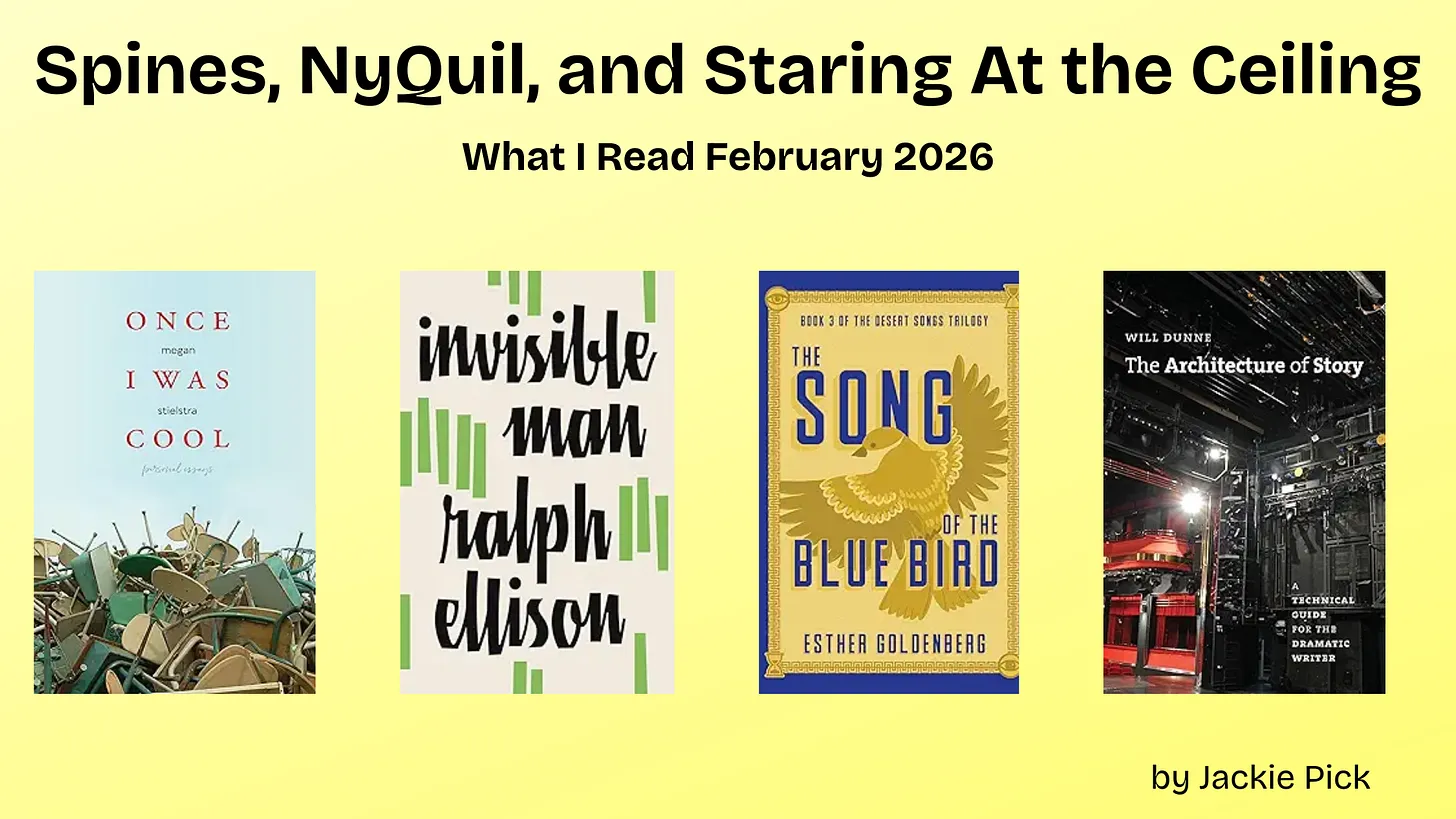
Once I Was Cool: Personal Essays by Megan Stielstra
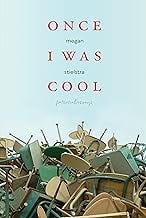
Invisible Man by Ralph Ellison
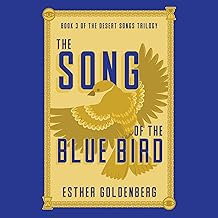
The Song of the Blue Bird by Esther Goldenberg
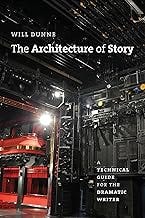
The Architecture of Story: A Technical Guide for the Dramatic Writer by Will Dunne
Note: For sanity and scale (mine, yours, and the internet’s), what follows are the openings of each review. Full versions are linked below.
Cool is elusive and requires a certain indifference to what other people think. That’s extremely difficult to achieve for people like me who spend a certain amount of time thinking about what other people think. (Perils of the job.)
Which is to say: I am not cool. And, unlike Megan Stielstra, I may never have been.
Once I Was Cool lives in that gap between who we thought we were and who we are now…
We tell ourselves stories about who we are. We tell ourselves that effort will be seen, that talent will be recognized, that identity is something we build and then present to the world.
Invisible Man by Ralph Ellison dismantles that.
The novel follows an unnamed young Black man trying to find his place in a society determined not to see him as an individual…
History is usually sung in the key of men: their journeys, their covenants, their departures and returns. The women, if they appear at all, are often relegated to the margins, tending the hearth.
The Song of the Blue Bird by Esther Goldenberg shifts the lens and begins where the women have always been: at the heart of survival and the center of the story. These women are far too busy living, enduring, scheming, loving, and adapting to remain marginalia in someone else’s story…
I picked up Will Dunne’s The Architecture of Story while working on my novel and trying very hard to ignore the inner voice that had begun scream-whispering, “You don’t know what you’re doing!”
I was stuck. I had reached Chapter Twelve with the creeping suspicion that Chapters One through Eleven were not only slightly disconnected from Twelve, they might also be slightly disconnected from each other and possibly from any version of “good…”
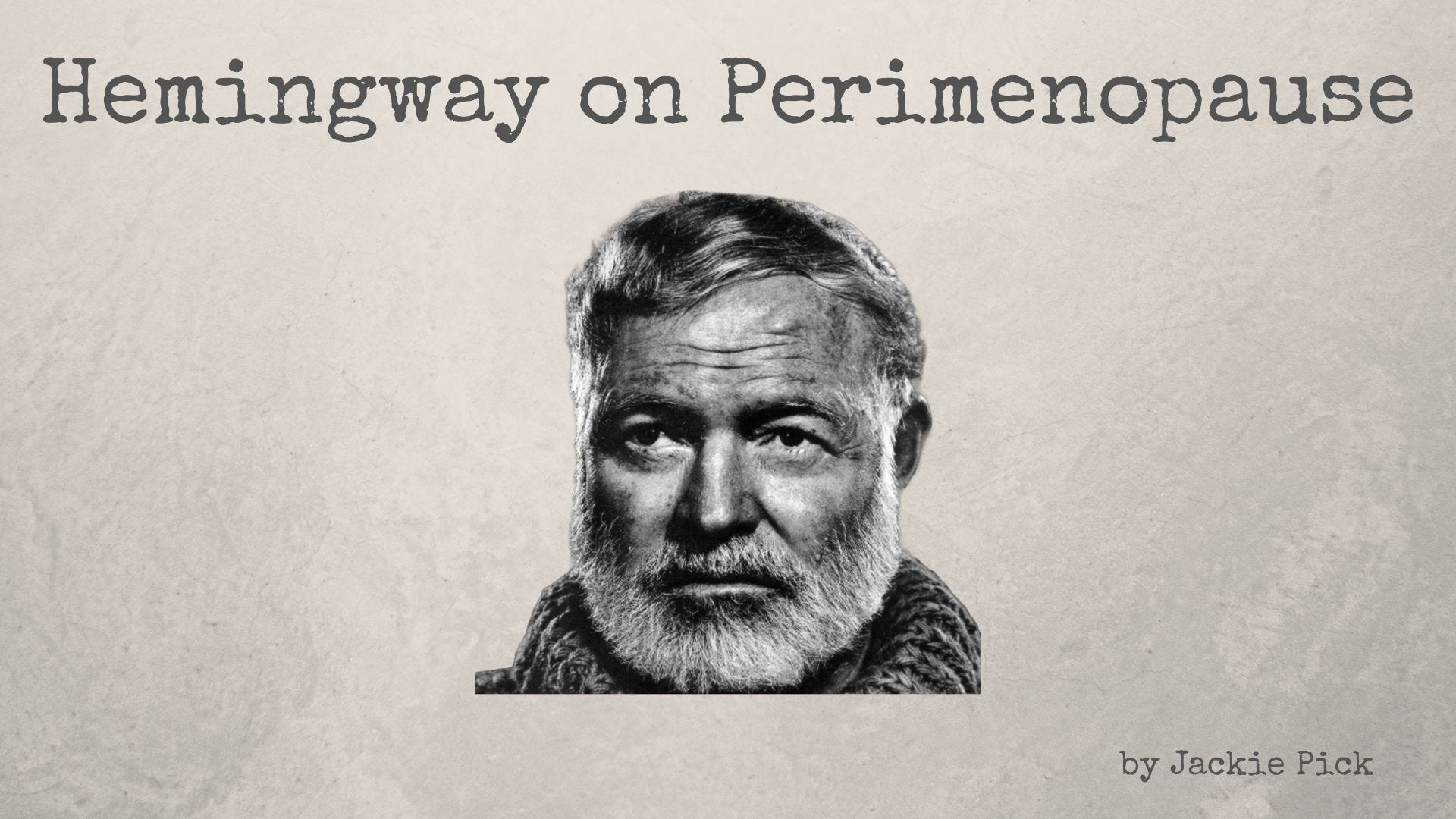
I have hunted lions. I have watched the sun rise on days when I was certain the world was ending and drunk enough whiskey to be sure of it. I have fought against the marlin, an enormous wet metaphor for my masculinity.
All of it was nothing compared to perimenopause.
I am a man, a matter of some regret in this context. I have observed and made notes. They are incomplete, as all honest accounts are.
It is unknowable, this Red Ledger of Womanhood, but I will explain it anyway.
Perimenopause, a word with too many vowels, is from the Latin for “the threshold between fertility and glorious cronehood.” It is a time when ovaries, like exhausted grenadiers, abandon their post and estrogen evaporates. Much like absinthe, for which it is also time.
Don’t bother deciphering if it’s happening or not happening. Most things halfway happen. You will know when you find yourself crying inexplicably in the grocery store as “Landslide” plays.
Having set down my credentials plainly, it remains only to tell you how it is in the borderlands between the era of spring-loaded hormones and the years that follow, which are less buoyant by degrees.
These are the things that must be endured:
Insomnia: The nights are the first to betray you. You will lie awake counting your regrets and your nemeses as a fisherman counts his catch, except you will throw nothing back. In the mornings you will feel like you’ve been hollowed out with a grapefruit spoon.
Bleeding: It will happen without pattern or mercy. It will lull you into complacency, then strike with malice. Like when you’re on your boss’s white office sofa. Do not speak of it to your boss. They can only pretend not to notice, and the awkwardness is yours alone. Soon enough, you will get to not miss this.
Hot flashes: A traitorous inner furnace ignites when you least expect it, which is to say, always. You will feel a powerful urge to strip naked in public and become visibly furious at the air. There is no dignified way to do this.
Moods: They will rise and fall like monsoon squalls. You will slam doors, then return and apologize. You will disassociate as the dermatologist removes questionable moles. You will bellow at the toaster if its settings are untrue. Know you are not hurtling toward operatic collapse. Probably.
Carousel of Other Indignities: Everything negative and mysterious you experience from now on is perimenopause. Physical discomfort. Metabolic chaos. That asshole who cut you off in traffic. Thinning hair. Itchy earlobes. People telling you to “let that sink in.” The betrayal of your bladder when you sneeze. Chi-Chi’s vague promise to reopen. Anything that causes the urge to hurl a shoe at someone indiscreetly.
You will seek a system to manage it all. It will fail because everything happens anyway. You will be tempted to try yoga, catalogue your ordeals in a leather-bound journal, or fill your online shopping cart with items terrible and proud.
Do none of this. If you must, cry behind a rack of discounted shapewear at T.J. Maxx. They’ve seen it all at T.J. Maxx. Just do not purchase the waist cincher. You will despise it.
Steel your resolve and proceed.
I hope to leave you with something other than recommendations to age gracefully. Perhaps punch a sandbag and, as you enter this season of dissolving composure, remember: it will pass.
When? A few months. A decade. Maybe longer than Friends, certainly not longer than Grey’s Anatomy. Don’t try to track it. Uncertainty is part of the process.
I warn you so you won’t be startled when chin hairs sprout like a cursed harvest. Fortunately, the forgetting will also begin, and you’ll be left holding tweezers. You will tweeze nothing. You will remember again when you touch your chin and wonder when you became late 1970s Barry Gibb. Those colorless bastards will be nearly impossible to remove. Your eyesight will also have gone to shit.
The point is, this is not the end of all things. Soon enough you will be alone with your pulse and the knowledge that no part of you was ever permanent except that tattoo you got one ill-fated evening with a guy known only as “Little Bowser.”
Perimenopause is natural. Also intolerable. This is the paradox you will ponder as you cry under the Zombie Wasteland Sewer Tunnel at any given Spirit Halloween.
That is the sum of it.
Now go and swoop through the world like a hormonally-imbalanced falcon, taking sweaty dominion over it all.
This was one of those months when books held fast and made claims on a corner of my inner world. It’s cramped in there and I probably should Marie Kondo the place, but for now, these books are welcome to squat in my brain corners and bring me joy.
This was not just a “hey, nice book” kind of month, but the kind where at least two of these are straight-up shoe-ins for my end-of-year Best Of list.
The silvery thread binding these books together is that they are all about the act of storytelling, how sometimes that’s the only way to get through. Or in. Or out.
I’ve been reshaped by these works.
Which is all just to say these are the books that I enjoyed enough to finish in the last month:
If you’re going to take on Twain, you’d better bring the goods.
Percival Everett not only brings the goods, the whole goods, and nothing but the goods — he delivers them with such unapologetic brilliance that you’ll find yourself wondering, ‘How has no one done this before?’ And then you realize — no one else could have done this.
I am thunderstruck.
James is not merely a retelling of Adventures of Huckleberry Finn, it’s a complete reimagining where Jim — now James — steps into the center of the narrative. He is now a man with his own inner life, vibrant with intellect and grappling with the cruel complexities of his life. Cerebral, flawed, painfully conscious of what it means to exist in his circumstances, James becomes a moral force.
Everett critiques both the historical portrayal of Jim in Twain’s original work and contemporary issues of race. The narrative blends humor, satire, pathos, and sharp commentary, with James often confronting his situation with a deep sense of survival, wit, and profound love for his family. It’s brutal and beautiful and fresh.
I marveled at the fullness of James as a character. He is no longer a sidekick, no longer just a figure for Huck to bounce off. He’s no “Mary Sue,” either. He’s deeply human. If this book isn’t immediately welcomed into the American Canon, I’m not sure what would be.
There’s also a lot of philosophy thrown in there because YEAH, THERE IS. And it works. Some folks have expressed displeasure with how the book’s toe-dips into farce seem abrupt. Welcome to literature. Think of it like a journey. A journey on a river of some sort. Where there are twists and turns and sometimes the river is gentle and sometimes… Do we see where I’m going with this?
This is a genre-bending boundary-pusher for sure, and any liberties it takes with the original story are just and satisfying. To tackle Twain requires a certain audacity, and to succeed requires genius. Everett has both in abundance.
There is no doubt that schools will use this as a parallel text when studying Adventures of Huckleberry Finn.
There is also no doubt this will be on my Best Of 2024 list.
All towns should have a bookstore, don’t you think?
Island bookstore owner A.J. Fikry is definitely not having the time of his life. Grieving the loss of his wife, struggling to keep his bookstore afloat, self-medicating, bereft of passion and connection. However — hooray! — everything begins changing when a toddler is left in his bookstore. What follows are not thunderous events but a soft, deliberate opening of life.
This is a novel about a community only as flawed and fragile as the people within it, and A.J.’s bookstore becomes the fulcrum for everything: grief, love, indiscretions, second chances. It’s life, piece by tangled piece.
Perhaps by dint of being set in a bookstore, the book celebrates not just the joy of reading but the necessity of it. This sweet novel is a love letter to books, bookstores, and the communities that form around them. It’s well-paced, though it takes a few big leaps in time that might make you a little woozy. Still, the storytelling works beautifully. Zevin is deeply respectful of and never underestimates her audience, a skill also showcased in her Tomorrow, and Tomorrow, and Tomorrow. Zevin’s storytelling is tight and purposeful — there’s not a wasted word or superfluous scene. Every moment builds A.J.’s world and relationships, while also pulling the reader into the life of the bookstore and town, stitched together by books.
The quirky main and secondary characters feel like they’ve stepped out of an exceptionally good sitcom — believable, loveable, and tinged with just enough sorrow to avoid being treacly. Literary references throughout the novel are sweet treats, and A.J.’s book notes are lovely touches. It eventually is made clear who these notes are for and how they tie into the plot, which made me hug the book to my chest. Yes, I’m weird. It’s fine.
Ultimately, The Storied Life of A.J. Fikry is a love story. I’ve said before that all stories are love stories. This one isn’t sappy, disappointing, or cynical. Neither are real jaw-dropping twists here; instead, the story unfolds in small, quiet ways. This book may not cause you to bolt upright, but little moments you enjoyed will stay with you long after you’ve finished.
Zevin’s writing is self-assured, and she trusts the reader to keep up and fill in the gaps. It’s zippy. It’s wackadoo. And it’s a reminder that sometimes, a good book — and a good life — are about those quiet, small moments that happen when you crack things open.
It’s hygge at its finest.
All stories should come with a bookstore, don’t you think? After all, “a place ain’t a place without a bookstore.”
In Michigan earlier this year, I picked up a bag of Limited Edition Cherry Barbecue potato chips. (Stay with me.) They were…peculiar. Sweet, spicy, not quite balanced, all in a way that made me go, “What is happening?” I wasn’t even sure if I liked them. But two sittings later? Gone. Gone like yesterday’s regrets. And here’s the kicker: I’d eat those weird-a$$ chips again fistful by fistful in a heartbeat.
This was not unlike reading Nothing to See Here by Kevin Wilson. At first, it’s strange. This cannot hold up. But it does. You keep reading. You’re hooked. And suddenly you’ve finished the book, wondering what just happened and, more importantly, HOW DID THAT WORK AND WHERE CAN YOU GET MORE?
And by “you” I mean “me.”
I’d read this weird-a$$ book again in a heartbeat.
(*extreme Stefon voice*) Nothing to See Here has (almost) everything — friendship, responsibility, and spontaneous human combustion. It’s strange, dark, and hilarious. Wilson somehow makes these fire children funny and tragic all at once. They’re weird, the narrator is weird. It’s all weird and it works.
After reading a string of heavy, intense novels, Nothing to See Here gave me literary whiplash. Let me tell you, though, I love a funny book that writes its own rules, that’s wholly original, and doesn’t feel like it’s trying too hard to be ultra-cool or different. It just is. Wilson pulls this off.
Our narrator, Lillian, is sharp-tongued, jaded, and just messed up enough to carry a story. She may be even a little much…her vocal fry practically buzzes off the page. And I couldn’t get enough of her.
If I have one complaint, it’s that I wanted just a bit more at the end. A glimmer of what’s next, a sense of where these characters might land after the final page. But then again, that’s life, right? Stories don’t always wrap up neatly.
And that’s the thing — the story Lillian believes about herself is one of failure — she’s convinced that a mistake in high school sealed her fate as a woman with no prospects. Caring for these kids forces her to rewrite that story, imagining herself as someone capable of love and responsibility. Madison, the children’s mother and Lillian’s high school friend, on the other hand, has crafted a flawless public image. Both women’s stories are their emotional shields until they’re forced to confront the truth.
The children’s story is different — they’ve been treated like secrets, their combustive condition dismissed or explained away by crackpot theories. Wilson handles all this with great humor and pathos. It’s crackers and I felt like it shouldn’t work, but good grief, I devoured the book in two sittings.
Can outrageously great writing elevate an otherwise good book? Yes, it can. Exhibits A and B: Yes, it can. Exhibits A and B:
“You don’t believe the sky is falling until a chunk of it falls on you.”
“You’d be surprised how quickly the mind goes soggy in the absence of other people. One person alone is not a full person: we exist in relation to others. I was one person: I risked becoming no person.”
Atwood’s writing remains as sharp as ever, resulting in The Testaments punching above its weight. Did I love it as much as The Handmaid’s Tale? No. The Testaments feels a little like a victory lap, more epilogue than continuation, an attempt to close open loops.
The story picks up 15 years after The Handmaid’s Tale, with three narrators: Aunt Lydia (yes, the one we know and loathe), plus two new characters — Agnes, a Gilead-born girl, and Daisy, a Canadian teenager. Credit where it’s due — Atwood gifts each with a voice that feels real.
Aunt Lydia’s chapters were my favorites. We learn more about Gilead’s power structures and Lydia’s own twisted brand of resistance. Meanwhile, Agnes and Daisy get tangled up in a plot to take down the regime. The stakes are high…or should be. Lydia is fascinating — a judge turned ruthless enforcer turned murkily-motivated saboteur — but I wanted more of the internal fallout as she took on those roles. I WANT MORE RECKONING, please and thank you.
Maybe that’s the point. Maybe Atwood is telling us that authoritarianism rots you from the inside — and that Lydia, like the rest of us, is susceptible and sometimes their fates aren’t satisfying. But oof, I wanted to see more of that rot unfold on the page.
The two teens’ intertwined stories had some moments — like hearing about young brides-to-be inside Gilead — but the stakes didn’t quite hit the way they did in The Handmaid’s Tale. The glimpses of life outside Gilead didn’t pack quite the punch I was hoping for.
Am I unfairly holding The Testaments up to an impossible standard? MAYBE. I wanted more machinations, more urgency, more visceral danger, more fire. The story felt pale next to the original, and the big “reveal” at the end didn’t quite land.
Or maybe I’m numbed because *mumbles something about 2024.*
Honestly, I’d have loved this to be only Aunt Lydia’s story from start to finish (bring in the teens, sure, but through her eyes.)
That being said, there were enough satisfying moments to answer a few lingering questions left over from The Handmaid’s Tale and for me to finish the book (and I’m quite brilliant at not finishing books.)
A worthwhile read for Atwood fans — fanatical and casual.
The Things They Carried by Tim O’Brien
My boys and I read this at the same time. Them for class, me for connection. This is not a book one reads for pleasure, but it is a reminder that sometimes a great book stops being a story and becomes a reflection.
The Things They Carried by Tim O’Brien is a collection of twenty-two interconnected short stories revolving around a platoon of American soldiers during the Vietnam War and the literal and emotional burdens each soldier carries, if only to remember they are human.
This is a demanding read — not because it’s obtuse or buried in authorial swoops and swirls, but because O’Brien splays himself open, unblinkingly and with an honesty that begs for his precise language.
O’Brien uses a blend of autobiographical details and fictionalization to share stories of the haunting complexities of war and its aftermath.
One of the central themes is storytelling — how stories help people cope, give meaning to their experiences, and preserve memory. O’Brien uses his characters to explore the meaning of truth in both war and writing, especially during and after times of extreme conflict. Against this backdrop, we witness (sometimes unwillingly) the worst and best of human nature. It is deep and disturbing, and hoo boy, did it earn its status as a finalist for the Pulitzer.
Read this when you are in a place to do so, if only because the writing and structure are elegant and majestic. But also, read it when you can stomach the violence and sorrow. The title story may be one of the best-crafted pieces I’ve ever read. The non-linear organization of the book is a lot like memory itself — asynchronous, spiraling, sometimes perseverating, sometimes rushing ahead because that’s the only speed one can self-preserve and still tell the truth. But ultimately, even that rushing is just procrastination from confronting the inevitable.
This is also most definitely going on my Best Of 2024 list.
![Invisible Man (Edition 2) by Ellison, Ralph [Paperback(1995£©]](https://substackcdn.com/image/fetch/$s_!Flyk!,f_auto,q_auto:good,fl_progressive:steep/https%3A%2F%2Fsubstack-post-media.s3.amazonaws.com%2Fpublic%2Fimages%2F8835cbae-0dba-4190-9a6c-825de13ed628_141x218.jpeg "Invisible Man (Edition 2) by Ellison, Ralph [Paperback(1995£©]")

 Jackie Pick