Jackie Pick is a former teacher and current writer living in the Chicago area. She is a contributing author to multiple anthologies, including Multiples Illuminated, So Glad They Told Me: Women Get Real about Motherhood, Here in the Middle, as well as the and the literary magazines The Sun and Selfish. She received Honorable Mention from the Mark Twain House and Museum for her entry in the Royal Nonesuch Humor Writing Competition. Jackie is a contributing writer at Humor Outcasts, and her essays have been featured on various online sites including McSweeney's, Belladonna Comedy, Mamalode, The HerStories Project, and Scary Mommy. A graduate of the University of Chicago and Northwestern University, Jackie is co-creator and co-writer of the award-winning short film Fixed Up, and a proud member of the 2017 Chicago cast of Listen To Your Mother.
I am of the firm belief you do not ask someone when they are due unless you can see the baby crowning. Likewise, you don’t ask a writer how the novel is going.
We don’t know.
Besides, we’re not supposed to talk about it. We’re supposed to keep our big mouths shut and let the work speak for itself. Ideally after we’ve emerged from a volcano with a manuscript, multiple offers from agents, and severely chapped lips.
But here I am talking about it because apparently I’ve reached the part of writing a novel where I start peeling my skin off like a baked potato and handing it to the internet. Please acknowledge this. It’s covered in salt.
This is my third attempt at writing this novel. Not a third draft. I mean I’ve started over from scratch twice.
The first attempt took years to not finish. Entire children were conceived, born, and sent to preschool in less time. It was an accomplishment in the way that keeping your maternity underwear long after your youngest is complaining about their orthodontia is an accomplishment.
The second attempt was a rebound. A creative fling with all the structure of a failed soufflé and the range of a doorbell chime.
What pushed me into this third attempt was that the first two were steeped in political satire born of deeply unfunny, relentless real-life headlines. The world refused to cooperate. After a while, it felt like writing from inside a sealed flaming trash compactor. I do not enjoy such things.
Around that time, people who actually read books started asking for recommendations with an almost universal plea: “Something fun. Something smart.Something I can get lost in.”
And I thought, YES, SAME, PLEASE, and also, Hey, maybe I can build that place.
I already tell people to get lost all the time. Maybe I should help them do it.
So I started again and quickly finished a draft. It has legs. Newborn giraffe legs, but legs nonetheless.
“Great! So you’ve written a book!”
Oooh, no. I’ve written a draft. This is different from writing a book. A draft is a long, disorganized document that’s too done to be a total mess, and too messy to be anything else.
You know how people refer to airports as “liminal spaces”? My draft is an airport Chili’s.
There’s always revision, though.
People love to talk about revision. They use words like “refinement,” “clarity,” and “where the magic happens.”
Huh.
My revision process, such as it is, involves rereading what I’ve written and muttering, “What is this?” and “Who did this to me?” Plotlines open politely, never to return. Characters introduce themselves, say something baffling, then wander off towards Act Three. Entire pages seem to have been written while I was concussed.
Still, I persist…mostly because I’ve told too many people that I’m writing a book and now I’m trapped. There’s no going back. I either have to finish it or fake my death.
Writing a novel is mostly problem-solving, which is to say, it’s discovering that you are the problem. You move scenes around like furniture in a rental apartment. You convince yourself that having a refrigerator in the bathroom is fine, ignore it. Then you reread it and have to lie down.
I am told by people with better outlooks that this is all part of the process.
“It’s good to question your choices. Writing is about discovery!”
Maybe so. But when they say “discovery,” they mean it like spiritual growth. I mean it like accidentally finding a family of bonobos in the linen closet.
This is not my process. Those people are untrustworthy.
“Oh yeah, Smartmouth? What’s your process?”
Excuse me. Do you also ask a person tripping down stairs what their choreography is?
I mean:I sit. I write. Quietly. Irritably. Daily, if possible.
There will be a book. Sooner rather than later.
It’ll be as smart and as fun as I can make it. Something people can get lost in.
And one day, I’ll admit I’m enjoying the whole rotten process.
Until then, if you ask how it’s going, the answer is “Fine.”
This month, I tried to read books that, strictly speaking, weren’t about the world ending in fire, bureaucracy, or vibes. Not because I believe the world isn’t decomposing in full view — it is, and with remarkable enthusiasm — but because I am occasionally tired of being reminded.
I didn’t consume books like they were rations in a bunker. I didn’t read to survive. I read to live. And it was exactly what my overtaxed little brain needed. Books full of humor, weirdness, and sharp little elbows jabbing at the ribs of reality. Did the world behave better as a result? Nope. But these books at least did not add to the noise. They were entertaining. Intelligent. Occasionally infuriating.
You know. Worthwhile.
Can I connect them all thematically? Ha. Obviously. That’s what we do here. Let’s lay them out like tea leaves spilled across a summoning circle and see what dark magic swirls out.
If there’s a thread among these books, it’s not tone or genre. It’s attitude. These are books written by and for people who look at the world and say, “I don’t think so.” Books that side-eye the system, question reality, and refuse to take their elbows off the table.
They are books for people who suspect that reality (like most things) has been poorly edited, and that it’s entirely reasonable to rewrite it.
If you’re looking for polite stories about polite people doing what they’re told, you’ll find none of that here.
Which is all just to say these are the books I enjoyed enough to finish in the last month:
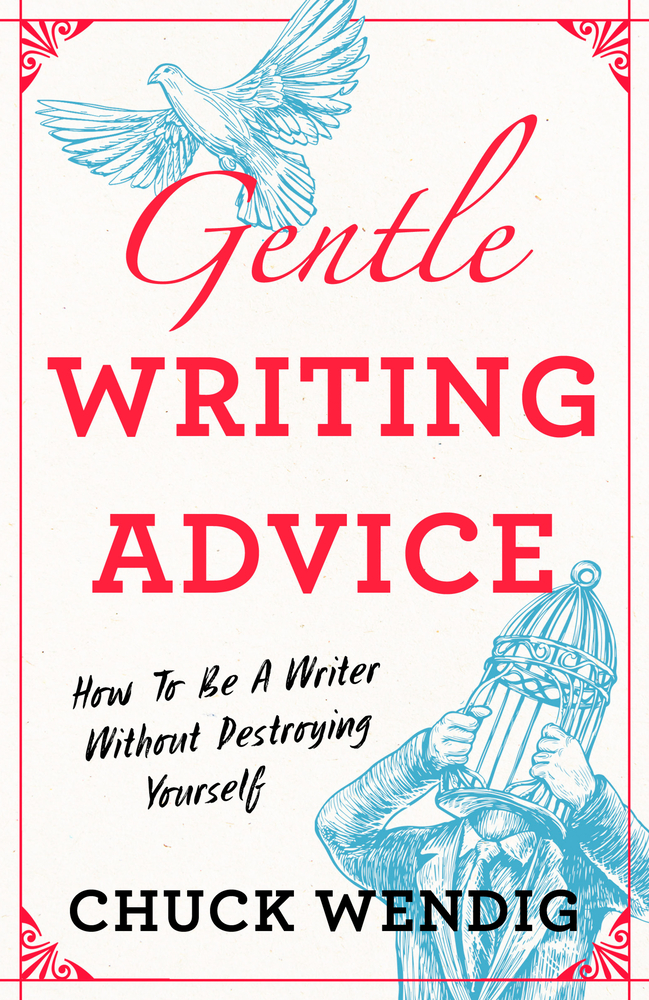
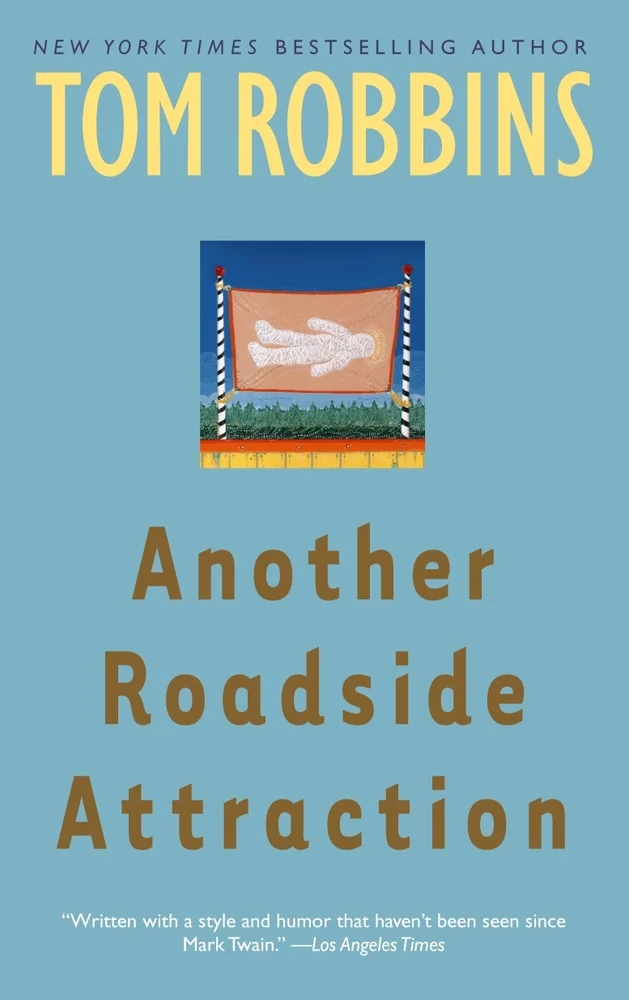
Alice In Wonderland/Through the Looking Glass by Lewis Carroll Gentle Writing Advice by Chuck Wendig Another Roadside Attraction by Tom Robbins Joan of Miami by A. Parrish
Lewis Carroll’s Alice’s Adventures in Wonderland and its companion novel, Through the Looking-Glass, form an enduringly strange and brilliant duology. These tales are far more than whimsical romps through fantastical lands — they are surrealist puzzles, philosophical playgrounds, and cultural mirrors that continue to enchant and perplex readers of all ages.
Though often lumped together, Alice’s Adventures in Wonderland and Through the Looking-Glass have distinct tones and structures. Both follow Alice, a sensible girl dropped into thoroughly nonsensical worlds: first through a rabbit hole into the chaotic dream-logic of Wonderland, then through a mirror into a more structured, chessboard-like realm. Wonderland is a tumbling disorder full of talking animals, shifting rules, and queens obsessed with beheadings, while Looking-Glass is more of a surreal thought experiment, populated by living poetry, mirrored rules, and unsettling nursery rhyme characters. If the first is all riddles and reversals, the second feels like an upward climb toward queenship, meaning, and a strange kind of self-awareness. Both show worlds run by folks who absolutely should not be running the world. Through it all, Alice is as polite as she can be.
Carroll’s characters are unforgettable weirdos who’ve pitched tents in the collective unconscious. From the fretful White Rabbit and the cryptic Cheshire Cat to the haughty Red Queen and the delightfully befuddled Tweedledee and Tweedledum, each figure feels both iconic and symbolic. Some represent the adult world’s hypocrisy, others embody logical paradoxes or childhood anxieties. Their nonsensical dialogue is often razor-sharp satire disguised as silliness. They are real in that sideways way. They’re not metaphors, they are archetypes of dysfunction. And Alice, when she doesn’t outright defeat them, walks away.
Though often labeled children’s stories, these books are subversive and complex. Carroll’s background as a mathematician shines through in his love of paradox and his relentless wordplay as the engine of the narrative. Logic, grammar, and social norms are constantly upended. Alice isn’t just navigating strange places; she’s navigating meaning itself. The poems, puns, and riddles twist language until it starts to resemble something closer to truth — or at least, a more honest kind of nonsense. Carroll games the English language like an old pinball machine and never tilts.
And it works because Carroll seems to understand better than most that language is a power tool. Or a tool of power. Either way, people in power often speak the most nonsense with the greatest confidence.
Alice is a triumphant protagonist: curious, skeptical, occasionally indignant, and deeply grounded in a child’s sense of fairness and reason. She’s not a wide-eyed innocent but a sharp observer who meets absurdity with exasperation rather than awe, making her the voice of reason in a world that gleefully resists it. Neither helpless nor perfect, she holds her own against the madness. In doing so, she becomes the grounding force that allows the books to spiral, twist, and tumble without losing their center.
Alice is just trying to make sense of it all, get to where she thinks she should go, and make some friends along the way without getting her head bitten (or chopped) off.
Aren’t we all?
These books endure because they resist a single interpretation. They can be read as nonsense or satire, fantasy or dreamscape, children’s story or commentary on Victorian society — or all of these at once. Carroll invites readers into a world where nothing is fixed, and that openness keeps Alice fresh with each reread.
Together, Alice’s Adventures in Wonderland and Through the Looking-Glass are strange, clever, disorienting, and absolutely iconic for reasons that are both obvious and, frankly, impossible to explain. They remind us that logic can be silly, that childhood contains profound insight, and that language itself is a kind of magic.
If you’re willing to wander, they’ll take you somewhere worth going.
How to Be a Writer Without Coming Entirely Unglued
Writing advice is usually:
Agonizingly Practical (“Use a timer, a color-coded scene-by-scene spreadsheet, and an accountability partner with a whistle and cocked eyebrow.”)
Fussily Prescriptive (“Make sure your protagonist’s internal arc adheres to all twelve stages of the Hero’s Journey and Save the Cat, then read the entire Western Canon [preferably in the original languages] before attempting dialogue.”)
Completely Bananas (“Lie in damp grass, arch your feet, and listen for the ghost of Virginia Woolf to whisper your story into the mist.”)
Oh ho! But there’s another category: advice that isn’t so much instruction as permission. Permission to be weird. Permission to be lost. Permission to not write for a while, or write badly, or want to burn everything down and start a goat farm.
This category is usually where the good stuff is.
Cue Chuck Wendig.
Gentle Writing Advice: How to Be a Writer Without Destroying Yourself is, in theory, a craft book. But in reality, it’s an exploration of “Why Bother?” in the best sense. It’s also hysterical, intelligent, and surprisingly tender in a way that makes you realize halfway through a solid joke about Comic Sans that you’re actually crying. Or writing your next book. Or both.
I am a — well, not firm believer, but a somewhat jiggly, Jell-O-level believer — that writing expertise is mostly a slippery reflection of what we’ve already done. For example, I am an expert on my most recent dumb social media joke, my last published piece, and my last writing disaster (unpublished, thank goodness). That’s the résumé. And yet, like everyone else, I want the hacks. The tricks. The hacks about the tricks.
But what we really want is reassurance that we’re capable, we’ll find our voice (again or ever), and our messiness doesn’t disqualify us from making something good. We want to laugh at ourselves and fiercely believe in ourselves. We want someone to tell us how to be confident and vulnerable and brave and realistic and gentle and productive and very specifically address the spiral of concerns we have about that one unfinished essay that haunts us like a ghost in a hoodie sitting in the corner of our writing space playing the recorder.
Chuck Wendig gets that. (The need-for-reassurance part, not the recorder-playing-ghost part. I hope.)
Note: Yes, the title says “gentle,” but he’s saucy and foul-mouthed, and his words come at you rat-a-tat-tat. And then, like most saucy, hilarious, foul-mouthed people, he lets the mushy, empathetic core out.
In the introduction, Wendig warns us: “Writing advice is bullshit. But bullshit fertilizes.”
Unfortunately, this is very good advice.
He takes aim at the MFA-ified “listen to the clouds” advice that dominates traditional literary circles. Not because it’s wrong, but because it doesn’t always speak to the chaos-writing many of us do in the margins of our lives. We, the 4 AM Scribblers.
Please consider this book if only for the footnotes. (See page 8 for one that made me snort my coffee). Chapter 5, “Self-Care for Writers,” contains a section on shame that I desperately needed, along with perhaps one of the most resonant pieces of writing advice I’ve ever heard:
“Self-care sometimes means limiting people’s access to you.”
This funny, sweary, generous writing guide believes in you. It’s vulnerable because it knows you are, too. It’s strong because it’s built to help you keep going. Gentle Writing Advice connects us to something inside ourselves that still believes in trying.
And honestly? I’m happy Wendig and I live in the same timeline. (I think. The man gives strong “slides between dimensions on Tuesdays” energy.)
Absurdist fiction / countercultural theology / metaphysical hot dog stand
Let me begin by saying that I do not believe in roadside attractions. I believe in roads. I believe in destinations. I believe in stopping only when absolutely necessary: for example, when a building is on fire, or when someone is waving at you to prevent you from driving into a sinkhole.
Roadside attractions, as a concept, suggest you are not already where you’re meant to be.
Which also describes this novel.
Another Roadside Attraction is Tom Robbins’s debut novel, and it comes in HOT. The plot, such as it is, is something like: a clairvoyant ex-circus performer named Amanda and her musician/tightrope-walking husband John Paul open a roadside hot dog stand that is also a museum of weirdness. They are joined by a scientist/drifter/occasional scold named Marx Marvelous and an ex-CIA operative named Plucky Purcell who steals the mummified body of Jesus Christ. What follows is a swirl of theology, sex, and philosophy.
If you’ve ever read a book and hoped there was at least one pet baboon in it, you’re in luck.
The prose is a study in excesses. Robbins unleashes language upon the reader. His sentences somersault and flirt, then rest. Even when it’s too much — and it often is — it’s never boring.
The characters are archetypes in tie-dye, full of delightfully implausible wisdom and nonsense. Amanda, especially, is the grandmother of every mystic dream girl in contemporary fiction. Yes, radiant, but also written in that “male-gaze-mystical-fertility-goddess of the 70s” way. (although, to be fair, her agency and internal logic are more developed than “archetype” implies.) John Paul is a philosophical foil with a man bun before man buns were a thing. Robbins clearly adores his characters and seems to write them with a loving sense of “You’re fabulous, go be free.”
This book does not ask for permission to be weird. It takes swings at organized religion, capitalism, science, mysticism, and the entire notion of polite fiction.
As one character puts it: “Real courage is risking one’s clichés.”
Robbins risks every cliché. And that is fun. He has big, unwieldy, thought-provoking, and possibly unwashed ideas.
Overall, however, the book felt pseudo…something. Philosophical? Poetic? Literary? Infectious? Familiar? Challenging?
Perhaps that is due to the writing style, which felt relentless. It is metaphor-as-worldview. Or at least as a hallucinogenic window to a worldview. If you’re in the mood, it’s delicious. If you’re not, it feels like being sea-lioned by someone in a fedora who wants to “explain” how you’ve misunderstood greatness by just asking questions. A different editor, perhaps, might have been warranted.
And yes, the book is extremely of its time, and it may be possible to get a contact high off of some of the passages.
Don’t read Another Roadside Attraction for plot. Read it for the ride. For the glittering, overgrown language. For the absurdity and the sincere questioning. For a bygone world that’s falling apart but bringing forth a whiff of patchouli and old truths. It’s for all of us weird kids.
And here’s the thing: Despite all that, I feel largely indifferent about Another Roadside Attraction, and I think Robbins, were he to float by on a peyote-scented cloud, might actually be fine with that. This isn’t a book that begs to be loved by everyone. It’s not tidy — it’s not even particularly clear — and it’s not universal. It’s certainly not a relaxing tale.
This book is not normal.
A not-normal book doesn’t necessarily need adoration. It just needs you to walk through it once, eyes open, and maybe leave a little differently than you arrived. You may even end up admiring it, as I did.
It’s an ambitious book and, to its credit, entertaining while committed to the radical notion that a young woman with opinions might actually change the world.
Read any good books lately? Let me know in the comments!
History is fading, the sea is rising, and a turtle is unimpressed.
Some months, the books are books. Story. Characters. Distinct pleasures.
And then there are months where books refuse to stay in their lanes. They start talking to each other, or maybe through each other. Suddenly the tidy book stack turns into a narrative séance. Ghosts, toddlers, bureaucrats, broken systems, family myths, fractured timelines, fractured time.
Oh, I had questions. What does memory preserve, and what does it redact at convenience? Are stories fixed or quantum? Can language hold sacred when everything else falls apart?
MAYBE.
These five books lurch, loop, and rebuild themselves mid-stride. A girl travels across water and time. A man folds a stranger’s laundry. A mother dies, a child is inherited. Many of these books refuse the ease of a beginning, middle, and end. Some worry about the end of the world. Others worry about surviving the day. Most do both. It all means something or quite emphatically does not.
Memory shows up as both myth and mortar. While ghosts linger and names slip, fragile truth cracks. Growing up and growing old involve figuring out what we owe each other now and in the future (and in some cases, the past). The answers are words shared or withheld and often wrapped in grief.
As shown in these five books, those words, expressed or not, recommend a deep belief in storytelling as lifeboat and anchor. When systems fail and the world turns sideways, people build stories from scraps. That’s how humans get on with this whole business. It may be the only way.
Violence still hums underneath, of course. We’re human after all.
Every story here is about surviving damage.
That can be draining. Worth it? Yes. Still, I’m hoping to gift myself some lighter April reads. But who knows? Haphazard book-choosing is haphazard, as absolutely no one says.
Also, somehow, I read two climate apocalypse novels this month. One would’ve been sufficient. Two feels pointed.
Aaaand, one book does indeed have a talking turtle. The turtle has opinions. Heed the turtle.
Which is all just to say these are the books that I enjoyed enough to finish in the last month.
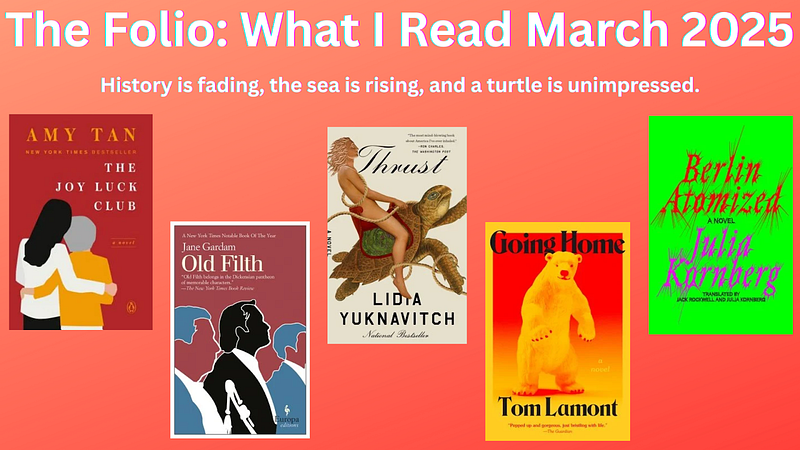
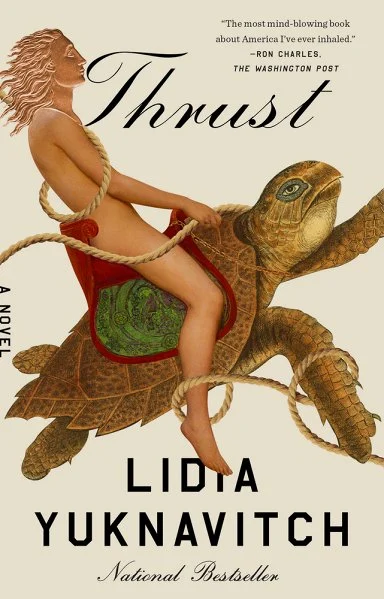
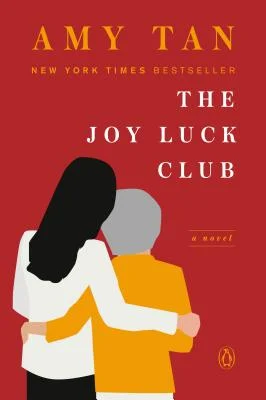
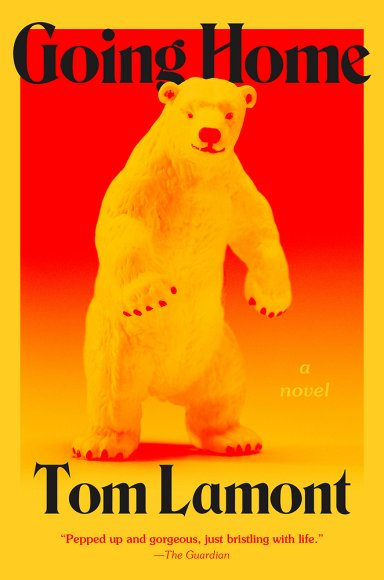
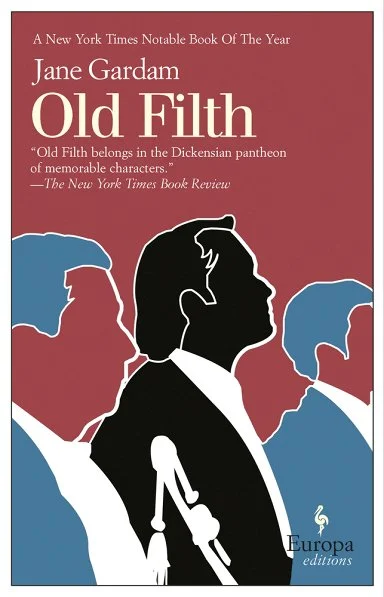
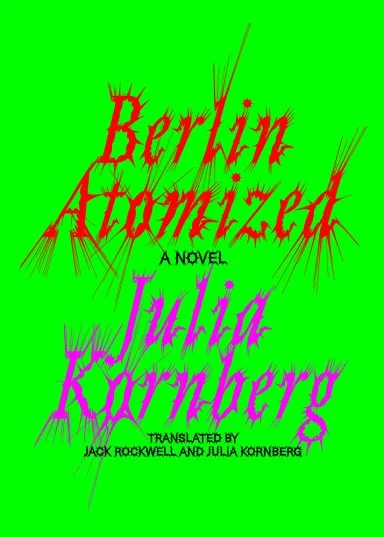
Thrust by Lidia Yuknavitch The Joy Luck Club by Amy Tan Going Home by Tom Lamont Old Filth by Jane Gardam Berlin Atomized by Julia Kornberg
Beautiful, brutal, and shouldn’t make sense, but does
If you pick up a novel hoping for relaxation or comfort, you might want to reconsider Thrust by Lidia Yuknavitch. This is not comfort reading. It’s barely even comfortable reading.
HOWEVER, Thrust is a tsunami wrapped in poetry. Beautiful, brutal, and shouldn’t make sense, but does. Yuknavitch does not shy away from complexity or discomfort, and here she plunges us headlong into narrative that defies ease. It’s a story full of place and people dissolving and somehow still fighting to create something that feels like home and family.
I began Thrust without realizing it was set in a future defined by climate catastrophe. It took a bit of time to get my bearings with the structure of the book and the fantastical elements, but somewhere around page 48, I stopped trying to grip the story and let it carry me. I did not so much sink into this book as hover over it, skeptical and fascinated and ultimately won over.
The story centers on Laisvė, a young girl gifted/burdened with the ability to glide across water and time. She slips between timelines from the Statue of Liberty’s assembly on America’s shore to an America drowning beneath rising seas and its own humanity. Society, it turns out, was always built on shaky ground, half-broken and desperate. Animals speak with her, and unsurprisingly, they have more sensible things to say about humanity than humans do. (Largely that humans may not have ever had our acts together.)
Structurally, the novel loops and swirls through time, memory, and identity with a complexity reminiscent of Cloud Atlas. Just…wetter.
Yuknavitch writes about characters who are lost in one way or another. Those who exist in the kinds of spaces society has reserved for those it cannot properly categorize or who it can categorize a little too glibly. She reminds us that identity, names, and history are slippery things. “I think humans are comforted by names isn’t that right?” a whale asks young Laisvė. “I think names and naming do matter a lot,” she replies. “Also, I think names can slip their meanings.” Profound, although not necessarily cheerful in or out of context.
It’s almost unfair how good Yuknavitch’s prose is. Lines such as, “She slept in pieces,” or “David let out the heaviest breath I’d ever heard, as if he were releasing a long, thick, coiled rope” hit in that way that can make a reader take a deep, respectful breath.
In the end, Thrust isn’t a snuggly read. It’s unsettling, powerful, and almost obnoxiously good. Yuknavitch writes like a time traveler with a flare gun.
“You will all die, too, is the thing. But you haven’t figured out how to make death-stories, and death-places, that have generative power.” And yet, Thrust is exactly that: a death-story, a life-story, and a hell of a ride.
The Joy Luck Club is like being invited to someone else’s emotionally loaded family dinner. One minute you’re trying to stay out of the competition over the side dishes, the next you’re knee-deep in decades-old grudges, unspoken secrets, and love wrapped in miscommunication. Tan serves carefully balanced portions of humor and tragedy, and before you know it, you’ve ingested more insight about your own family than you ever intended to when you told your friend you’d love to go.
I think I’ve exhausted the food metaphors for now. We’ll see.
The novel centers on four Chinese immigrant mothers and their American-born daughters as they work through and/or avoid tangles of memory, identity, and cultural translation. Told through interwoven stories, The Joy Luck Club shows how silence travels through generations just as surely as genetic or cultural traits. The mothers carry unspoken griefs and brutal histories; the daughters try to decode them while managing their own anxieties about expectations.
Tan’s prose is graceful and wry, lulling you in then quietly wrecking you with an underlying throb of the unsaid. Generational connection doesn’t always come from words, it comes from tone, from gesture, from knowing which part of a story was left out. This takes the characters (and, you know, folks in real life) sometimes decades to unravel, if they do at all.
I’m embarrassingly late to reading this. Tan writes with empathy and precision, and there’s a warm familiarity to each character. It’s as though you’ve met them before. Or maybe like you are one of them, depending on the day.
Tan is particularly good at capturing the vibrations between people who love each other but don’t quite know how to show it. It reads beautifully like a sort of emotional translation error. These mothers and daughters are just as estranged by their own efforts to protect, preserve, or forget as they are by language or culture differences. Tan doesn’t tidy that up, thankfully.
What’s striking is how much the book holds at once: war, motherhood, survival, pride, superstition, and kitchen-table psychology. The silences are golden. Not for the characters, necessarily, but definitely for the reader. The silences are earned and enhance rather than frustrate the reading.
The Joy Luck Club is about the things we carry, even when we don’t realize we’re carrying them. It’s a book built on rituals of care and memory. There is also no small amount of the kind of maternal judgment that reads like poetry when you’re ready for it but ooof, does it hit.
You’ll find a lot to love here, especially complicated family dynamics and deeply emotional prose with a light touch.
Tom Lamont’s Going Home opens so quietly you might think you’ve wandered into a long meditation on unrequited love and youthful navel-gazing. For a few early pages, I feared a descent into melodrama. But then the book begins a gentle and precise shift, and what emerges is something tender, funny, and clear-eyed: a lovely debut novel about surprise parenthood, fractured friendships, sandwich generations, and the quiet work of becoming someone others can count on.
The setup sounds like the first half of the first line of a joke — three men, a toddler, and a rabbi — but Lamont sidesteps trashy sitcom impulses. Téodor Erskine returns to his childhood town to care for Joel, the two-year-old son of his late friend (and unrequited love), Lia. Joel isn’t precocious, saccharine, or a plot device meant to teach a man how to feel. He simply exists, which makes him and the novel believable.
Téodor’s orbit includes three characters who, in lesser hands, would’ve been cardboard cutouts. His father is occasionally obstinate and struggles with aging. His friend Ben is impulsive and underbaked. And then there’s Sibyl, the newly arrived rabbi who faces particular challenges in her new community. She could have been reduced to the wise outsider trope, but Lamont gives her space and dignity, even if this is ultimately a story about men, and the emotional labor they’re rarely taught how to do.
Lamont writes male friendship without irony or overcorrection. There are no big ol’ bro-hugs or teary confessions under stadium lights. Just the quiet, complicated beauty of men trying, and sometimes failing, to show up.
The book shifts between perspectives, offering characters from the inside and the outside. This adds texture without feeling gimmicky. And while I didn’t tear through it, I didn’t want it to end either.
Most telling: I rooted for every single character. Even the ones who screwed up. Especially them. That’s rare. And while reading about parenting can be brutal (hello self-comparisons and quiet self-judgement!), Going Home reminds us that effort counts and that being trustworthy — or even just wanting to be — is a kind of grace.
Sure, a few threads tie up a little too neatly, but it’s a small quibble for something this warm, intelligent, and human.
Going Home is a gentle hand on the shoulder and a lovely read, but take note that there are moments of hardship and grief that are honestly portrayed.
When a friend (Hi Sadie!) recommends a book, one does not simply stroll to the library. One launches to the library like a caffeinated muppet, arms windmilling, breathlessly asking “DO YOU HAVE THE ONE WITH THE SAD BRITISH JUDGE.” And that is the story of how Jane Gardam’s Old Filth got into my grubby, windmilling, muppety hands. And then I sat with it. And reader, it sat back.
Old Filth reads not with a bang but with the heavy sigh of someone who’s seen too much war, too many port cities, too many fools, and at least one ghost of Empire. It is emotional shrapnel in a teacup and some witty conversation.
On the surface, it’s the story of a retired British barrister looking back on his life, but to leave it at that is like calling the ocean “damp.”
“Old Filth” stands for “Failed In London, Try Hong Kong.” A joke, sure, but also a code. Sir Edward Feathers is Old Filth. A widowed barrister and borderline representative of British restraint. But Gardam gives us the man: a Raj orphan shipped off to England, broken early, bandaged with decorum, built entirely out of Empire and repression. He is a lot. And a little. Mostly lonely.
The novel moves fluidly between past and present timelines. There’s class tension humming throughout, understated but sharp. At the end of his life, Feathers is a bookmark of another world.
Fear not, though, this story isn’t a slow-motion tragedy, thanks to British wit that slips in right when you think the whole scene might tip into something overwrought.
Feathers himself is a marvel of a character: infuriating, endearing, proper to the point of parody, and desperately alone. Through him, themes of closeness, intimacy, and patient survival ripple through the novel. There’s illness (Fevers! Bad bananas!) but it’s not a Victorian swoon-fest. It’s atmospheric dislocation and quite necessary.
Gardam’s prose is spare but piercing, and occasionally devastating. It’s not entirely a breezy read, but it’s generous. It reads like a Saturday afternoon on PBS, all history, dignity, a touch of mothballs and some sepia-toned scandal.
Maybe I’m too twitchy these days, what with *indicates the world with the muppet wildness engaged when first getting the book.* So I am a little restrained in my adoration, although unhesitant in my enjoyment. Maybe this book is an October book. Or an August-in-a-Hammock book. I’ll revisit it. And when I do, I’ll likely be the windmill-armed version of myself, full of adoration. This one will stand up to a second date, I am certain.
This is a grown-up, thoughtful, quietly brilliant novel, and it rewards a grown-up, thoughtful reader. This book doesn’t grab you by the eyeballs and scream “LOVE ME!” But it will move something in you that you didn’t know was still tender. It’s full of nuance and memory and wit so dry it could start a small fire.
The word atomized, once largely in the realm of physics or dystopian sci-fi, now feels like the most honest way to describe moving through the world. Not exploded, just broken down into parts. Julia Kornberg’s Berlin Atomized embodies it. Families are scattered, identity is poofed away, and narrative floats about and is pieced back together if you can trap it at all.
Berlin Atomized follows Goldstein siblings Nina, Jeremías, and Mateo, children raised in the unnervingly pristine gated community of Nordelta outside Buenos Aires. The novel opens in a world already broken. The poor have been politely removed, the landscape reshaped, and the wealthy moved in to build something that metaphorically functions like a luxury scented candle “Only those who were invited were allowed to enter,” we’re told. It’s a perfect setting for dislocation.
The siblings scatter eventually and in their own ways. Nina rituals her way through bathtubs and language; Jeremías seeks refuge in music; Mateo turns toward fire. Each is lost, or lawless, or both. All seem allergic to stability. All feel uncomfortable in their own skin.
The novel itself feels hot and unsettled, even though the whole thing is framed from the future. In 2063, childhood friend Angélica Oshiro is trying to reconstruct their lives from notes and fragments. The whole premise renders the story slightly and deliciously unreliable as she attempts this archival experiment from the kind of scraps that usually end up in a recycling bin or memoir.
Kornberg’s sentences are strange, straightforward, and sometimes slippery. The world may be falling apart (and yes, it’s another climate disaster novel), but these characters still try to exercise control in the way they know how: by naming, remembering, forgetting, floating, burning and bathing.
And underneath it all lies the question of Jewish identity. Berlin Atomized doesn’t put Jewishness at the forefront, but it’s there. All of the siblings are tinged by something ancestral, something broken and half-remembered. In an interview with the Los Angeles Review of Books, Kornberg said, “There’s a messianic aspect to Judaism that I really appreciate; the idea that you have to work to make the future better is very appealing and real to me.” The novel wrestles with that drive. It’s a kind of generative eschatology — what happens after the world ends, when you still have to get up and figure out who you are.
This is not a warm novel. But it isn’t cold, either. It’s precise. It’s not trying to be overly charming. Instead, it is deeply suspicious of comfort.
Berlin Atomized is beautifully and strangely built and slightly haunted. It’s a novel about people trying to assemble themselves from the pieces left behind. If you’ve ever wondered what’s holding your fragments together, this one is a must-read.
It’s messy in the way that trying to survive a world that doesn’t know what to do with you is messy.