Author: Jackie Pick

Jackie Pick is a former teacher and current writer living in the Chicago area. She is a contributing author to multiple anthologies, including Multiples Illuminated, So Glad They Told Me: Women Get Real about Motherhood, Here in the Middle, as well as the and the literary magazines The Sun and Selfish. She received Honorable Mention from the Mark Twain House and Museum for her entry in the Royal Nonesuch Humor Writing Competition. Jackie is a contributing writer at Humor Outcasts, and her essays have been featured on various online sites including McSweeney's, Belladonna Comedy, Mamalode, The HerStories Project, and Scary Mommy. A graduate of the University of Chicago and Northwestern University, Jackie is co-creator and co-writer of the award-winning short film Fixed Up, and a proud member of the 2017 Chicago cast of Listen To Your Mother.

Ruminative, Wine-Soaked, and a Little Bit Murdery


What I Read February 2025

What was I thinking with this month’s reading list?

No idea, but I appear to have created a series of weird, unintentional book pairings like a deranged literary sommelier. (Ah yes, sir, for your main course of existential dread, might I recommend a light, fizzy side of diary-based romantic shenanigans?”)

Bridget Jones’s Diary and The Buddha in the Attic are vastly different in tone but both offer takes on the complexities of being a woman in the world: one through a haunting chorus of immigrant voices, the other through wine-soaked self-sabotage. Somehow they’re both about trying to make a life in a world that won’t always let you. Othello (going solo in this intro because why not) has some views on womanhood that don’t hold up. But the drama? High. The murder? Plentiful. And the moral? Still a banger, applicable to everything from Real Housewives to the most poorly lit, overly expensive HBO premium drama. Rounding things out, Seventeen Spoons and Novelist as a Vocation form a ruminative duo, each lingering on meditation, purpose, and the weight of words, urging a reader to curl up on a window seat, sip tea, and, I don’t know, make some sourdough starter.

Did I plan this sort of pairing? Of course not. Did it work? Also of course not, but also maybe a little bit?

Which is all just to say these are the books that I enjoyed enough to finish in the last month.

  • The Buddha in the Attic by Julie Otsuka
  • Othello by William Shakespeare
  • Seventeen Spoons by Esther Goldenberg
  • Novelist as a Vocation by Haruki Murakami
  • Bridget Jones’s Diary by Helen Fielding

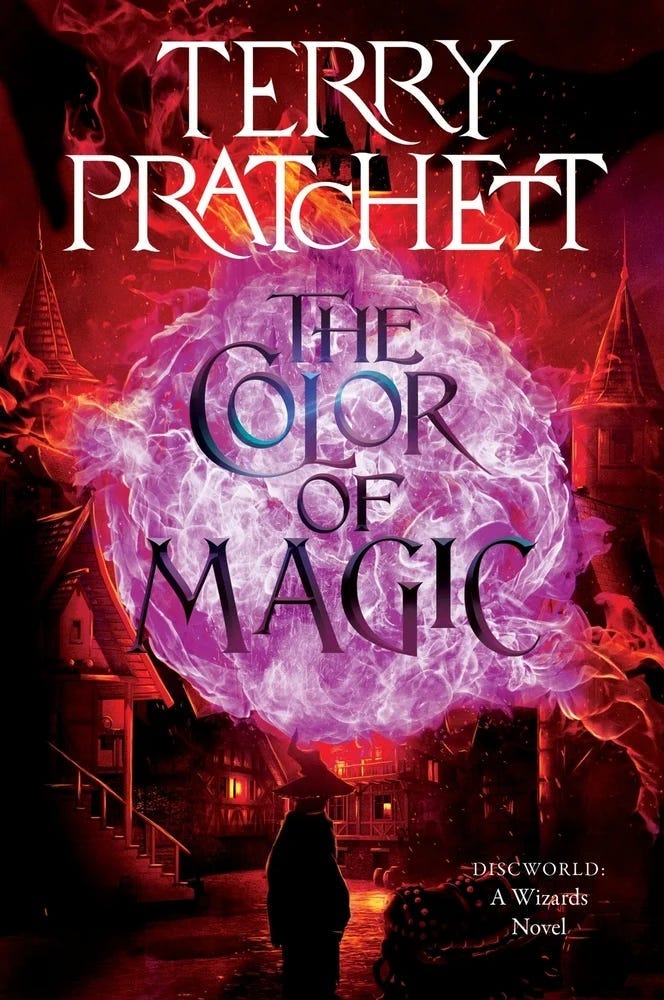
The Buddha in the Attic by Julie Otsuka

Murmurs and Accumulates

Cover of the book The Buddha in the Attic by Julie Otsuka

Julie Otsuka’s The Buddha in the Attic is not a standard novel. There is no single protagonist. No clear plot arc. No dramatic twists where someone uncovers a shocking secret that changes everything. Instead, there is we and us and our.

Using first-person plural, the slim novel weaves together the voices of Japanese “picture brides” who immigrated to the United States in the early 1900s, carrying the sweet perfume of anticipation, believing they were stepping into a future shaped by letters and photographs of men they had never met. But the life that awaited them was not what they had been promised.

The novel moves in rhythm with their journey. They arrive in America expecting prosperity and romance. They get a much harsher reality. Grueling field labor, cramped houses, husbands who are older, poorer, and significantly less charming than they appeared in their photos. They work and raise children who are often caught between cultures and seen as outsiders in both. Then the war erupts, and the internment orders are carried out. Finally, they disappear, first from the towns they lived in, then from the pages of the novel itself. It is unsettling. It is brutally effective storytelling. It is deeply intimate and tragically expansive.

Otsuka writes in a lyrical, first-person plural voice. The effect is hypnotic and completely immersive, until suddenly, it isn’t, and you realize you are desperately craving a single proper name to hold onto. The style blurs the lines between individual and communal, underscoring how these women’s struggles were not singular tragedies but part of a larger system.

I had the great fortune of hearing Julie Otsuka speak several months ago. She writes “by ear,” listening for the rhythms in words and phrases, shaping them into something essentially musical. This is made clear from the first lines of this book.

Structurally, the novel is a slow build to the final section, which removes the women’s voices entirely, shifting to the perspective of those left behind: neighbors who meant to ask where they went, teachers who noticed something seemed off, shopkeepers who assumed they would come back eventually. It’s quietly devastating and it lingers.

Some readers may find the lack of individual character arcs frustrating. However, I contend that the novel’s greatest strength is its refusal to play by the usual storytelling rules. This is not about one person’s suffering. It is about a pattern, a system, recurrence of history’s slow relentlessness. The Buddha in the Attic is about disillusionment, survival, and invisibility. The women exist in a country that never fully sees them, and their story is one of both resilience and loss. The novel speaks to broader questions of immigration, assimilation, and the ease with which people can be discarded when they are no longer convenient to the American narrative.

The Buddha in the Attic is a novel you sink into, slowly, until you realize it won’t let you go. Spare yet evocative, richly inventive yet restrained. A knockout.


Othello by William Shakespeare

Cover of the book Othello by William Shakespeare

Trust No One, Especially That Guy

Othello, classic tale of love, jealousy, and how one man’s career frustrations escalate into full-scale tragedy. It has everything: deception, a well-placed handkerchief, and a sobering reminder that if you want to live, you should probably not be a woman in a Shakespeare play.

This isn’t just a play about trust gone wrong. It’s about misogyny. And racism. And classism. And the Elizabethan equivalent of toxic workplace dynamics. In other words, a play that has aged well.

You know this story. Othello, a brilliant general, marries Desdemona, but his right-hand man, Iago, decides to stir up some recreational evil. Cue a spiral of manipulation, jealousy, suspicion, tragic misunderstandings, and several dick jokes.

Othello is about how quickly power and respect are revoked when the person holding them doesn’t fit the mold. Othello is Black in a white society, and nobody lets him forget it. He’s admired, sure, but the moment there’s a hint of scandal, that admiration vanishes. Brabantio, Desdemona’s father, assumes Othello must have used witchcraft to win her love, because the idea that she made a rational choice to marry him is simply inconceivable. Iago plays into this, feeding Othello’s insecurities until Othello begins to believe them himself.

And so a brilliant, accomplished man is destroyed not just by jealousy, but by a society that is quite willing to see him as a villain the second it suits them.

Not to mention, Othello is not subtly misogynistic. It is aggressively misogynistic. Desdemona is treated like an expensive handbag, her father appalled that she eloped without his permission. The mere suggestion of infidelity transforms her in Othello’s eyes. And poor Emilia (arguably the only woman in the play with a backbone) gets stabbed for telling the truth, while Iago at least gets to see his nasty handiwork before facing consequences.

Speaking of Iago — If he had internet access, he’d be the guy writing long-winded articles with titles like “Define a Woman, Especially in the Workplace.”

The eternal Shakespearean question pops up: Is he critiquing these systems, or condoning them? On one hand, the play makes it clear that these forces are destructive. On the other hand, Desdemona’s suffering exists largely to give Othello a big emotional moment, and Othello’s Blackness is emphasized mostly as a way to set up his downfall. Shakespeare holds up a mirror to society, but he is also, perhaps uncomfortably, reinforcing some of the very ideas he’s exposing.

Othello functions on human folly, and none more glaring than how quickly Othello buys into Iago’s lies. The play hinges on the speed at which Othello believes Iago. But where reputation is everything, trust isn’t built on deep personal connection. It’s built on what other people say. Iago plays on this expertly, proving that sometimes, all it takes to destroy a person’s life is a well-timed whisper.

Just why does Iago do any of this? His reasons shift constantly: he wanted a promotion. He thinks Othello slept with his wife. He’s bored. He’s like a Shakespearean Joker, except instead of “some men just want to watch the world burn,” it’s “MEN ARE NOT EMOTIONAL!!!11!!”

And then there’s Desdemona. Shakespeare wrote some excellent female characters (Beatrice, Lady Macbeth, Viola.) Desdemona, however, is frustratingly passive. It almost makes you want to say, “At least ask to speak to the manager!”

Did I respect Othello? Sure. Did I dig it? That’s complicated. The themes are powerful. The language is stunning. The tragedy is tragic. But the next time someone whispers that my best friend is betraying me, I will be double-checking my sources before sharpening my blade.


Seventeen Spoons by Esther Goldenberg

Cover of the book Seventeen Spoons by Esther Goldenberg

Yearning and Dreams

The biblical story of Joseph is a wild ride from favored son to Egyptian vizier. Betrayal! Prophetic dreams! A famine-induced family reunion! Ancient cattle herds! Naturally, one might expect a novel retelling of his life to be just as dramatic. But Esther Goldenberg takes a different approach, leaning into the slow, contemplative, deeply introspective side of Joseph’s journey. Anchored in the biblical text yet rendered with a dreamlike smoothness, it transforms familiar history into something immersive and intimate.

Goldenberg’s Joseph is both a golden child and an outsider, a man marked by divine destiny and semi-dysfunctional family dynamics. He’s naive in his youth, so much so that you want to shake him and say, “Please, for the love of God, read the room.” And that’s part of the charm: Goldenberg makes him endearing, even as he floats through life making choices that range from “wise beyond his years” to “spectacularly oblivious.”

The book’s pacing is a nod to the pace of life of that era. Long stretches of time unfold in spongey, atmospheric detail. Then, suddenly, decades pass in a sentence. Blink and Joseph has gone from “pensive teenager” to “deeply pensive middle-aged man.” The effect is a literary embodiment of how life rarely proceeds at a reasonable speed.

Goldenberg explores the themes of duty and expectation (and boy, how exhausting it must be to be perceived as special!) Joseph isn’t just a guy trying to make it in the world, he’s the guy, the chosen one, the standard-bearer. His interactions with Esau crack open some of the novel’s most poignant moments, highlighting the pain of being either too favored or not favored enough (a reminder that biblical families often struggled with “healthy communication”). Meanwhile, his relationships with his father, with Deena, with his brothers, and with Potiphar paint a picture of a man searching for connection, but never quite finding where he belongs.

And then there’s the longing. Goldenberg does not shy away from Joseph’s desire for love and companionship. His sexuality is explored, his divine destiny never presented as at odds with his human needs. It’s tastefully done, but if you prefer your biblical fiction without surprises in the romance department, just a heads up.

For readers of Goldenberg’s first book in the series, Deborah returns (!), linking the novel to broader conversations about patriarchal narratives and the role of women in biblical history. It’s a lovely reminder that while the focus may be on Joseph, the lives of the women around him are just as rich and complex.

Is Seventeen Spoons a pulse-pounding odyssey? No. But it is a thoughtful, deeply immersive novel that takes a legendary figure and turns him into a living, breathing, yearning human being. Goldenberg proves that biblical fiction can be an excavation of emotions, faith, and the ways we are shaped by the weight of expectation.

I had the pleasure of reading an early copy — look for it on March 18!


The Novelist as Vocation by Haruki Murakami

Do the Work, Stay a Little Strange

Haruki Murakami’s Novelist as a Vocation isn’t a how-to book. It is not a craft manual. It is not an MFA-in-a-box syllabus where you walk away armed with techniques and exercises that offer the thrilling certainty that you will be a novelist! Instead, it is Murakami sitting across from you, sipping his coffee, casually saying, “Yeah, I just kind of started writing one day and kept going.”

Murakami, famously an outsider to the literary establishment, did not spend years refining his voice or agonizing over whether he had what it took to be a writer. No tortured coming-of-age story, no years of rejection, no life-changing mentorship from a crusty old professor who saw something in him. He was at a baseball game and thought, “Maybe I should write a novel.” Then he went home, sat at his kitchen table, and did it.

This book is a loose collection of essays about writing, which is to say, Murakami thinking out loud about his career, his habits, and his approach to making words appear on a page.

A key takeaway: novelists should be slightly boring. Murakami writes every day, avoids literary parties, and does not regularly engage in public intellectual debates. His philosophy? Conserve your energy. Be steady. Be disciplined. Stay weird, but not too weird.

In “When I Became a Novelist,” Murakami shares how wrote his first novel, Hear the Wind Sing. Since he had no formal training in writing, he figured he’d just make something up and see how it went. In a move that will make all aspiring writers either wildly inspired or deeply resentful, he sat down, wrote his book in simple English sentences, then translated them back into Japanese. This helped him develop his signature style.

Murakami is refreshingly unbothered by literary conventions. In “What Kind of Characters Should I Include?” he explains that he doesn’t base his characters on real people. He believes fiction should come from deep within, not be a reflection of the outside world. His process is to follow his instincts, let the story unfold, and trust that it will all make sense eventually.

In Are Novelists Broad-Minded? Murakami explores the balance between ordinariness and eccentricity. Writers, he argues, should be just strange enough to create compelling stories but not so strange that they lose all connection to reality. Too normal? Boring. Too weird, no one will understand you. (Note to self: Be less weird).

Murakami’s approach to writing is refreshingly devoid of tortured-artist tropes. He doesn’t believe in suffering for the craft. He doesn’t claim to have unlocked cosmic truths of literature. He just writes methodically, joyfully, and without overcomplicating it. Part memoir, part reflection, part casual shrug in the face of literary convention, it champions intuition, persistence, and the art of just sitting down and doing the work. And honestly? It’s a damned delight.


Bridget Jones’s Diary by Helen Fielding

The cover of the book Bridget Jones’s Diary by Helen Fielding

Charming. Maddening.

Yeah, I’m late to the party. Just surfing the zeitgeist, finally getting around to this one after more than two decades.

Bridget Jones’s Diary is, indeed, a diary of a year in the life of Bridget Jones, a single, 30-something Londoner who is trying (and often failing) to pull herself together. She wants to lose weight. She wants to drink less. She wants to quit smoking. And, most importantly — at least according to literally everyone in her life — she wants to find a man. Surprise! That last part is not as easy as people keep making it sound.

It’s a strange thing, the way we tell stories about women and frame their lives as a sequence of certain types of goals. That’s how I read this book: Bridget is fighting for joy, autonomy, and meaning in a world that wants her to focus on the scale and a boyfriend. Sometimes, she resists; other times, she buys in.

She is funny, though. She’s charming, chaotic, and constantly caught between what she wants and what society keeps telling her she should want. She’s got a wildly inappropriate, emotionally unavailable boss (Daniel Cleaver: human red flag), a mother with strong opinions, and a “perfect on paper” suitor, Mark Darcy, who has all the personality of a tax audit. Hijinks, misunderstandings, and diet-obsessed monologues ensue.

And okay, it’s a Pride and Prejudice riff (hence Mark Darcy). Bridget’s voice is undeniably hilarious, which is why I kept reading. The book is clever and keenly observant.

But I struggled with this book. The food/weight obsession is relentless. Bridget spirals about five pounds like she’s one croissant away from ruin. And the find-a-man-or-die-trying plot? I’m not in that stage of life. I don’t want any woman or girl to be in that stage of life. Then there’s the bigger question: Is Bridget showing us the absurdity of society’s expectations, or is she just another victim of them? She’s allowed to be funny and flawed, but is she free? Are any of us? DO I NEED TO JUST CALM DOWN?

Satire is a slippery thing.

Bridget Jones’s Diary is about indulgence — how we allow it, how we punish ourselves for it, and who gets to decide what’s too much. It’s also about control. Who has it. Who loses it. Who dictates the rules of relationships. And, quite frankly, bad communication isn’t charming after a while. The misunderstandings, the endless will-they-won’t-they…sometimes it’s cute, but sometimes you want to grab these people by the shoulders and yell, “USE YOUR WORDS.”

Some readers’ feminist critique might rightfully come in hot. Where is Bridget’s actual independence? She’s constantly looking for validation, if not from a man, then from a boss, a mother, a bathroom scale. The book sells itself as a fun, feminist, modern story, but does it ever let Bridget just be?

That said, she is hilarious. And the book is weirdly comforting, like junk food you both love and regret eating. But now? I’m jonesing for Pride and Prejudice.


So…read any good books lately? 

What Dangles From Your Trailer Hitch


Value/Display/Ignore

Writers are tasked with noticing. Most of the time, it’s harmless: overthinking a text or assigning poetic meaning to a crack in the sidewalk. Normal stuff.

But sometimes you are forced to stare at something so aggressively stupid that your writer brain —  wired for metaphor and incapable of mercy  —  whispers, “This means something.”

And unfortunately, it might.


An image of a shimmery pink disco ball against a black backdrop. The text reads “What Dangles From Your Trailer Hitch by Jackie Pick”

Impact at the Intersection

Every great civilization eventually signals the exact moment it gives up. See: bread and circuses, phrenology, Gérard Depardieu.

I encountered what may be our surrender point at a red light.

While stopped, I was running through my usual litany of big thoughts (Did I turn off the stove? Did I accidentally Reply All? Will humanity survive the inevitable collapse of late-stage capitalism masked by hyper-niche consumer trends?) when my attention landed on the truck in front of me.

No. Truck implies a mere conveyance. This was an iron colossus. One perhaps called The Dominator. Or The Torque Reckoning. Or The Doom Hauler.

Being a lusty all-American vehicle large enough to have its own microclimate should have sufficed.

Yet dangling from the hitch by paracord was a set of Truck Nuts.

If you are fortunate enough to be unfamiliar, Truck Nuts (or Truck Nutz) are decorative testicles, usually made from plastic or rubber, that people attach to the back of their automobiles.

The vehicular huevos festooning the back of the  —  oh, let’s say, GMC Rumble Thumper  —  bobbed with needless enthusiasm as the engine idled.

Part of my shock was geographic. There aren’t many Truck Nuts enthusiasts in my area. Car décor usually tops out at 5K decals or proud nods to children’s honor roll status.

These ornamental knackers weren’t even high-quality plastic, just the brittle material of cheap children’s toys that cracks on impact or warps in the sun. No subtlety, no artistry, just bright blue unapologetic vulgarity.

I stared. I didn’t want to, but like Medusa, these marbles demanded eye contact.

Two questions came to mind:

1. Who is driving this be-nutted behemoth?

2. Just…why?

The Driver: Breaking the Hypothesis in Real Time

Naturally, I started profiling the driver. Cargo shorts despite wind chill. Thinks taxes are theft, turn signals are for betas, and protein powder is a personality. Refers to women as “females,” has more Tapout shirts than sense, and once tried to fight a locker in high school.

The light turned green, I accelerated, pulled up next to the…let’s go with Chevy Thunder Tusk… and looked.

Stone-faced. Sunglasses. Holding large iced coffee.

A woman.

A woman who, I could tell with just a glance, has strong opinions about butter boards, and somehow manages to be unbothered and deeply furious at the same time.

She zoomed ahead of me as if to say, “Yes, I know. And no, I won’t explain.”

The Windows 95 error sound pinged in my head.

Where Capitalism and Low-Hanging Metaphors Collide

The more troubling question was why.

Clearly, there’s demand. Like it or not, an entire Truck Nut industrial complex exists, operating, presumably, within the legal parameters of commerce.

A factory.

Machines.

An entire logistics chain ensuring that no motor vehicles in America need remain ball-free.

Actual adults waking up in the morning, pouring coffee into World’s Best Dad mugs, and heading to a job where they debate aerodynamic integrity of plastic scrota.

There was undoubtedly a prototype. Wind tunnel tests. Torque calculations. PowerPoints on market scalability. Some guy insisting, “We’re revolutionizing the industry.”

Enormous vats of melted plastic poured into molds, cooled, popped free, and sent to a quality control specialist probably named Earl, who gives each a light tug to ensure structural integrity.

Shrink-wrapped pallets of these faux family jewels are distributed to gas stations, online marketplaces, and that one hardware store where someone’s grilling hot dogs in the parking lot.

A marketing team works on branding. Tough Nuts for Tough Trucks! Don’t Be a Ball-less Hitch! Freedom isn’t Free (And These Are Only $24.99)!

Perhaps even a network of aftermarket enthusiasts who have rousing online chats about proper ball-to-bumper ratios

All leading to the driver of the Ford Fee-Fi-Fo-Fummer in front of me (or her partner) slapping down actual money. Then, kneeling behind their truck, they tied these orbs of virility into place, wincing not even once.

I remind you we once wrote the Constitution, built Chicago (twice!), and sent humans to the moon.

I remind myself that I used to write about civic responsibility, democracy, and motherhood.

And yet, here we are.

The Philosophical Collapse

Still, was there meaning in these petrochemical gonads?

Irony? Prank? Postmodern critique of gender norms? Radical rejection of patriarchal tropes through appropriation of male genitalia?

Or worse  —  was it apathy, the apex predator of meaning?

The social contract as envisioned by Rousseau was not designed for this. Democracy, human rights, collective dignity? Yes. Plastic testicles on the back of a Toyota Titan Howler? Absolutely not.

Hobbes believed life without government was “nasty, brutish, and short.” I generally agree, but still argue that life with government has somehow produced a scenario where I’m stuck in traffic behind a Jeep Inferno Stallion, eyeball-to-clangers.

I cannot point to the exact section of the social contract that discourages such a thing, but I assume it’s located in the part about not making public spaces unbearable for everyone else. Or maybe tucked into an addendum called “This Should Really Go Without Saying.”

But if the driver in front of me didn’t care about the affixed Truck Nuts on her Honda Oblivion Rover, then the entire framework of cultural semiotics disintegrates. They mean nothing.

And if they aren’t anything, nothing is. Everything just sways pointlessly.

Metaphysics, but Make It Dumb

Perhaps material offers meaning.

There is something grotesquely poetic about the fact that the fake gonads are plastic.

Plastic is eternal.

Glaciers will melt, cities will sink, and centuries from now when the Great Plains are waterfront property, an archaeologist  —  probably also named Earl  —  will stumble upon slightly cracked, sun-bleached Truck Nuts. He’ll scan them for meaning and ask, “What god did these people worship?”

It’s not an unreasonable question. What else could it be other than an object of reverence? Is this who we are now? Cheap, crass, oscillating as if to measure the time we have left before the entire country embraces hollow spectacle under the hazy guise of, “I’m just asking questions.”

Or maybe we worship the in-your-face part.

Conclusion: Swing Inevitability?

The woman in the truck didn’t notice my deep dive into culture and philosophy like I was some one-person Department of Cultural Anthropology. She zipped off with the patriarchal baubles wobbling behind her.

I sat there, eating her proverbial dust, realizing two things:

  1. You cannot parody a culture that’s already doing it for you
  2. At some point Truck Nuts will come factory-installed. Standard.

And only Earl will understand the horror.

Be/wilder (With/standing)

January Month In Review

SHORT STUFF

  • I am keeping a list of the Top Ten Days of 2025. So far, January has failed. The only (weak) contender is January 26th, when we ate decent nachos. A tasty moment in an otherwise indifferent stretch of time.
  • “It takes something more than intelligence to act intelligently.” — Fyodor Dostoyevsky. What is the “something more”? Patience? Instinct? Juice? Is it juice? I don’t like juice.
  • Sleep is a flirt. I am a willing fool. I chase, I lose, I am tired. Who else belongs to the 4 AM Club?
  • December’s cozy hibernation exited stage left when January hit like a brick, and suddenly I’m expected to make responsible choices again. Terrible system. Do not recommend.
  • Seth Godin says slow down. I am listening. But also I am not. But also, I should be. This may be why I am in the 4 AM club.
  • My January 2025 had a soundtrack. It is, as my kids would never let me say, “a bop.” 

LONG STUFF

I cried at the dentist.

Not because of the scraping. Not even because of my idiotic need to be LITTLE MISS FUN PATIENT. (Let’s be clear, I am fun because I am hilarious.)

It wasn’t pain. It wasn’t fear.

Perhaps it was inevitable.

The night before, I forgot to season my vegetables (not a euphemism), which is not like me. I know how to cook and how to make things better. But I didn’t. And so we ate them, joyless.

When the body runs on fumes, you stop doing the things that make life taste like something.

Maybe it was inevitable because I haven’t listened to much music lately. This is also not like me. Normally, music is everywhere in my life. A soundtrack, a story, a signal. But now? Silence. Or just enough ambient music to fill the spaces, to keep the walls from pressing in.

Music is its own kind of story. And I cannot absorb another story right now. Certainly not while eating sad vegetables. Not while being Little Miss Fun Patient. Not while *everything else.*

Anyway, remember how I cried at the dentist because I just told you I did a few paragraphs back?

It happened when the next song came on. My dentist tries to calibrate the playlist to the patient — something generational, something soothing, something that says, “Pay no attention to the tiny metal hook scraping your bones.” Do I need Megadeth blaring while I’m power-washed in the mouth like a neglected patio? MAYBE. But probably not.

In the lonely space between cleaning and exam, a song came on.

And I cried.

Okay, yeah, it was “Chariots of Fire.” On the cornball scale of tear triggers this, ranks up there with a screensaver or a commercial about butter substitutes. Or “Bubbles” by the Free Design.

There are plenty of respectable reasons to cry, including being at the dentist, practically flipped upside down in the chair, mouth agape, and drowning in the indignity of it all.

Perhaps, though, it was not that.

The world these days is very “The Bear Went Over the Mountain”

On the other side of the mountain is Mount Doom.

After that, Mount Crumpit

And then the tiny sledding hill in my backyard where my kids, without fail, would somehow manage to steer directly into a tree even though the closet tree was about 20 yards away.

Climb one mountain, find another waiting. That’s how it works. So you throw the grappling hook and reach down to pull others up. (Am I a seasoned mountain climber? No. Do I like looking at mountains on Toblerone wrappers? Yes. Same energy.)

I also cried because my heart is with New Orleans, California, Las Vegas, and every neighbor who feels alone and helpless. My heart is not enough and tears unhelpful after a point, so we choose and we do. Because we see what we can see.

“Look for the helpers,” Mr. Rogers said.

Try to be one.

My background and expertise are scattered —  writing, education, social policy, the arts. A hodgepodge, but a purposeful one. A toolkit.

The goal now: Help fully. Help precisely.

Say “yes” carefully, but say it generously. 

Everyone’s capacity is stretched thin. I’m no exception, but am seeking and finding good community. Lord love a duck for that. (It is not a duck community, though perhaps it should be.)

Still posting my dumb little jokes (Are we connected on Bluesky?). Still writing the blog, working on the book, and seeking joy as we withstand and work.

A photo of Mel Brooks with his quote “Laughter is a protest scream against death, against the long goodbye. It’s a defense against unhappiness and depression.”

We can choose to be wild through actions and care, through public voice, through fiercely defending our peace, through a combination of those.

Also have some nachos if you like them. They help.


(Despite it all,) Here are some splashes of marvelous from January 2025

One of the stories in mass circulation today is a very old one, but it’s taken on a new vigor: women in general are out of control and feminism in particular is to blame… men are no longer in control, mothers are not what they used to be, and it’s the fault of Germaine Greer, Cosmopolitan, and headline stars.

  • An excerpt from Rumi’s “Where Everything is Music” Because sometimes you need Rumi.

Don’t worry about saving these songs!
And if one of our instruments breaks,
it doesn’t matter.

We have fallen into the place
where everything is music.

  • Sometimes my 70-pound screw-loose pitbull mix gets the zoomies. It is short-lived because he has zero stamina and the spatial awareness of a potato. But he tries. He is all heart and demolition. I will try to film it.
  • Need a corny cry break?

Until next time, here’s a combo I ask you to consider: books, pen, paper, us.