My go has been thoroughly gotten. My timbers shivered. Murgatroyd and Heavens have joined forces to create a chaos cabal.
Great googly moogly, folks, I’ve consumed not-quite-a metric buttload of books this year. I’ve also abandoned a few along the way without shame. Life’s too short and other platitudes
We long for stories that fuel the soul. Whether you get them through books, e-readers, audiobooks, puppet shows, or, MAYBE, you know, this superb nonsense right here. You’re welcome.
A lot of my reads this year were solid, some stellar, but these? These are the books that stuck like particularly hearty and literary overnight oats.
So, if your TBR pile isn’t yet a towering Jenga stack of ambition, here are some suggestions to make it so. Hopefully, there’s something here for your next visit to the reading nook of your choice.
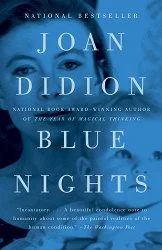
This is the one I’ll crawl back to when I’m dangling off the edge of life’s proverbial cliff and need to grab hold of something — someone — for dear life. Artistically speaking. And also in all the other ways.
Aging, parenting, disillusionment, regret, grief, and the accompanying sense of fragility, presented with the calm of deep grief. It’s magnificent. It’s Didion.
This is the one I hope I’ll never need to return to — but I’m deeply grateful it’s there, should I need an unwavering companion when grief strikes its deepest, darkest notes.
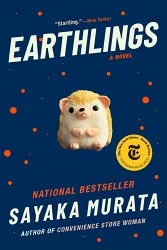
So fricking weird. (*heart emoji*) Murata’s wild originality had me falling head over heels one moment and clutching my stomach the next. It’s the kind of book that makes you say, “Wait, what?” on every other page. Do read a summary before you dive in — it’s not for everyone.
This is the one I’ll revisit whenever I need to remind myself just how boundless, bizarre, and brilliantly unsettling human creativity can be.
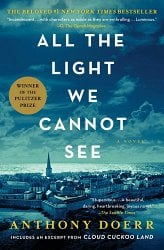
Needle-sharp detail. Characters so deep you could drown in them. Language that brushes up against the divine. TIt’s a long one, sure, but not for a second did it feel like it. Every word earns its place.
This is the one I’ll revisit when I want to study with a master.
Can I interest you in a Pulitzer Prize winner that just doesn’t let go? This is the kind of book to take on a long train ride. Or several short ones. Or just sit with at your kitchen table, pretending you’re in some windswept European war zone while your coffee goes cold because.
Of this year’s books, the one I’m most likely to reread.
A deeply resonant, delightfully offbeat novel that juggles wild trips to the end of the earth, absurdity, and lawn warfare with pitch-perfect balance.
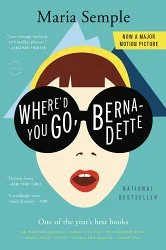
This is the one I’ll reach for when I need a reminder that satire can be both razor-sharp and laugh-out-loud hilarious. Also on those days when I want to pretend that I, too, am a perfectly flawed genius navigating a world that just doesn’t get her, but likes to text about her anyway.
A steaming hot bowl of chicken noodle soup — comforting, helpful, a little salty. Perfect. You want to rush through it? Wrong move. This is a slow-simmer kind of book. It’s the kind of thing you read and pause, read and pause. You mellow with it. That’s where the magic is.
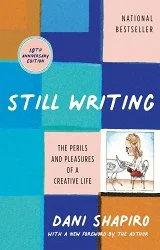
This is the one I have already revisited several times as I bemoan one writing issue or another.
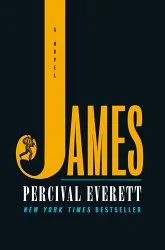
Percival Everett not only brings the goods, the whole goods, and nothing but the goods — he delivers them with such unapologetic brilliance that you’ll find yourself wondering, ‘How has no one done this before?’ And then you realize — no one else could have done this.
I am thunderstruck.
This is the one I will revisit when I’m in the mood to be astonished and delighted by audacious brilliance.
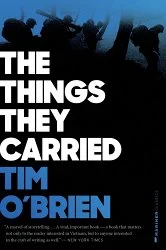
Read this when you are in a place to do so, if only because the writing and structure are elegant and majestic. But also, read it when you can stomach the violence and sorrow.
This is the one I will revisit to marvel over the near-perfection of the title piece.
There is warmth here, and ferocity. There is compassion, too, and an unwavering sense of curiosity. What does it mean to remember someone? What does it mean to be remembered? These are the questions Winik circles, never directly, but with every story she tells.
This is the one I’ll revisit to marvel at how entire lives can unfold in just a few paragraphs, every word chosen with surgical precision and care.
When I wrap up each month’s reading, I like to look for themes that connect the books I’ve enjoyed. I am exciting that way.
This month, the theme seems to be something like “Joke’s on you, asshole.” Fair. A little harsh. I should be nicer to myself.
Anyway, generally, I want my books to feel “slippery and wild,” as Gwydion Suilebhan described in his post about A Real Pain. . The books should make me work for it a little, challenge me, delight me, or knock me off-balance just enough.
This month has been mostly glorious, occasionally frustrating, and terribly on-brand for late November into December. There was so much illness in the house, including me. Two solid weeks of being sick cut into my reading time, as did an ocular migraine that I was sure was a retinal detachment (long story). Finals for the kids, Thanksgiving, and the usual chaos of life were all there too — the kind of busyness we’ve somehow convinced ourselves is virtuous. Spoiler: it’s not.
Still, there were hugs to give, cheers to yell as we clawed our way through heartaches, anger, joy, and everything in between. Most of the books I read this month fit the mood perfectly. And, as you’ll see next month, even Nuclear War (which I didn’t finish in time for this wrap-up) aligns thematically in its own toe-tapping way.
WHY do we do this? Why do we run around like caffeinated ferrets, scuttling to and fro with all our urgent ferret business, only to collapse in December like, “Yes, our ferret work here is done,” and then, immediately decide January is the perfect time to start sprinting again? (Side note: I am fully bracing myself for the onslaught of “Hard to believe, but it’s time to make summer plans for your kids!” emails by January 10th. No. Stop it. Please. Let us wallow in this current hellscape for five seconds before dragging us into the next hellscape — this time flavored with the bitter tang of FOMO over missing All the Important Things.)
Back to the books. There’s a clear thread of humanity in all its messy, ridiculous, and poignant glory.
Some of these were slippery. Some wild. Some both.
Which is all just to say these are the books that I (mostly) enjoyed enough to finish in the last month:
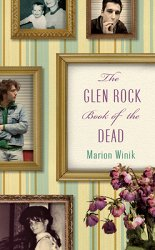
Marion Winik’s The Glen Rock Book of the Dead is approximately 50 brief, jewel-like portraits memorializing (if not nearly resurrecting)individuals who have touched her life. Inspired by the Mexican Day of the Dead traditions, where mourning and celebration dance together, Winik writes about people she’s known intimately and fleetingly. She flays open lives in just a handful of paragraphs, with warmth, precision, and dazzling compassion.
And oh, holy hell. Sometimes your new favorite book waits quietly, unremarkable in a groaning TBR pile. What a delight this book is. You will feel things you are unprepared to feel about the lives of people you don’t know and whose names you may never find out. Winik doesn’t so much write as she casts spells, allowing entire lives to unfold in under two pages. Each life is “introduced” in vibrant entrances, and their passing takes a back seat to their living. Each subject arriving fully realized, their deaths present but secondary to their lives. Winik seems more interested in how they lived and how our lives imprint on one another.
There is warmth here, and ferocity. There is compassion, too, and an unwavering sense of curiosity. What does it mean to remember someone? What does it mean to be remembered? These are the questions Winik circles, never directly, but with every story she tells.
It confronts pain and disappointment, isolation and failure, but it also finds joy, community, and the unyielding mystery of what it all means. The reader is left wondering what their own two-page version would look like. Disappointment? Pain? Trying to shield myself and my kids from it all, succeeding in some places, failing in others? That’s part of the story. But Winik reminds us that we get to write our own. And that pain? That joy? It’s real. It’s messy. It’s what makes life worth remembering. And it leaves you hoping, above all, that when your story is told, someone notices. Someone remembers. Because, damn it, you mattered. All of you. Your pain and your triumph.
These aren’t obituaries — they’re titrated snapshots of life, love, and the lingering weight of loss. is uplifting even as it wounds, surprising in its candor and its grace.
May we all be remembered like this.
This one is a stunner and you can expect to see it on my “Favorite Reads of 2024.”
Kate Atkinson’s Normal Rules Don’t Apply is a collection of linked short stories that’s equal parts literary magic trick and narrative haymaker. Atkinson throws you in — no hand-holding, no explanations. Just the weird, the wonderful, the unsettling. The result? A threaded, clanging tumble through lives and timelines.
This isn’t your run-of-the-mill short story collection. It’s a mind-bending, genre-hopping grab bag of what just happened?
This book is cheeky. Boisterous. It’s dark humor wrapped in a velvet glove, then slapped across your face for good measure. Atkinson sets you up with a grin, plays nice for a few pages, and then yanks the rug out from under you. And you’ll thank her for it, because it all tracks. It shouldn’t work, but it does. More than once as a story ended with a brilliant twist, my response was, “Clever girl. Of course.”
The rules of this universe are deliberately opaque. Atkinson leaves you to sort through the fragments, to make sense of the silences between what is said. It’s in those silences that her true mastery lies. She gives you just enough to see the edges of the abyss and then leaves you trembling on the brink.
The collection is quite the cocktail: a shot of Twilight Zone, a splash of Black Mirror, and just enough Grimms’ Fairy Tales to make you wonder what’s lurking in the woods. The rules of this universe are blurry, and that’s the point. And, you know, the title. Atkinson creates the illusion of coherence while actively undermining it.
You don’t settle into this book. You hover above it, guarded, watching through your fingers as the characters stumble into doom, misfortune, and the occasional epiphany. These are stories about endings large and small about how the world tilts on an axis so thin it’s a wonder we haven’t all already fallen off. The characters are magnets for misfortune, yet you are drawn to them, even if only to glimpse their ruin. You feel for them, in the way one might feel for a figure in a painting, separated by time and the inability to intervene.
Not every story is a slam dunk. Some are bumpy, but Atkinson’s gift for words, dialogue, world-building, and her ability to twist your brain into a Möbius strip more than make up for it. Her wordcraft is elegant, ruthless, and a lot of fun.
Standout stories for me included “The Void,” “Spellbound,” and “Classic Quest 17 — Crime and Punishment.”
Normal Rules Don’t Apply is fun. It’s spooky. It’s grim. It’s a Rube Goldberg machine of all sorts of end times — global, personal, and everything in between. And when you’re done, you’ll sit there, wide-eyed, and maybe a little haunted.
Cheryl Strayed’s Tiny Beautiful Things isn’t your average advice book — it’s a mixtape of truths wrapped in gorgeous prose and raw humanity. It’s a book of dualities: brutal yet tender, despairing yet hopeful, profound yet breezy. This isn’t sugarcoated “life gets better” nonsense. No, this is Strayed, as “Dear Sugar,” rolling up her sleeves, grabbing your heart with both hands, and saying, Look. This is it. This is life.It’s messy. It’s painful. It’s achingly, stupidly beautiful.
The letters are raw, the writers, asking the questions many of us are too scared to admit we have: Am I enough? Does this pain ever stop? Do I matter?Why am I so lonely? Why does life suck so hard? How do I make it through another Tuesday? These writers are raw, stripped down to their essence, but they are also filled with the absurdity of being human. And Strayed is right there, tossing out lifelines. Not fluffy ones. Not Hallmark-card platitudes. Real, gut-wrenching ropes woven from her own heartbreaks, mistakes, and triumphs. She doesn’t shy away from the mess; she dives right in and invites us to do the same. The water may not always be warm, but you’ll adjust. As Strayed replies with wisdom and candor, there is, when appropriate, a certain lightness. She is sharp, sometimes blunt, but never unkind.
“Vespers” is a stunner — a piece that makes you sit there, slack-jawed, wondering how someone can take pain and turn it into something sacred.
This book isn’t a balm; it’s a salve that stings before it heals. It picks at the scabs of life and gets to the tender, raw human stuff underneath. It’s so much about fixing your problems as it is about reminding you that you’re not alone in the mess. That we’re all just stumbling around, wanting the same damn things: joy, connection, purpose. And, yes, you can probably fix what needs fixing, if you’re brave. You can probably get through this particular heartache if you’re brave. And you’re going to be brave because you are not alone in this.
Tiny Beautiful Things is a reminder to stay human. To stay messy. To stay hopeful, even when it feels impossible. It’s also a reminder that there are good, decent, people in this world who are here for you and me, and we for them.
Cheryl Strayed doesn’t just give advice — she lights a fire in your chest and dares you to hold onto the warmth. You get a lifeline! You get a lifeline! Everybody’s feelings get saved — or at least acknowledged — and isn’t that half the battle?
Tiny Beautiful Things is here to break your heart, stitch it back together, and then maybe poke at it a little for good measure. It’s a book that’ll make you want to hug a stranger, laugh at your own bad decisions, and send a text to that one friend who always puts up with your nonsense. It’s brutally honest, occasionally breezy, and profoundly human. Read it, feel all the things, and maybe grab a box of tissues. You’re gonna need ’em. Chin up, friend. We’re here for each other.
For a script written in the seventeenth century, The Misanthrope by Molière has a strikingly contemporary feel. The sharp dialogue, biting wit, and complex interplay of ideals versus social niceties could easily be transplanted to a modern setting without losing its punch. Molière’s critique of societal hypocrisy still hits hard.
This wasn’t a game-changer for me, but it’s a classic I’ve wanted to check off my list, and I’m glad I did. There’s something refreshing about reading a script, where the dialogue and characters carry the story’s full weight. Alceste, the titular misanthrope with unyielding moralism, is both frustrating and fascinating, a man who despises the very world he’s hopelessly entangled in. His dynamic with Célimène, his perfect foil, creates a tension that still feels fresh. Her flirtations and charm contrast his severity and bluntness, and their relationship becomes the beating heart of the play. She is everything he claims to despise, yet he cannot look away.
Alceste’s disdain for pretense and societal hypocrisy feels less like a relic of 1666 and more like the bitter grumblings of someone scrolling through social media today. And yet, his rigid moralism isolates him, a reminder that the pursuit of ideals often comes at a cost. The play’s ending, where Alceste stubbornly clings to his principles, has sparked plenty of debate. Is it a comedic jab at the absurdity of rigid moralism or a quiet tragedy about isolation? Molière pokes fun at Alceste’s earnestness while acknowledging that society, in all its artifice, is hardly blameless. It’s not neat, not tidy, but just ironic enough to make you think. Alceste stomps off to be alone with his ideals, proving once and for all that being “right” doesn’t necessarily make you happy. It’s funny, frustrating, and real in a way that feels timeless. Classic Molière.
Look, it’s not going to knock “hanging out at Chuck E. Cheese for my twins’ 5th birthday” out of my top life experiences or anything, but I’m glad I read it. It’s clever, and its critique of human nonsense is as relevant now as it was when Molière wrote it. If you like your classics with a side of sarcasm and existential dread, give this one a shot. Plus, reading a script makes you feel fancy. Like you’re one latte away from writing your own play. And isn’t that lovely?
Arsenic and Old Lace is a dark comedy that takes sweet old lady energy and spikes it with cyanide. Mortimer Brewster, your average theater critic, discovers his adorable aunts have been murdering lonely old men and burying them in the basement. One brother thinks he’s Teddy Roosevelt; the other is Creature Feature of the Month having a bad day. The whole thing is bedlam.
I read the play, having heard my whole life that it was a real treat. I didn’t not get it, but I also didn’t get it-get it. So I watched the film — it’s not entirely faithful, but close enough. Same reaction. It’s not for me.
I don’t usually review things I don’t like, or even finish them, but I finished this, so I’m marking it here.
Millions of people love the play and the film, and I leave it to them with warm wishes that it continues to bring joy for years to come (and with sincere hopes that the name “Mortimer” makes a comeback.)
Next week I’ll post my favorite reads from 2024. I’ve got my eye on a lot for 2025. I went through the NYT list of the top 100 books from the year and it made a nice little graphic of things that caught my eye. The local librarians are going to get very sick of me soon.
Were you able to read much this last month? Anything good?
Two Le Guins, A General, and a Notable Debut Author
These last four weeks were rare in that the right books and I collided into each other like we ran slow-mo toward each other in some kind of rom-com golden-light meadow. Chocolate may have been involved. It usually is.
This month’s reads were, in many ways, melancholic but also full of life. It’s in the battle between those two forces that the tasty morsels lie. I say “betwixt” because I’m fancy.
The last four weeks were quite a thing (more on that in another post, and everything is fine). Grief and exhaustion were mercenary. I needed mercy — not pity, not a kiss on the forehead — but mercy in its truest, most sustaining form. These books became that mercy.
Reading time, however necessary, was scarce. I took in enough words to stave off starvation, though barely. Crescendo began the month with promise, but then life’s walls came down.
For a time, I didn’t want to feel or think at all. No books, no television or movies, not even music. Eventually, I listened to plinky ambient music — the kind piped through hotel lobbies. Then came a slow tiptoe back to feeling, a desire to care for things. I didn’t want ambient feelings but intentional ones: thoughts that nurture, reinforce, and bring goodness and life without demanding more from me than I could give. But demanding nonetheless. In a good way.
Naturally, this led to a glorious overindulgence in Le Guin — if such a thing is even possible.
Which is all just to say these are the books that I enjoyed enough to finish in the last month:
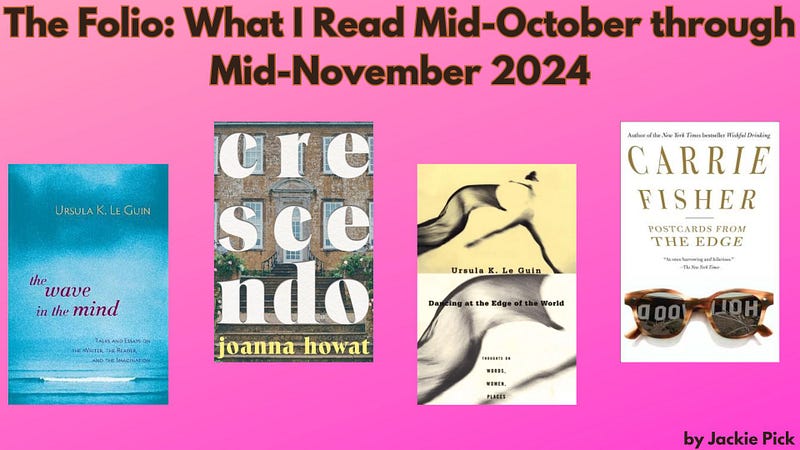
There is a stillness at the heart of Joanna Howat’s lovely new novel Crescendo as it follows two adult children reeling from the accident that took their parents. It is in that stillness that Howat best captures the search for equilibrium and identity. The tragedy and its consequences tear through worlds, relationships, and sense of self, yet Howat never loses sight that death is a part of life, which has as many ridiculous and gentle moments as it does serious and painful ones. In those lighter moments, though, grief also seeps in unpredictably and inconveniently, as Howat also shows.
Jamie, a musician stalled in a drab, unremarkable job, is haunted by a life he cannot quite grasp as well as a more practical need to access a piano. His one light is a new romance, and even that strains under the weight of tragedy so early in its course.
Meanwhile, his sister Caz turns to increasingly self-destructive behaviors that threaten the fragile steadiness of her family. In this stripped-down emotional place, Howat’s story takes flight as Jamie and Caz stumble towards reshaping their lives.
Crescendo pays particular attention to the texture of the ordinary moments that shape young adulthood, all of the pangs and small indecisions that can be ignored until, in a flash, they are unavoidably real. Howat’s focuses on the small, suspended moments that grief amplifies, and the subtle humor that can surface in times of hardship.
This is not a book of overwrought sentiment; its power lies in its honest look at grief with a restrained hand. Rather than dramatizing sorrow, Howat leans into life’s forward march, exploring how family loyalty, memory, responsibilities, and conflicts endure even as the world unravels. Yet Crescendo is not without its moments of levity — Howat tempers Jamie and Caz’s burdens with grace, warmth, and humor. It’s beautifully balanced.
With precision and British sensibility, Howat writes a world both familiar and quietly unsettling. Her prose is crisp, conjuring a sense of place that is cozy with an underlying chill, a reminder that family bonds can be as much a burden as a comfort. Their former nanny appears intermittently, an attentive and overbearing figure whose presence is both welcome and irritating — a person as apt to smother as to comfort. Jamie’s office mates — one competitive and crass, the other empathetic and insightful — round out the minor characters, refreshingly avoiding the clichés typical of supporting roles.
Crescendo places its characters in moments of impasse and progress that move in fits and starts, moments of adrenaline, moments of stillness. Howat brilliantly and, at times, humorously shows grief as it often is: fogged, disorienting, ebbing and flowing. Loss in all of its complex humanity.
I might have wished for a little more of Caz’s point of view for fuller balance to the narration, but this is a small quibble. Though the theme is somber, it is not a weepy stroll through a garden of grief where everyone is either a saint or a monster.
This book offers a surprising sense of escape and an affirmation that, indeed, the only way out is through. Strongly recommend.
Dancing at the Edge of the World is like being hit by a lightning bolt of intelligence, curiosity, and wit — except the lightning bolt also hands you a cup of tea, sits on something cozy, tucks its legs under, and says, “Sit, we’ve got some things to talk about.”
What I value most about this book is its honesty. It doesn’t try to be definitive or grandiose; instead, it starts a conversation — playful and serious in turn — between the writer and the reader.
This collection represents a slice of Le Guin’s thinking across more than a decade, during which she wrestled with pressing personal and societal questions: norms, literary traditions, and humanity’s relationship with the natural world. It’s a series of forays into ideas about writing, feminism, storytelling, and the world we share. You know, small things like that. The essays and speeches are more exploratory than declarative, making them fascinating and ultimately persuasive.
Highlights include “The Carrier Bag Theory of Fiction,” a subversive reimagining of narrative purpose, and the “Bryn Mawr Commencement Address,” which calls for courage and imagination in shaping the world. “Whose Lathe?” is a standout, a brilliant and timely exploration of book banning, as relevant now as it was when she wrote it. It made me want to grab my library card and bellow, errrr, whisper a war cry.
What makes this collection exceptional is the way it bridges the personal and the universal, the writer’s craft and the reader’s world. The slats on that bridge? “How do we live together? What are ways to share the world?” Curious about any of those? Then this is the book for you.
Le Guin’s writing is as lucid and precise as it is poetic and playful. She opens intellectual doors without haranguing, inviting readers to join her. While the collection might feel uneven at times, with some essays lacking cohesion, the diversity of topics reflects her rhythm of thought.
Even in its less polished moments, the book brims with ideas. I love her writing so much I devoured her reviews of books I hadn’t even read and would do so again. Dancing at the Edge of the World is not a handbook or a manifesto — it’s an eddy, tentative yet bold, circling and returning. And if Le Guin stumbles here or there, it’s only because she refuses to stand still.
This is the kind of book that makes you want to pick up a pen — or some other mighty weapon — and face the world, feet firmly planted in whatever world we share.
The Wave in the Mind by Ursula K. Le Guin manages to be both a soothing balm and an electric jolt to the noodle. Beauty, justice, imagination — these timely and timeless essays are steeped in deep respect for writers and storytellers, with Le Guin insisting on honesty, even if that feels like a lot to ask these days.
In this collection of essays, lectures, and reflections, Le Guin offers more brilliant explorations of language, creativity, and the human experience. She moves effortlessly between poetic musings and sharp critiques, always maintaining deep respect for the power of words and the relationship between writers and readers.
The title essay, inspired by Virginia Woolf, likens thought to the rhythm of a wave — nonlinear, rhythmic, wild. Standout pieces include “Being Taken for Granite,” showcasing peak Le Guin wit, and “A Matter of Trust,” which challenges readers to reflect on the ethical responsibilities of storytellers and how to build trust in yourself and beyond (spoiler: write! Then write more!) Another highlight, “Stress-Rhythm in Poetry and Prose,” takes a fascinating, almost scientific approach to language. It’s a linguistic crash course on why words work the way they do. Her discussion of “mumbling” as four unstressed syllables in a row sparked thoughts about how rhythm, stress, and tone shape my humor and communication, both in writing and in spoken word. (To the point that I want to further study linguistics!)
Le Guin’s writing is a cocktail of intellect, warmth, and humor. While the strongest pieces in a collection are often the first, second, and last, this one is threaded with timeless insights into imagination, beauty, and justice from start to finish. The essays succeed in their mission to explore the connections between writing, reading, and living, celebrating imagination as a transformative force. The diversity of topics reflects the rhythm of thought — the wave in the mind, so to speak.
Perhaps most valuable is the book’s honesty. It doesn’t attempt to be definitive or grandiose but instead feels like an intimate conversation, playful and serious in turn. Whether it fully hits the mark depends on each reader, but for me, it absolutely does.
These essays aren’t just about storytelling — they’re about what it means to be an engaged human. The Wave in the Mind is both a celebration of creativity and a call to think critically about how we shape and are shaped by words, stories, and the worlds we create. More of this vibe, please.
Postcards from the Edge is a book written (and clearly semi-lived) by someone who didn’t entirely know what they were doing — and had a hell of a time doing it anyway. Carrie Fisher’s novel tackles serious topics like addiction, recovery, mental health, and fame, but keeps colliding with her brilliant, twisted sense of humor. Thank God for that.
The book is sharp, deep, and honest. It’s abrupt and awkward at times, but breathtakingly well-written if you love dry, self-deprecating (and other-deprecating) humor. And let’s face it, who wouldn’t want to read about showbiz in the 80s — gloriously dank, glittery, and pretending not to be a cesspool?
The story follows Suzanne Vale, a self-deprecating actress navigating rehab, sobriety, and the tangled threads of fame and family. Delivered through a mix of journal entries, letters, and third-person perspectives, the narrative feels like an intimate conversation with someone both smarter and funnier than you, though you’re grateful for it anyway. Fisher’s wit is her superpower, turning even the darkest moments into something dazzling. Her descriptions of people and places are blisteringly precise:
“I shot through my twenties like a luminous thread through a dark needle, blazing toward my destination: Nowhere.”
Her ability to capture mood and anxiety in a single sentence is unparalleled:
“Remember what it was like when you’d be getting ready to jump rope… two people were turning it, and you were waiting for exactly the right moment to jump in? I feel like that all the time.”
Fisher’s skill at drawing character, setting, and mood with just a few brushstrokes is stunning. Weirdly, sadly, it was the story itself that fells flat for me. The story read like the novelization of a one-woman show, and while I haven’t seen the movie, I wouldn’t be surprised if it’s one of those rare cases where the film surpasses the book (*ducks*).
Fisher’s writing is dry to the point of dehydration — my kind of writing. And while I admire Fisher as a performer and writer and human with uncanny self-awareness, underneath it all is pain she never hides. By the end, I wanted to hug her and bring her soup. Perhaps that was the goal. Clever girl.
The novel wobbles, but Suzanne’s voice remains steady. It’s a vivid snapshot of the 80s and the gritty glamour of showbiz. If the plot occasionally falters, the characters and quips more than make up for it.



 Jackie Pick