Why does November always feel like someone handed me a blinking device, said “cut the wires, good luck,” and wandered off to make a sandwich? November wasn’t catastrophic. I mean, no one actually handed me a bomb, none of my kids ran away to join a third-tier circus, and absolutely nothing went wrong on Thanksgiving (though my holiday prep was questionable, as usual). Like I said, November simply feels like that all happened.
(*le soupir*) November is just that month. It’s a little dumb and a lot chaotic and kinda drafty.
I don’t care much for dumb drafty chaos, so I hid and read. And by accident, subconscious choice, or cosmic joke, I read four books that each dwell in chaos. Personal chaos! Communal chaos! Existential chaos! Structural chaos! What a spread!
Sloane Crosley mines the human experience (hers, yours, mine) and comes up with glinting stories to share. James McBride unleashes riotous confusion in a Brooklyn neighborhood, where it morphs into grace. Katherine May slows everything down until the mess reveals a mossy, watery texture. Jennifer Egan fractures time and form, letting chaos spool into something Pulitzer Prize-winning.
Look, I get it. Life (November) is mostly uncontrollable, and yes, it can still be meaningful, funny, periodically beautiful, and let us not forget the glory that is this. But, sheesh, can things settle down a little? Or can we at least keep the chaos to the page? I can always pause that kind of bedlam for a moment by putting the book down to go make my own sandwich or cut the wires or whatever.
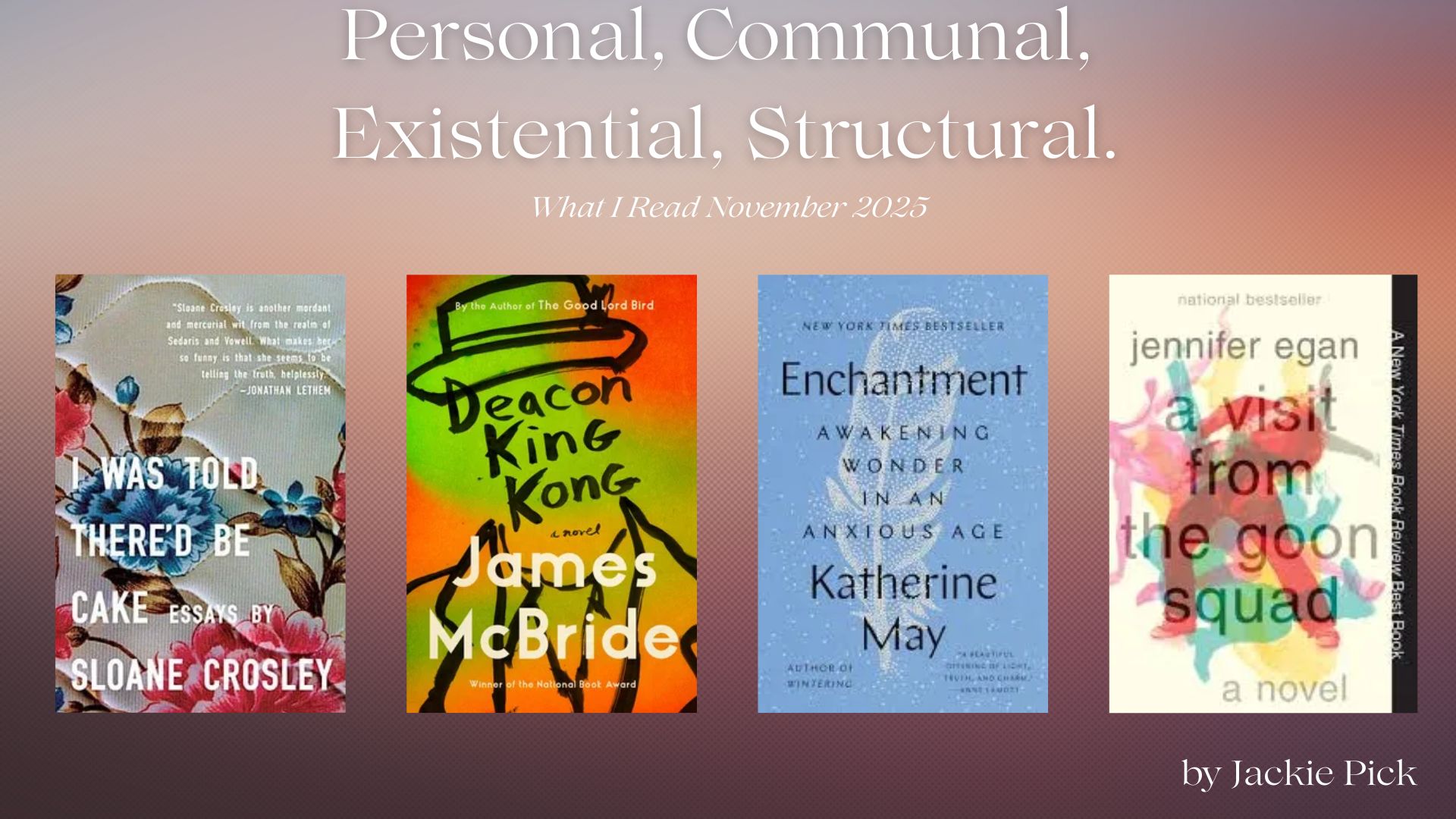
Which is all just to say here are the books I enjoyed enough to finish this month:
Deacon King Kong by James McBride
Enchantment by Katherine May
I Was Told There’d Be Cake by Sloane Crosley
A Visit From the Goon Squad by Jennifer Egan
Note: For sanity and scale (mine, yours, and the internet’s), what follows are the openings of each review. Full versions are linked below.
The world of Deacon King Kong absolutely pulses from the get go. We start with a cinematic, panoramic sweep that situates us in late-1960s Brooklyn, where, the Cause Houses are a fully realized sociocultural ecosystem. And because the neighborhood is so fully formed, and its residents carry the whole spectrum of human feeling, the world of the book feels piercingly real and often achingly funny.
Aging deacon Sportcoat shoots a young drug dealer, Deems, in broad daylight. The mystery of why Sportcoat did this is the narrative aperture, and the mystery expands, matryoshka-like, into a larger one: how does an entire community swallow, digest, argue over, misremember, and metabolize such an event? Through this violent and abrupt act, McBride explores community, memory, and the layered structures of power shaping the neighborhood…
Katherine May’s Enchantment rearranges your insides. It’s a little uncomfortable until you realize you can breathe! Wonderful!
She defines enchantment as “small doses of awe” (which sounds about right. Larger doses would be too much). Her small doses of awe are the everyday sparks of joy, moments of breath, and our decision to pay attention.
The book is organized into four sections: Earth, Water, Fire, and Air, which sounds a bit woo-woo, but each section reads like a grown-up, old-time fairy tale, the kind scuffed and weathered and passed forward by wind and rock and tide. May documents a lived folklore of how humans can and should make meaning in noticing. Even the structure is soothing.
Sometimes the universe takes an ordinary Tuesday, shakes it like a snowglobe, spritzes it with lemon juice, then publishes it as Sloane Crosley’s I Was Told There’d Be Cake.
I Was Told There’d Be Cake wanders through human experiences from childhood mishaps, to mall culture, to bosses who probably should not have been in charge of anything, to boyfriends who definitely should not have been in charge of anything. These worlds are recognizable, but tilted just slightly so we can see their underbellies.
Sometimes literary fiction still pulls off a magic trick. Sometimes you open a book and discover an entire small galaxy.
Which is to say, I just finished Jennifer Egan’s A Visit from the Goon Squad.
It’s marketed as a “novel in stories,” though that undersells it. It’s quite not a traditional novel, but it’s also not 13 stand-alone stories. It’s something hybrid, slippery and recombinant and fluid.
This month I’ve been juggling eleventy kajillion calendars. This is not, as you might assume, because I am a particularly efficient or important person. It is because time, like most of my kitchen drawers, gets jammed on all the oversized things I try to cram in it. Items currently requiring my attention and scheduling: two schools, two adults working from home at somewhere between two and seventeen different jobs, volunteer activities, various kid activities and applications, and the all-important sacred day when the Halloween candy finally materializes on the grocery shelves. That’s the one holiday America does perfectly. Costumes, sugar, minimal chitchat.
Fittingly, every book I finished in September carried within it the godforsaken ticking of a clock – THE clock – with incessant urgency and inevitable silence.
In Replay, time is a wheel greased with déjà vu: die, reboot, repeat. Maggie Smith’s Dear Writer is profoundly gentler, insisting we use our time well and show up to the page. The end will come regardless but right now there is time to mark the paper purposefully, joyfully, fearlessly. Obitchuary treats death like a hot gossip item, grief delivered with a rimshot. Robert Benchley proves that even the most mundane of moments can be slapstick if you just untie its shoelaces.
Put another way: my eleventy kajillion calendars don’t lie, though they constantly contradict each other. We’re all quite busy running out of time, and what remains is how we spend it. There are jokes, stories, hope, relationships, and maybe a decent breakfast before the lights click off.
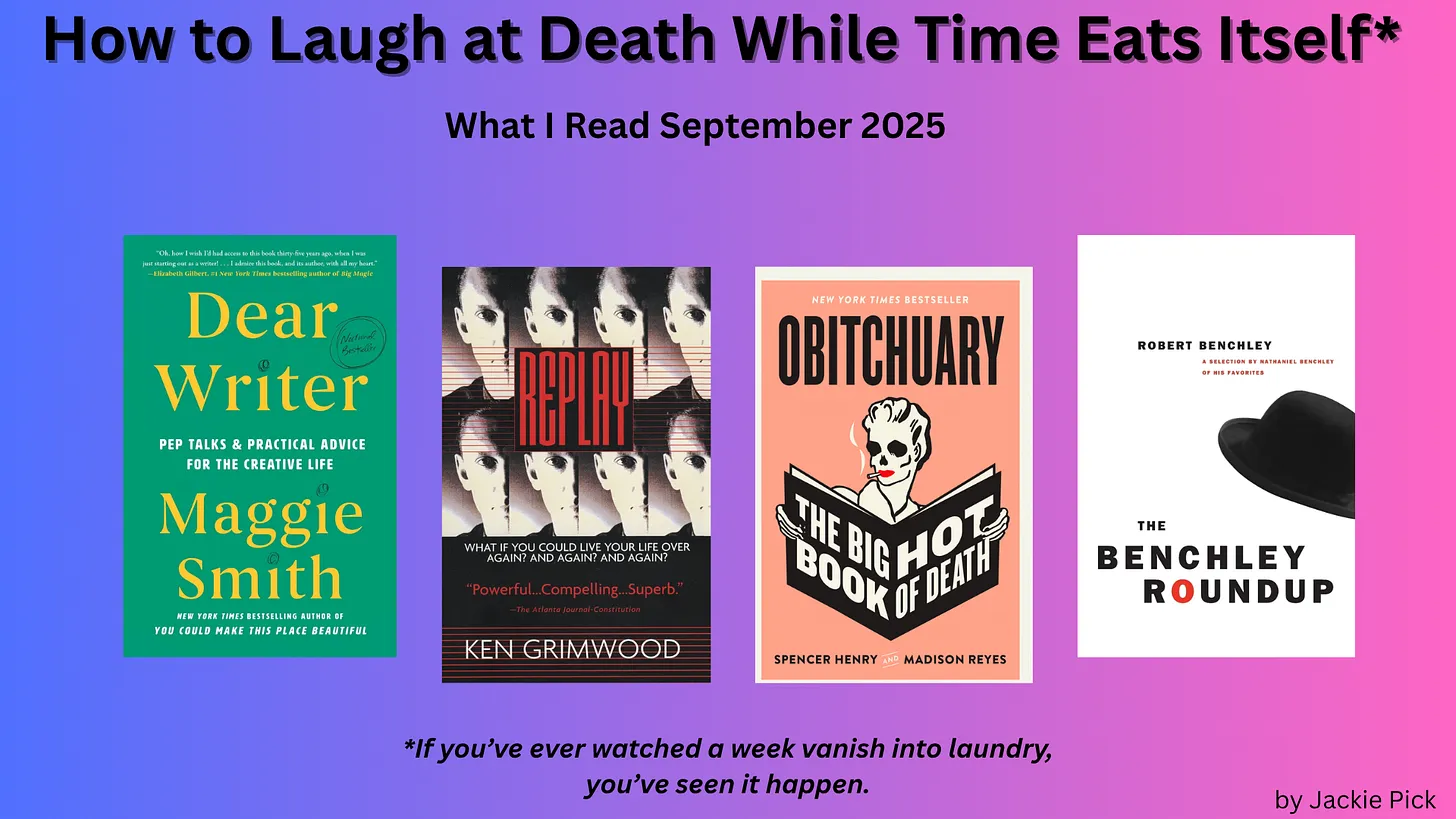
Which is all just to say here are the books I enjoyed enough to finish this month, in no particular order except the one I typed them:
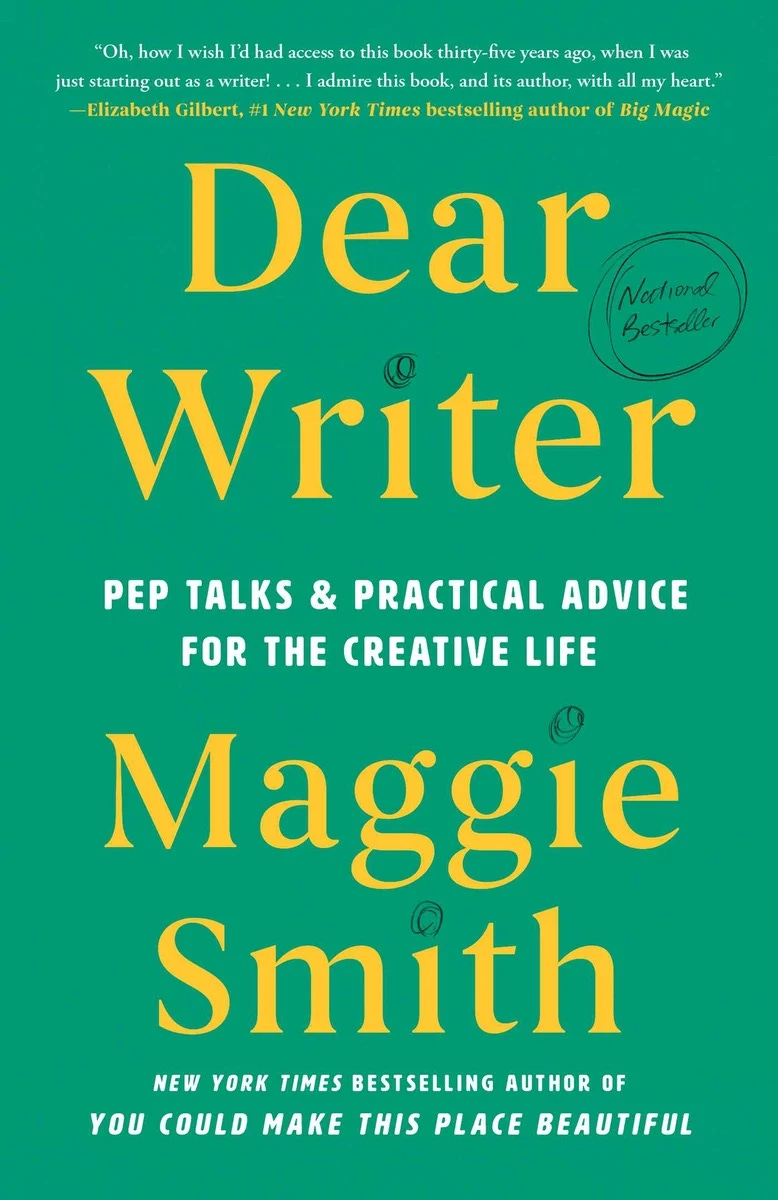
Dear Writer by Maggie Smith
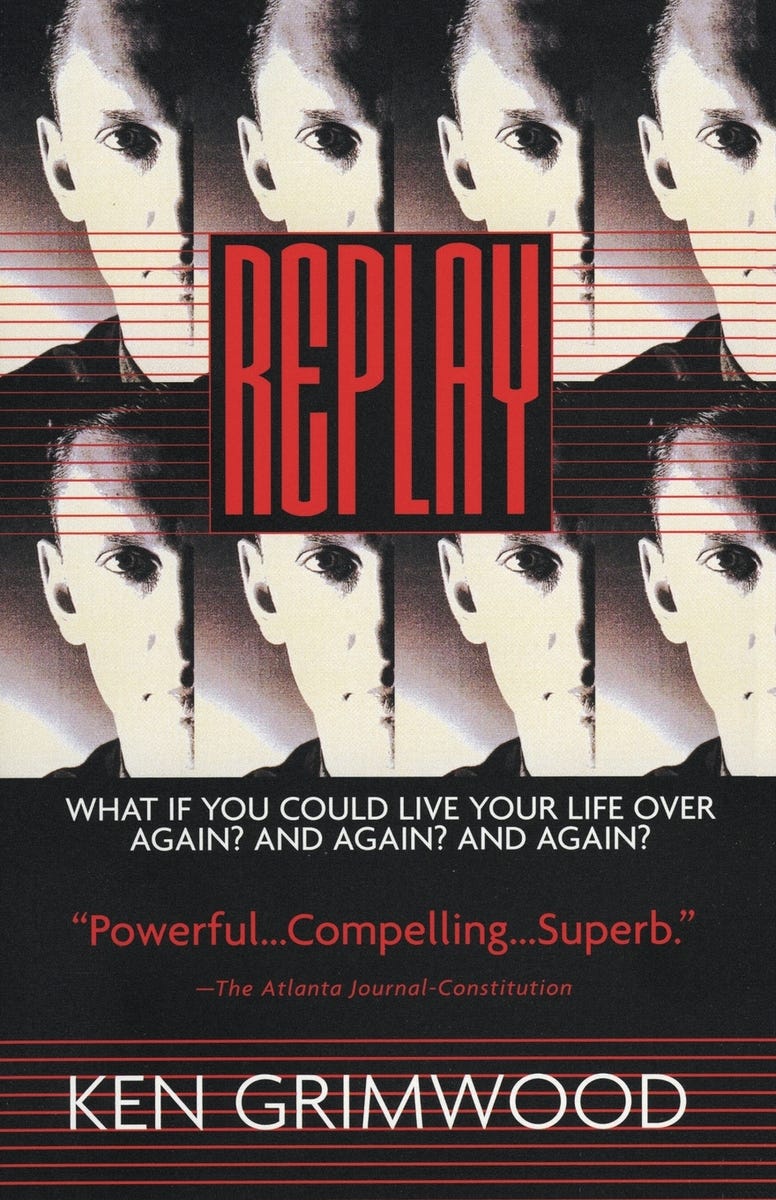
Replay by Ken Grimwood
Obitchuary by Spencer Henry and Madison Reyes
The Benchley Roundup by Robert Benchley
*If you’ve ever watched a week vanish into laundry, you’ve seen it happen.
In the opening paragraphs of Dear Writer, Maggie Smith writes, “I believe creativity is our birthright as human beings.” I like this. It’s a much better birthright than, say, a Costco card or bad knees. She doubles down a page later: “When you read a poem, or listen to a song, or watch a play, you’re not the same person afterward. You’re slightly rearranged.”
Smith organizes her book around ten principles, which incidentally sound like the syllabus for the world’s nicest graduate program: Attention, Wonder, Vision, Play, and more. Each comes with a note to “Dear Writer,” followed by essays, some prompts, and suggestions for further reading. It’s craft book meets pep talk, heavy on kindness and honesty, light on prescriptive rules.
The section on Vision is a banger. Smith advises us to “make your own uncool,” which is the kind of line I love because I am, in fact, deeply uncool, so this will take very little effort on my part. The gist: take risks, some people won’t like your work, and that’s okay. The chapter on Restlessness also hit home. Smith reframes that itchy dissatisfaction we all feel when a draft isn’t there yet as something generative.
Smith’s quotable lines are legion. In Tenacity: “Your creativity is calling. It needs you. Work on your endurance and stamina. Wring your mind out like a rag over a bucket, until it’s bone-dry. Get every drop.” In Hope: “If hope is imaginative, then pessimism is a failure of imagination.” And she drops a piece of advice from Stanley Plumly that I’m still chewing on: “Stay deep within yourself and stay alone there — that is where your poems come from, and that has nothing to do with an audience. You are the audience.”
You don’t have to please anyone else in the room. You’re the damn room.
My personal underline-and-throw-exclamation-points-in-the-margin fest came in her section “On Feedback.” As someone who’s received workshop comments that shut me down for months, I found her take validating and humane. Feedback, she reminds us, isn’t about finding what’s “wrong,” it’s about clarifying, supporting, and helping the writer get closer to what they want.
If you’ve read Anne Lamott’s Bird by Bird, this book is its scrappy cousin. Same heart, different swagger.
This month I’ve been juggling eleventy kajillion calendars. This is not, as you might assume, because I am a particularly efficient or important person. It is because time, like most of my kitchen drawers, gets jammed on all the oversized things I try to cram in it. Items currently requiring my attention and scheduling: two schools, two adults working from home at somewhere between two and seventeen different jobs, volunteer activities, various kid activities and applications, and the all-important sacred day when the Halloween candy finally materializes on the grocery shelves. That’s the one holiday America does perfectly. Costumes, sugar, minimal chitchat.
Fittingly, every book I finished in September carried within it the godforsaken ticking of a clock – THE clock – with incessant urgency and inevitable silence.
In Replay, time is a wheel greased with déjà vu: die, reboot, repeat. Maggie Smith’s Dear Writer is profoundly gentler, insisting we use our time well and show up to the page. The end will come regardless but right now there is time to mark the paper purposefully, joyfully, fearlessly. Obitchuary treats death like a hot gossip item, grief delivered with a rimshot. Robert Benchley proves that even the most mundane of moments can be slapstick if you just untie its shoelaces.
Put another way: my eleventy kajillion calendars don’t lie, though they constantly contradict each other. We’re all quite busy running out of time, and what remains is how we spend it. There are jokes, stories, hope, relationships, and maybe a decent breakfast before the lights click off.
Which is all just to say here are the books I enjoyed enough to finish this month, in no particular order except the one I typed them:
Dear Writer by Maggie Smith
Replay by Ken Grimwood
Obitchuary by Spencer Henry and Madison Reyes
The Benchley Roundup by Robert Benchley
*If you’ve ever watched a week vanish into laundry, you’ve seen it happen.
In the opening paragraphs of Dear Writer, Maggie Smith writes, “I believe creativity is our birthright as human beings.” I like this. It’s a much better birthright than, say, a Costco card or bad knees. She doubles down a page later: “When you read a poem, or listen to a song, or watch a play, you’re not the same person afterward. You’re slightly rearranged.”
Smith organizes her book around ten principles, which incidentally sound like the syllabus for the world’s nicest graduate program: Attention, Wonder, Vision, Play, and more. Each comes with a note to “Dear Writer,” followed by essays, some prompts, and suggestions for further reading. It’s craft book meets pep talk, heavy on kindness and honesty, light on prescriptive rules.
The section on Vision is a banger. Smith advises us to “make your own uncool,” which is the kind of line I love because I am, in fact, deeply uncool, so this will take very little effort on my part. The gist: take risks, some people won’t like your work, and that’s okay. The chapter on Restlessness also hit home. Smith reframes that itchy dissatisfaction we all feel when a draft isn’t there yet as something generative.
Smith’s quotable lines are legion. In Tenacity: “Your creativity is calling. It needs you. Work on your endurance and stamina. Wring your mind out like a rag over a bucket, until it’s bone-dry. Get every drop.” In Hope: “If hope is imaginative, then pessimism is a failure of imagination.” And she drops a piece of advice from Stanley Plumly that I’m still chewing on: “Stay deep within yourself and stay alone there — that is where your poems come from, and that has nothing to do with an audience. You are the audience.”
You don’t have to please anyone else in the room. You’re the damn room.
My personal underline-and-throw-exclamation-points-in-the-margin fest came in her section “On Feedback.” As someone who’s received workshop comments that shut me down for months, I found her take validating and humane. Feedback, she reminds us, isn’t about finding what’s “wrong,” it’s about clarifying, supporting, and helping the writer get closer to what they want.
If you’ve read Anne Lamott’s Bird by Bird, this book is its scrappy cousin. Same heart, different swagger.
The trouble with dying at 43 (or any age, really) is that you expect it to be permanent. So imagine Jeff Winston’s surprise when he keels over at his desk, only to wake up in his 18-year-old body, circa 1963, with all the memories of a man who’s already survived disco. From the opening pages, it feels more exciting than the life he just lost.
At first, Jeff Winston does exactly what most of us would do. He places major bets, invests wisely, and generally struts through life knowing how it all turns out. But then the loop resets. He dies at 43 again. And again. And again. Turns out living the same 25 years over and over, no matter what, is maddening.
Like Groundhog Day stretched across decades, the book shifts from fantasy to philosophy. Can you only enjoy being 18 if you’re actually 43 inside? What happens when you’re living as a teenager and a middle-aged man at the same time? Grimwood leans into those ripple effects where every choice remakes the world, but the ending never changes.
The pacing is tight. Grimwood spares us the tedium of every replay in full, fast-forwarding to the choices that matter like a cosmic remote control with a mercifully working fast-forward button. Yes, it reads a little late-1980s, but then again, so did the 1980s.
If you love books like 11/22/63, “what if” fiction with actual emotional depth, or have ever just wondered “If I had to do it all over again, knowing what I know now…” you might enjoy Replay.
Replay starts as wish fulfillment (i.e., the fantasy of having the opportunity to do it again and fix things) and becomes a philosophical exploration of regret, loneliness, and the dreadful suspicion that life only matters because it ends. The brilliance of Grimwood’s novel is in showing that inevitability can be both a curse and a peculiar sort of gift.
I didn’t realize until after I got hold of this one and looked at the back cover that the authors are podcasters. This did not bode well. I like my podcasts like I like my books: unrelated.
I opened it anyway.
Obitchuary is breezy, irreverent, and laden with more-than-occasionally-gross death facts. If there is a Venn diagram of “Halloween enthusiasts” and “people who correct you on the Latin root of rigor mortis,” this book sits precisely in the overlap. Especially good for pub trivia enthusiasts during Spooky Season.
The tone at first is like listening to two slightly tipsy friends who’ve been speaking in inside jokes since middle school. Now set them loose on the surprisingly sober business of what happens to your body after death. It’s not wholly unpleasant, but it’s undeniably jarring.
By Chapter Two, they settle in. The humor shows up in the right places instead of everywhere all at once, and the information takes the lead. Honestly, they are funny, it just lands better when they don’t keep poking you in the ribs to make sure you noticed the joke.
What Obitchuary underscores, with a deliciously relentless cheer, is how people are quite odd about death. Before it, during it, long after it. Some readers will find this refreshing, others gratuitous, and still others will wonder if they’ve accidentally purchased the wrong book.
That’s gallows humor for you.
I finished it out of morbid curiosity (tip your wait staff). I read some sections twice, skipped others. That’s the great advantage of nonfiction. You can dip in and out.
But whatever you do, don’t skip the epilogue. It’s unexpectedly tender and inspiring.
This book might best be enjoyed by fans of the Obitchuary podcast, trivia junkies of the macabre, or readers who like their death culture delivered with a wink. If you think you might be the audience, flip through it first. You’ll know pretty quickly.
Robert Benchley was the sort of man who could look at a perfectly ordinary activity and turn it into a full-scale farce. He made being baffled by modern life into a writing career, which is no small achievement considering modern life’s eagerness to baffle.
The Benchley Roundup, assembled by his son Nathaniel, gathers these short pieces into a single cabinet of curiosities.
It is what you might call a “panoply,” although I can’t imagine anyone actually using that word outside of a catalog.
Nathaniel admits up front that his father’s humor is hard to pin down: “I don’t think it can be analyzed. It is sometimes mad, sometimes penetrating, and sometimes based on nothing more than word associations, and the only generalization that can be made with any degree of certainty is that it is different—or, if you will, unique.” Which is another way of saying: abandon all hope of categorization. Benchley was, inconveniently, unique. And that’s exactly the appeal: Benchley never sounds like anyone else, even now. I would venture a guess that Benchley thought faster than the rest of us, and we’ve been trying to catch up ever since.
Many of these essays originated in magazines. Some land perfectly; others remind you that you are reading something written when people still wore spats with jokes and references that make you feel like you’ve walked into a party eighty years too late. Others arrive startlingly fresh, proof that certain absurdities never go out of fashion. Humor is like that: part fossil, part banana skin.
Reading Benchley today is like watching an old black-and-white film where everyone speaks in that brisk, so-called mid-Atlantic accent that once passed for sophistication and now just sounds faintly ridiculous. But that voice, that sense of time, is half the fun. His writing is unpretentious, seemingly effortless, and wide-ranging. You get the sense he could spin absurdity out of absolutely anything. And often did. This is either a tribute to Benchley’s talent or a condemnation of how little progress we’ve made as a species. Probably both.
The Benchley Roundup is a delight to dip in and out of. Some essays feel like artifacts, some land with fresh precision, but together they remind you why Benchley mattered, how he influenced subsequent generations of humorists, and why his style still feels different, even now. It’s smart, silly, and deceptively simple. As his son notes, the collection is best read in small doses, dipped into like a jar of peculiar sweets, because each piece is its own odd little universe. Some will feel like time capsules, others like dispatches from a mind still waiting for us to catch up. Benchley pointed out, with impeccable timing, just how gloriously inexplicable the world was and still is.
And there be the September reads. As always, I welcome any recommendations! What’s in your TBR pile?
This month is about survival manuals. Don’t get excited, I’m not talking about the practical kind. You will not learn how to light a fire or pack a sensible go bag. And frankly, if you’re thinking that’s something I can provide, you don’t know me very well. Or at all. (But, maybe protein bars and magnesium fire-starters?)
This month’s books are survival manuals for other catastrophes: your metabolism leaving you without so much as a Dear John letter; fighting the demon chorus in your head so you can get words on the page; the gods themselves drunk, horny, and hurling thunderbolts again; civilization collapsing; when you’re trapped on a spaceship and you have serious brain fog.
There are giants this month, some even literal. Sometimes the giants are other things: menopause, perfectionism, capitalism, climate change, or just being dumb enough to try and write a novel (hi! It’s me!). The authors — themselves absolute giants in their fields — hand us crumpled roadmaps and tell us to keep going.
The uniting principle? Complicated hope.
Giants are human after all, even when they happen to be gods, or criminals, or your own worst instincts.
And I may not be able to help you make a fire, but maybe one of these selections will light one under you.
Which is all just to say here are the books I enjoyed enough to finish this month, in no particular order except the one I typed them:
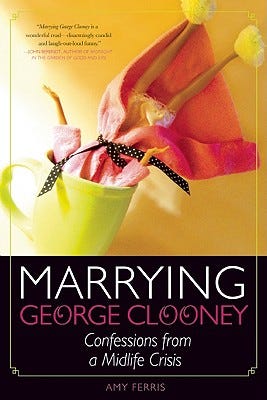
Marrying George Clooney: Confessions from a Midlife Crisis by Amy Ferris
I was first introduced to Amy Ferris via social media, where she is brash, openhearted, more-than-occasionally foul-mouthed, and soothing. She’s the kind of person who makes you feel both seen and slightly underdressed for your own life. I hoped for more of the same from Marrying George Clooney. I was not disappointed.
From the first page, Ferris hits you with big-font certainty. (Possibly the largest font outside of airport signage.) “I am hopeful.” And she is hopeful in the way you can only be in midlife at 3 a.m. Because this is a 3 a.m. book. A book written in the witching hours of perimenopause, when insomnia and anxiety shrilly tag-team you into wakefulness, and you find yourself thinking about your body, your parents, every embarrassing moment of your life, the sudden unignorable awareness that George Clooney is married with children, and also that your metabolism has left you for someone younger.
Ferris reminds us, with furious humor, that hope has sharp teeth and has bitten more than a few people who really should have known better, but who still keep sticking their fingers in anyway. Hope that carries the pressure of memory and the hunger of unfinished business. Midlife hope.
Ferris embodies the credo that You own everything that happens to you and writes accordingly. This is both empowering and terrifying, depending on your life from age 8-108. Ferris writes without filters and with sarcasm-as-survival-mechanism. You may bristle at that, but humans have a knack for dressing their wounds with sarcasm: a sort of glittery topcoat over layers of disappointment and hurt. Ferris points this out, and it somehow draws us closer, which is remarkable because sarcasm often is a way to signal “for the love of God, back off enough for me to recover.”
The book started, she says, as a funny, weird, sad menopausal diary. Then it braided itself with her mother’s descent into dementia. “THIS WAS NOT PLANNED,” she writes. This collision produces a final section of such tenderness that the only sensible response is to reread it so as to remind yourself that language and people can hold this much ache and still be lovely.
There’s a girlfriend-intimacy to her voice. She writes as if to one Dear Reader, and for the span of these pages, you get to believe you’re the one. She lets you in on her weirdest, wildest 3 a.m. thoughts.
Midlife is like losing your keys in your own handbag. Ferris is that girlfriend who reminds you your glasses are already on your head. She’ll insist that you put them on before you dig deeper, because the keys are definitely in there. Somewhere. Or possibly in another dimension.
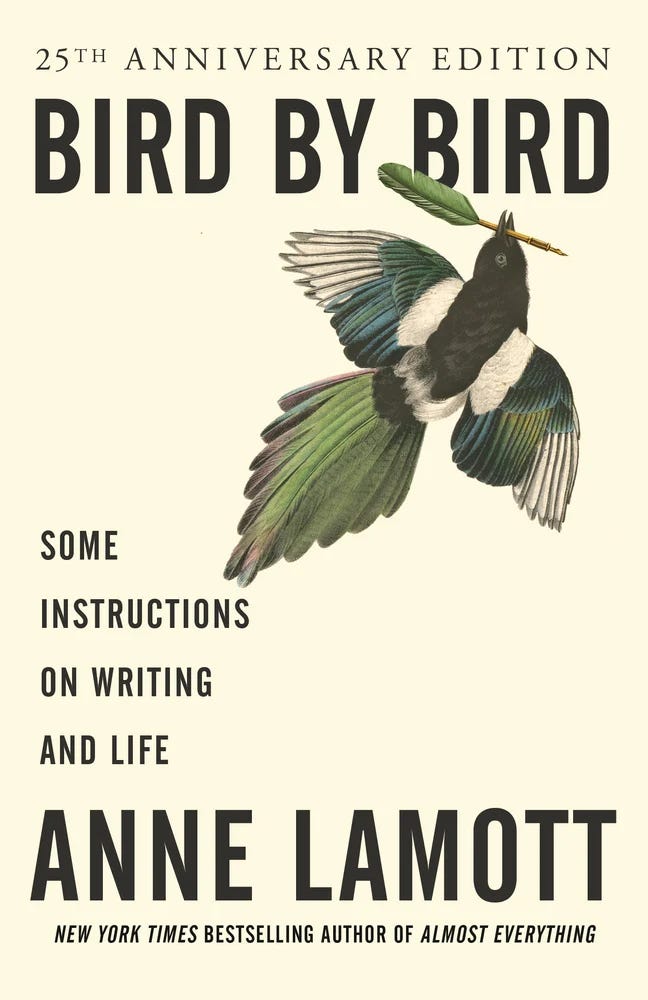
Anne Lamott begins Bird by Bird with a memory from second grade: her poem published in the school magazine. “I understood immediately the thrill of seeing oneself in print. It provides some sort of primal verification: you are in print; therefore you exist.” This is everything you need to know about writers: we don’t believe we exist until we appear in print. Is this the artistic mindset? Is it neurosis? Who’s to say?
Probably Lamott, actually, and I think she’d lean more towards “this is how writers are.”
Bird by Bird is a must-have (or at least a must-have-heard-of) for most writers, and with good reason. Writers love rules and systems. We want formulas for success the way other people want life hacks for cleaning a cast iron skillet (and just as debatable online). Anne Lamott, to her credit, refuses to give them any. This is also why writers like her. We are a capricious bunch.
Writing is, as everyone knows, a profoundly humiliating and humbling activity, which Lamott affirms with delicious humor. Then she convinces you that it is somehow still worth it.
The famous “shitty first drafts” chapter has become canon for writers. Everyone quotes it, mostly because it’s true and also because it allows them to say “shitty” in a professional context. Lamott captures the voices in your head (the vinegar-lipped critic, a German dude, your parents, William Burroughs for some reason, and a chorus of judgmental dogs) and says: yes, those voices are there, and yes, you still have to write anyway. You will make a mess, and then you will make another mess, and out of this mess, a book might crawl onto the shore.
Perfectionism, she points out in another section, is an additional problem we writers have. Writers cling to perfectionism as if one day someone will congratulate them for never finishing anything.
Lamott reminds us that characters are desire, contradiction, and ways people bump awkwardly into each other in the world. Good characters want things you’d rather they didn’t. They disobey. Sometimes they have a distressing tendency to walk off with the plot while you aren’t looking. Follow them.
Lamott insists that writing is about giving. Day by day, you have to give the work in front of you your very best, not hoard scraps for some future masterpiece. “It is only when I go ahead and decide to shoot my literary, creative wad that I get any sense of full presence,” she writes.
And then she doubles down: “You are going to have to give and give and give, or there’s no reason for you to be writing. You have to give from the deepest part of yourself, and you are going to have to go on giving, and the giving is going to have to be its own reward. There’s no cosmic importance to your getting something published, but there is in learning to be a giver.”
Lamott has been down the dark, boggy writing path and lights a torch for the rest of us. She is precisely the sort of person you want tending to your writer’s heart.
Many of us of a certain age learned Greek mythology in middle school, where it was presented to us thusly:
Behold these photos of statues and partial buildings in Greece.
Memorize fifty names, none of which sound remotely different after the third cup of cafeteria milk.
Realize that Cronus and Chronos are not typos but two different gods.
Take a test.
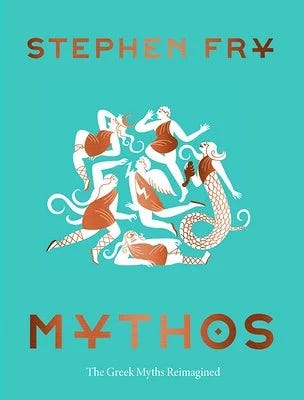
Stephen Fry looked at that steaming pile of joylessness and said, “Nah, let’s turn this into a glorious, messy bitchfest.” And he did.
Mythos is a retelling of the Greek myths stripped of marble solemnity. Fry himself pointedly reminds us these stories are not academic footnotes. Or, as he puts it: “there is absolutely nothing academic or intellectual about Greek mythology; it is addictive, entertaining, approachable and astonishingly human.”
It’s not baseless, though. Fry respects the source material as he roasts it. The man cannot resist a wink and some wordplay.
The gods here are not noble archetypes. They are jealous, petty, vengeful, capricious, warlike, creative, tender, and brutal. They also devour each other. Fry captures that energy and chaos, and the result is both illuminating and astonishingly funny. For example, when Gaia visited her daughter Mnemosyne, Fry tells us she was “busy being unpronounceable.” Later, Gaia gets wise counsel and, “as we all do, whether mortal or immortal—ignored it.” This is the sort of wisdom we can all relate to, because ignoring perfectly sensible advice is one of humanity’s core competencies.
The style is convivial, as if Fry were sharing stories while slightly tipsy at a campfire. Every so often, he pauses to offer an etymology lesson. This is the real work of myths: the breadcrumb trails from Olympus into our everyday speech, the stories we tell about storms and seasons, and the patterns of human interactions.
However, Mythos does not do a deep dive into the contemporary references and anchors mythology has, but this may pique interest enough for you to (oh, please pardon me) do your own research.
The book is broken into short, digestible chapters, like mythological tapas. I don’t think you are meant to binge Mythos in one sitting. Much like the gods themselves, who could never resist a late-night nibble of livestock, nymphs, or one of their own children.
One of the most delightful surprises was the story of Melissa. Yes, Melissa. I was sure Fry was joking, but no: actual nymph, excellent story.
If the last time you cracked open Greek myths was in middle school, Mythos is the perfect reintroduction with equal parts affection and irreverence.
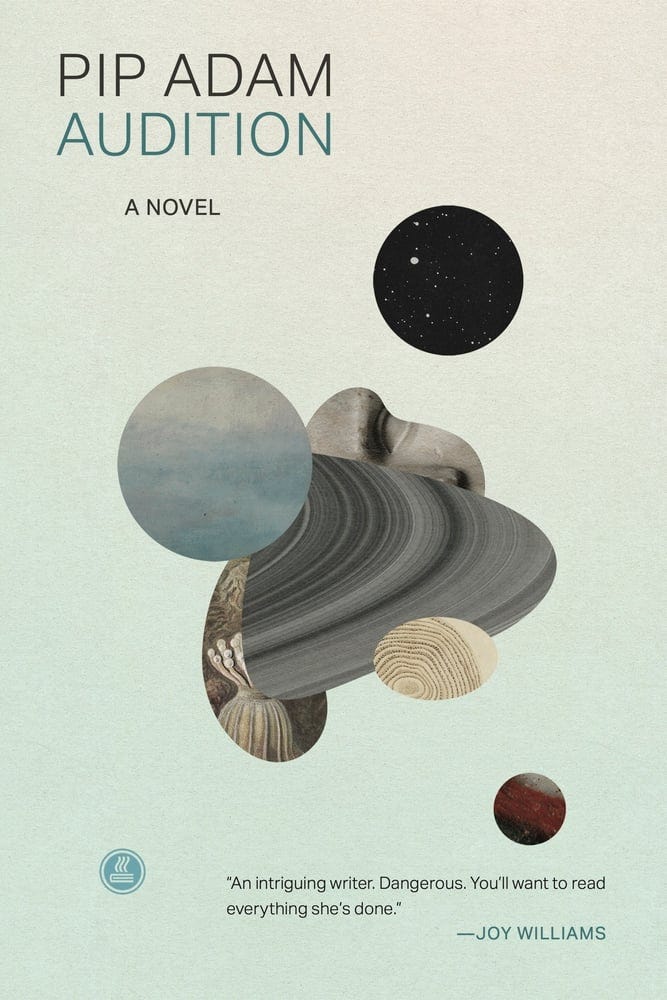
Reading Audition felt like waiting for the curtain to rise on a play that your friend who thrives on the strange is staging in a black box. The lights flicker. Something begins. You think this was a mistake and you start plotting how to escape without the actors noticing because you’re sitting six inches from the stage.
Then you realize you’ve bought a ticket to brilliance.
Audition’s opening section is nearly impenetrable due to fragments of conversation, interruptions, and absurdist overlaps. The only way I found to enter it was to read it as if it were experimental theater or one of those deeply strange animated shorts that air at 3 a.m., the ones that make you wonder who got high and greenlit it. Nonsense, until you let it in. Once I leaned into that frame, the text unfolded like mischievous origami.
The premise: Alba, Stanley, and Drew are three giants with wonky memories confined to a spaceship. They must keep talking or their bodies will expand, pushing against the ship until it breaks. Every word is a sandbag holding back catastrophe. And what do they talk about? Memory, incarceration, identity, the false promises of rehabilitation. These conversations are parceled out and loop back on each other, and the effect is unnerving but masterful. Adam lets information leak in portions just enough to sustain us.
Formally, it’s stunning. What begins as Beckett-like dialogue (people talking about nothing until it turns out to be everything) morphs into fractured recollection, and then just when you’re about to abandon ship, you get clarity. The result is a bit destabilizing. One moment you’re in a spaceship, the next you’re in the remembered history of “before Audition.” The boundary between the two blurs. Eventually, you begin to suspect all the settings are variations of the same place anyway.
Audition is abolitionist, queer, and political down to the marrow. It posits that we are made of memory, and also have holes where systems have taken from us. The giants have been shaped by violence and survival and systems, and Adam refuses to render them neatly.
This is not an easy book. It is experimental to the point that it, too, is pushing against walls until they almost break. Audition shows how speculative fiction can hold abolition and justice at its core. Think The Waves in space, or as one reviewer put it, “brilliantly weird, weirdly brilliant.”
I wanted it to explain itself and behave, but the disorientation is part of the experience. Possibly the point. Audition is theater and testimony and thought experiment. Read it when you’re ready to let a book dismantle you and your certainty.
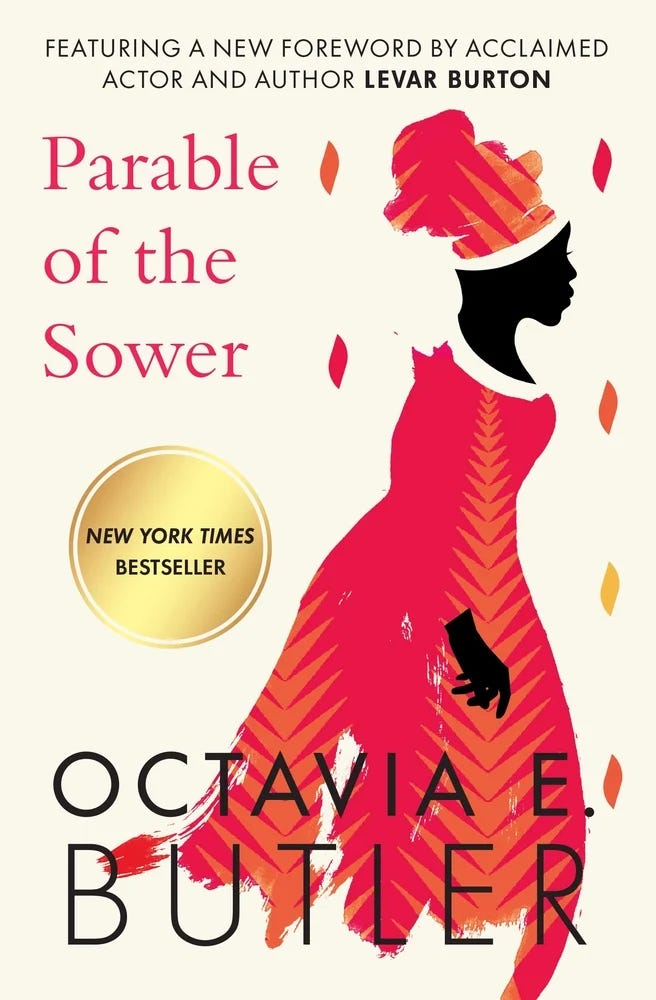
HOW HAVE I NOT READ OCTAVIA BUTLER BEFORE?!! This woman wrote Parable of the Sower in 1993, set it in the 2020s, and basically nailed our current situation. Climate collapse? Check. Wildfires, water rationing, roving gangs? Check. Corporations swallowing up desperate workers into indentured servitude? Check.
It feels like it’s remembering the future before we live it.
Our protagonist, Lauren Olamina, is a teenager during societal collapse (as if being a teenager weren’t enough.) Her neighborhood is walled off in a sort of DIY feudalism project while the outside world devours itself. Lauren suffers from hyperempathy, feeling the pain of others, which is not the sort of thing you’d request in a collapsing society. Hyperempathy makes her porous in a world that rewards hardness. This sounds unbearable, but instead of crumbling under it, she builds a new belief system: Earthseed. Central idea: God is Change. As her world collapses, she walks north, gathering people, planting seeds of this visionary and terrifyingly practical philosophy.
Butler has to convey an entire civilization’s worth of collapse (politics, poverty, violence, religion, drugs, arson, and more arson) and does it without a single moment of expository sludge. The information just unfolds. The world is on fire, but the prose is icily precise. She withholds just enough: a neighborhood that feels safe until suddenly it isn’t, a family plan that collapses in a single night. The restraint makes every disaster land harder.
Earthseed verses throughout the book sound like scripture mixed with human software patches. “All that you touch You Change. All that you Change Changes you. The only lasting truth is Change. God is Change.”
Is Parable of the Sower brutal? Oh yes. Neighbors are slaughtered, and kindness is often punished. But it’s also hopeful. Lauren is pragmatic, visionary, and keeps moving. It’s not a dystopia for spectacle or misery porn, but it does feel uncomfortably close to a guide for dark times.
Harrowing and brilliant.
Tied for my favorite read this month.
And there be the August reads. As always, I welcome any recommendations! What’s in your TBR pile?





 Jackie Pick