Tag Archives: Reading

The Folio: What I Read June 2025

Musings Gone Wild! Almost Zero Horrors!

Hello and other pleasantries to new followers and the brave souls who have been tolerating my nonsense for quite some time.

A reminder and an announcement. I produce two categories of posts:

  1. A sort of high-octane humor that usually ends with me typing in all caps and you wondering whether you’ve accidentally subscribed to the ramblings of an unusually literate honey badger.
  2. Book reviews.

Book reviews are published monthly as “The Folio.” They begin with an attempt at a witty introduction and segue into a more measured discussion. These reviews are longer than advisable, and this, I am aware, can be a turn-off.

Am I trying to turn you on? Certainly, but only to using your library card. Anything else would be unseemly.

I am attempting to keep the reviews aligned with my predilection toward absurdity. Who doesn’t love a slightly deranged, funny book review? PUT YOUR HANDS DOWN. THIS IS THE INTERNET. I CAN’T SEE YOU AND ALSO IT WAS A RHETORICAL QUESTION.

Yes, occasionally, seriousness is unavoidable, especially for the sake of basic human decency. For example, books about war, grief, trauma, or any of the Chicken Soup for the Soul series.

But Writing Reviews That Must All Be Taken Seriously is not always enjoyable. If I must always be properly serious, I’ll run around the town square bellowing “LOOK UPON MY CREDENTIALS, YE MIGHTY!” (which is, incidentally, the fastest way to clear a town square).

Generally, I see no reason to pretend that book reviews should be written in the hushed tone of someone narrating a documentary about endangered sea turtles.

Instead, I’m determined to write the kind of book reviews I’d want to read. Irreverent, digressive, somewhat useful, and not especially academic. When writing these pieces starts feeling like homework, I suspect reading them feels the same. (See review of Terry Pratchett’s book below.)

This is a process. I must first declare independence from the Good Scholar mindset, which is as persistent as mildew and probably smells like it as well.

We’ll see if this works. Forecast: probably not, but to be fair, optimism and I maintain a long-distance relationship.

Anyway, welcome. Or welcome back. Or Welcome Back, Kotter.

Signed, Epstein’s Mother.


I attempted hedonism with my reading this month, which is a pretentious way of saying I tried to read purely for pleasure. Most of the books cooperated. Not Fever Dream, which was an absolute miscalculation on the “fun!” reading scale. It was alarming, but, to be fair, exactly as alarming as promised. (I mean, the title isn’t Sweet Dreams and No Trauma Here.)

This was supposed to be my no-apocalypse month. And while there wasn’t a climate disaster in the bunch (I’ve tended to accidentally read a lot of those this year, if one can accidentally read anything to the end), Fever Dream did slip in poisoned groundwater and the creeping suspicion that everything is contaminated.

As in every month, I tried to find a coherent, unifying thread to connect the books I’d read. Something elegant and unassailable, like a particularly clever (and attractive!) spiderweb. Something that would make me sound like I’d been preparing a rigorous syllabus rather than just reading while eating toast.

The toast, for the record, was not entirely uninspirational.

At first, I thought the unifying theme was “Overthinking,” which is my preferred pastime. Every narrator here is the sort of person who can transform an ordinary moment into an ontological exploration through sheer sustained attention. These are books about people who can’t let a single thought pass unexamined. I recognized them immediately. I am Spartacus.

Just as I was congratulating myself on having found a thesis, another potential theme popped into mind. These books are also about “The Not-Necessarily-Horrific Coming Apart of the Well-Ordered Life.” Which, okay, wordy. All these books involve trying to build a manageable life, only to discover that order is a losing battle. Even the simplest lives can turn chaotic if you pay them too much attention. Or not enough. These books have both.

I spent significant time trying to choose which of these themes to highlight. Overthinking? Everyday order derailment? Eventually, I remembered this is not English Lit 201: Advanced Book Review Blogging and Merriment. No one is grading me. No one even asked for this. (Why didn’t you ask for this, by the way?)

So consider this month’s selections a set of reminders: that our minds are weird and perilous places, that “normal” is perhaps a myth, and that occasionally you will read something so funny, real, and/or unsettling that you won’t even care about the toast crumbs taking up residence down your shirt.

Which is all just to say here are the books I enjoyed enough to finish this month:

A SLIP OF THE KEYBOARD: COLLECTED NON-FICTION BY TERRY PRATCHETT

FUNNY GIRL BY NICK HORNBY

RUN FOR THE HILLS BY KEVIN WILSON

POND BY CLAIRE-LOUISE BENNETT

FEVER DREAM BY SAMANTA SCHWEBLIN


A SLIP OF THE KEYBOARD: COLLECTED NON-FICTION BY TERRY PRATCHETT
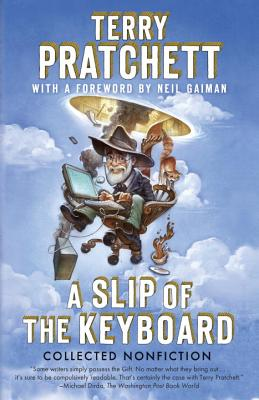
Cover of the book “A Slip of the Keyboard” by Terry Pratchett

My favorite read this month.

Terry Pratchett calls writing “the most fun you can have by yourself.” It’s a throwaway line, but like much that Pratchett lobbed at the world, it is three things at once: it’s funny, it’s self-deprecating, and it’s true.

This collection includes essays, speeches, introductions, and odd bits of reflection. It covers everything from fantasy literature to mushroom picking to Alzheimer’s. It’s brimming with the idea that the ordinary world is weird and interesting. There’s also a bracing indignation aimed squarely at deserving targets, yet even his fury is grounded in compassion.

Here you’ll find Pratchett in fine form, gleefully pricking the balloon of literary snobbery. “Where do you get your fantastic ideas from? You steal them,” he writes. “You steal them from reality. It outstrips fantasy most of the time.” (N.B. This is why writers keep notebooks: to record all the implausible things real people say and do). And you get the sense that saying this felt like slipping a whoopee cushion onto the seat of every Very Serious Writer at some awards banquet.

One of the pleasures of this collection is watching him circle the same conviction again and again: writing, for all its challenges, is meant to be enjoyed. In Chapter 12, he advises writers to amuse ourselves first, because if you’re not having a good time, your readers won’t either. (It sounds obvious until you remember how many books seem to be written purely as acts of flagellation, self or otherwise.) This spirit thrums through every piece. There’s a giddy undercurrent that never tips into preciousness or stupidity. It’s radically sincere and radically human.

Of course, the book isn’t all winks and asides. The essays move into the time after his Alzheimer’s diagnosis, and there is a sharpening. The humor stays, although it can get a little dark, but there’s an urgency, especially as he discusses assisted dying and the politics of autonomy. He had no intention of squandering any of his time on politeness or bromides.

It’s also worth noting how nimble he is. Pratchett can write equally brilliantly about dismantling the idiocy of genre snobbery as he can about daiquiris, and it all feels grounded in what is very clearly his voice and worldview. If you could distill a giggle, a guffaw, a groan, a raised eyebrow, and a perfectly aimed lightning bolt into a single human being, I’d like to think we’d get something very close to Terry Pratchett.

Standouts are most of them, but I particularly loved: “2001: The Vision and the Reality”, “The God Moment”, “Doctor Who?,” and “A Week in the Death of Terry Pratchett.”

Highly recommended. You don’t have to be a Discworld devotee to appreciate this. (I haven’t read them yet.) But you probably should care about books and stories and people and the planet. And if there’s an afterlife with any good sense, may it have a library big enough for him, a comfortable chair, and a hat no one is foolish enough to pinch.


FUNNY GIRL BY NICK HORNBY

Book cover of “Funny Girl” by Nick Hornby

Some of us (ME!) want the laugh. As a child, I’d sneak VHS tapes of Monty Python and Saturday Night Live, memorize sketches, and reassign myself all the best roles. I mentally cast myself as Madeline Kahn in everything she ever did.

So when beauty queen and I Love Lucy-obsessed Barbara Parker realized she’d rather have the punchline than the pedestal, I got it. She wanted to be in the room where the funny happened. Correction: she wanted to be the funny happening. And good for her. Beauty was/is a far more economically efficient trait.

Nick Hornby’s Funny Girl follows Barbara as she abandons the pageant world and reinvents herself as Sophie Straw, a comedically ambitious, photogenic young woman determined to become the next Lucille Ball. She moves to London, lands a lead in a new BBC sitcom almost immediately, and finds herself at the center of a cultural moment. This may sound like the setup for a frothy star-is-born tale, and it is. It’s also well done.

At its best, it’s a warm backstage novel with plenty of nostalgia for 1960s London and classic, frothy sitcoms. The first section snaps. Sophie’s introduction to the world of television is filled with biting dialogue, insecure creatives, and writing-room banter (which is arguably the best part of the book). Hornby nails the way brilliance and bitterness coexist in a creative team, as well as the cranky machine that seems to have been the BBC. I would happily read an entire novel that never left that room.

Once the sitcom takes off and Sophie settles into her role as national darling, the narrative zooms out. We get more focus on her coworkers: writers Bill and Tony, who steal scene after scene (especially Bill!). They embody one of the novel’s central tensions: should comedy comfort or provoke?

The “funny” dissipates into complexity, and it mostly works. Hornby’s wonderful at dialogue, even better at capturing the feeling of being slightly out of sync and by being ahead of your time. Funny Girl is like one of those rubber playground balls: bouncy and liable to knock you in the face when you least expect it. Hornby captures much of the texture of 1960s television: the starchy formality, creative constraints, looming cultural shifts.

What I loved most — and what I wanted more of — was the joy of collaboration, the weird alchemy of making something funny with other people. That’s where the book shines. Not in fame or romance or the idea of being “the one girl,” but in the magic of a room full of smart, neurotic misfits trying to make each other laugh.

If there’s a flaw, it’s the one that afflicts many long-running series. Eventually, there’s a sense that a wrap-up should have come sooner. Also, the book never quite reckons with the sexism it documents. That might have been thrilling as well, but a book cannot be all things to all readers.

When this book lands, it lands. It gets the weird intimacy of artistic collaboration. It gets the rush of writing a good bit. It gets the long slide from being new and bold to just being there.

Perfect for summer. It’s sweet and tart like lemonade, and just as delightful.


RUN FOR THE HILLS BY KEVIN WILSON

Book cover of Run for the Hills by Kevin Wilson

Most of us were raised on a diet of artificially flavored found-family stories. That most cherished of modern fables in which a group of charming misfits (orphans, strays, emotionally stunted baristas, etc.) band together and discover that what really matters isn’t who raised you. (See also: The Brady Bunch, those sunny-eyed avatars of family bliss. Fictional. Sanitized. Immortalized on lunch boxes.) Somewhere along the way, these found families become closer than real families.

Cue the swelling music. Hugs all around.

Enter Run for the Hills, Kevin Wilson’s contribution to the genre, which, thankfully, avoids nearly all of the above. It is not randomly peopled with inexplicably irrepressible eccentrics who “just need each other.” What it is, instead, is a not-saccharine-yet-still-positive, more ambivalent version of found family.

It starts with Mad Hill, a woman living a self-contained life on her mother’s farm, doing a great job avoiding the complicated legacy of her absentee father and minding her emotional business like a professional. That is, until her half-brother Reuben shows up. His plan is to track down the man who abandoned them both, and see if a couple of other step-siblings are up for meeting, if not joining the adventure. The sudden reveal of a half-brother, his PT Cruiser, other siblings, and this whole nutty scavenger hunt is…a lot for Mad to take in. Mad does not want to go. She says yes anyway. This is what we call family obligation, and also improv training, which sadly has no place in this book at all.

What unfolds is a road trip that’s more emotional audit than grand adventure. Wilson isn’t interested in big plot mechanics or over-processed closure. These siblings don’t know each other. All they have is blood and disappointment and a half-formed instinct to care. Over the miles, something resembling a bond starts to form because they decided to try.

The entire trip is a glorious, laugh-out-loud exercise in restrained dysfunction among truly good people.

Wilson writes with enormous empathy and just the right amount of weirdness. The book is emotionally resonant, highly enjoyable without begging for a laugh track or a piped in “awwww.”

After a carefully paced journey, the final pages may feel slightly soft, a quiet, gentle roll to a stop for some readers. Look, sometimes road trips end and sometimes they just keep going.

So, no, this is not the Brady Bunch. It is not about the ideal family, or even the fully-healed one. It’s about the possibility that choosing to remain in proximity to others, despite discomfort or history, is its own kind of commitment. And there is a lot of fun to be had in that.


POND BY CLAIRE-LOUISE BENNETT

Book Cover for Pond by Clair-Louise Bennett

Most people will do almost anything to avoid being alone with their thoughts. They will join clubs. They will cultivate elaborate social obligations. They will distract themselves with devices whose primary purpose is to obliterate solitude (see: iPhone, pickleball). Claire-Louise Bennett’s Pond is a testament to the opposite impulse: the deliberate, even defiant choice to pay attention to one’s mind. Where a banana left out becomes memento mori.

Reading Pond feels like showing up ten minutes late to a strange, luminous experimental film. You stand there, half-certain you’ve missed the part that explained everything, until you realize there is no part like that. You are simply inside someone else’s mind, and you get to stay.

In her debut collection, Claire-Louise Bennett assembles 20 fragments, vignettes, and near-monologues narrated by a semi-reclusive woman living alone on the edge of a village in the west of Ireland. She is never named; she is quite selective about what she shares about her exterior life. What she does share with abandon is a torrential, exhilarating interiority. Our narrator has a mind exquisitely tuned to its thoughts. This isn’t stream-of-consciousness, it’s a waterpark.

What is Pond about? Well, there isn’t much about here. No driving plot, no clear progression. But I’d argue there’s a lot of “there” there. There is an astonishing amount of noticing. Jeannine Ouellette (among others, but I like her approach very much) talks about paying attention as a radical act, an act of devotion, an act of “the most powerful writing practice you can cultivate for yourself.” Pond proves that. Each piece zooms in on a moment, an object, a mood. “Morning, Noon, & Night,” for example, imbues the most basic of breakfast foods with something close to rapture. Bennett’s descriptions are precise and saturated with significance. It’s Walden if Thoreau were a woman living alone in Ireland, interested in cooktop knobs, and quite possibly happier for it.

Bennett sounds like a dear friend who overshares with deep self-awareness while you sit and watch her “do her thing.” Take this line:

“English, strictly speaking, is not my first language by the way. I haven’t yet discovered what my first language is so for the time being I use English words in order to say things.”

This book requires a carving out of uninterrupted time. (Which is to say, this is probably not the book to read in five-minute increments between checking email.) But it is unmistakably alive . Prickly, even. It is also, in its way, a challenge: Who among us is willing to be this honest about what goes on in our heads when no one is looking? Most people can’t stand a single unscheduled thought. This book contains nothing but.

If you want to be reminded that noticing is itself an art form, then I say yes and yes again.


FEVER DREAM BY SAMANTA SCHWEBLIN

Book cover of Fever Dream By Samantha Schweblin

This is a book you absorb, like a symphony or a toxin, depending. It’s short, disorienting, beautifully written, and unpleasant in the best way. 

It is called Fever Dream, which is helpful, as the entire experience reads like the kind of dream you’d have after eating something you should not have eaten at a charity luncheon.

At first glance, this slim, unassuming volume looks harmless. You think, “Oh good, I can read this in a day.” Which you can. What you won’t expect is to spend the evening staring at your water glass, wondering if it has ever tasted quite so chemical.

The premise is simple: Amanda is dying. A boy named David (or perhaps a child-shaped presence named David), who may be real or may be the embodiment of Amanda’s crippling maternal worry or the result of illness, interrogates her as she drifts in and out of narrative coherence. She is trying to explain what happened. He is trying to hurry her along.

Early on, Amanda introduces the concept of “rescue distance” — the invisible, ever-changing rope between her and her daughter that represents how far her daughter can be while Amanda is still able to keep her safe.. She recalculates the rescue distance constantly depending on terrain, proximity, and possible threat. The “rope” tugs or goes slack, and both states feel awful for different reasons. It is one of the best metaphors for motherhood I’ve ever read, a reminder that parenthood is mostly the exhausting calculation of invisible risks.

Something is wrong, not just in Amanda’s mind, but in the rural Argentine town she’s visiting. The land is poisoned. Children are sick. Animals are dying. There’s a woman who might be a witch, and a boy whose soul might have been split or transformed. Or perhaps he was just traumatized. Schweblin doesn’t lean too hard into explaining the supernatural elements that vibrate in the background. That’s not where the horror lives.

The horror is in the groundwater and the gossip and the things the residents agree to pretend not to see. This town is rotting.

Structurally, the book is a conversation braided with memory, braided with something that may or may not be happening in real time. Whether David is present or imagined is irrelevant in this claustrophobic fever-dream-within-a-fever-dream. One minute you’re in a waiting room with Amanda, the next, you’re on a farm with Amanda and dead animals and sick children.

Megan McDowell’s translation carries it beautifully. It’s sparse, urgent, and devoid of unnecessary hand-holding.

As for the ending: it puzzles with an elegant disregard for the readers’ expectations.

Fever Dream is an exquisitely crafted conjoining of anxiety, dread, and maternal devotion. It is disorienting and unforgettable.

It’s motherhood rewritten as slow-burn horror.


And thus went June. I’m excited for my July reads, and as always, I welcome any recommendations! What’s in your TBR pile?
The 2024 Reads That Roused This Rabble of One


We All Love an End-of Year Recap, Don’t We? 

My go has been thoroughly gotten. My timbers shivered. Murgatroyd and Heavens have joined forces to create a chaos cabal.

Great googly moogly, folks, I’ve consumed not-quite-a metric buttload of books this year. I’ve also abandoned a few along the way without shame. Life’s too short and other platitudes

We long for stories that fuel the soul. Whether you get them through books, e-readers, audiobooks, puppet shows, or, MAYBE, you know, this superb nonsense right here. You’re welcome.

An image of paper-wrapped books and a caption that reads "The 2024 reads that roused this rabble of one. (We all love and End-of-Year Recap, Don't We) by Jackie Pick

A lot of my reads this year were solid, some stellar, but these? These are the books that stuck like particularly hearty and literary overnight oats.

So, if your TBR pile isn’t yet a towering Jenga stack of ambition, here are some suggestions to make it so. Hopefully, there’s something here for your next visit to the reading nook of your choice.

Presented in the order I devoured them:


Book cover of You Could Make This Place Beautiful by Maggie Smith

You Could Make This Place Beautiful by Maggie Smith

Beyond brave. It’s honest. It’s messy. It’s often overwhelming. It’s wonderful.

This is the one I’ll crawl back to when I’m dangling off the edge of life’s proverbial cliff and need to grab hold of something — someone — for dear life. Artistically speaking. And also in all the other ways.

Full review in this post.


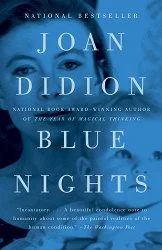
Book cover of Blue Nights by Joan Didion

Blue Nights by Joan Didion

Aging, parenting, disillusionment, regret, grief, and the accompanying sense of fragility, presented with the calm of deep grief. It’s magnificent. It’s Didion.

This is the one I hope I’ll never need to return to — but I’m deeply grateful it’s there, should I need an unwavering companion when grief strikes its deepest, darkest notes.

Full review in this post.


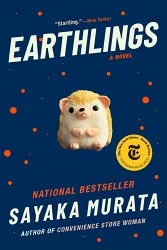
Book cover of Earthlings by Sayaka Murata

Earthlings by Sayaka Murata

So fricking weird. (*heart emoji*) Murata’s wild originality had me falling head over heels one moment and clutching my stomach the next. It’s the kind of book that makes you say, “Wait, what?” on every other page. Do read a summary before you dive in — it’s not for everyone.

This is the one I’ll revisit whenever I need to remind myself just how boundless, bizarre, and brilliantly unsettling human creativity can be.

Full review in this post


Book cover of The Secret History by Donna Tartt

The Secret History by Donna Tartt

Needle-sharp detail. Characters so deep you could drown in them. Language that brushes up against the divine. TIt’s a long one, sure, but not for a second did it feel like it. Every word earns its place.

This is the one I’ll revisit when I want to study with a master.

Full review in this post


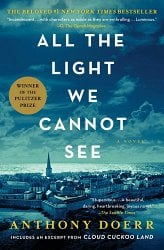
Book cover of All the Light We Canno See by Anthony Doerr

All the Light We Cannot See by Anthony Doerr

Can I interest you in a Pulitzer Prize winner that just doesn’t let go? This is the kind of book to take on a long train ride. Or several short ones. Or just sit with at your kitchen table, pretending you’re in some windswept European war zone while your coffee goes cold because.

Of this year’s books, the one I’m most likely to reread.

Full review in this post.


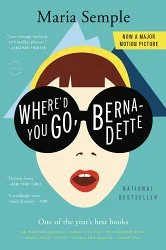
Book cover of Where’d You Go, Bernadette by Maria Semple

Where’d You Go, Bernadette by Maria Semple

A deeply resonant, delightfully offbeat novel that juggles wild trips to the end of the earth, absurdity, and lawn warfare with pitch-perfect balance.

This is the one I’ll reach for when I need a reminder that satire can be both razor-sharp and laugh-out-loud hilarious. Also on those days when I want to pretend that I, too, am a perfectly flawed genius navigating a world that just doesn’t get her, but likes to text about her anyway.

Full review in this post


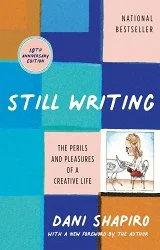
Book cover of Still Writing: The Perils and Pleasures of a Creative Life by Dani Shapiro

Still Writing: The Perils and Pleasures of a Creative Life by Dani Shapiro

A steaming hot bowl of chicken noodle soup — comforting, helpful, a little salty. Perfect. You want to rush through it? Wrong move. This is a slow-simmer kind of book. It’s the kind of thing you read and pause, read and pause. You mellow with it. That’s where the magic is.

This is the one I have already revisited several times as I bemoan one writing issue or another.

Full review in this post.


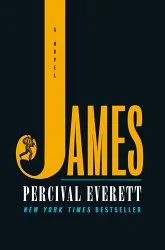
Book Cover for James by Percival Everett

James by Percival Everett

Percival Everett not only brings the goods, the whole goods, and nothing but the goods — he delivers them with such unapologetic brilliance that you’ll find yourself wondering, ‘How has no one done this before?’ And then you realize — no one else could have done this.

I am thunderstruck.

This is the one I will revisit when I’m in the mood to be astonished and delighted by audacious brilliance.

Full review in this post


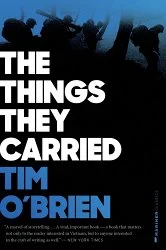
Book cover for The Things They Carried by Tim O’Brien

The Things They Carried by Tim O’Brien

Read this when you are in a place to do so, if only because the writing and structure are elegant and majestic. But also, read it when you can stomach the violence and sorrow.

This is the one I will revisit to marvel over the near-perfection of the title piece.

Full review in this post.


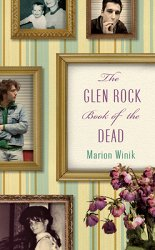
Book cover for The Glen Rock Book of the Dead by Marion Winik

The Glen Rock Book of the Dead by Marion Winik

There is warmth here, and ferocity. There is compassion, too, and an unwavering sense of curiosity. What does it mean to remember someone? What does it mean to be remembered? These are the questions Winik circles, never directly, but with every story she tells.

This is the one I’ll revisit to marvel at how entire lives can unfold in just a few paragraphs, every word chosen with surgical precision and care.

Full review in this post.


What books made your year more bearable? More enjoyable? More human?

The ones that lifted you, grounded you, or just reminded you we’re all in this wild, messy, beautiful thing together?

And what stories do you recommend for us for the coming year?

P.S. Because I love you and them and all of us.

The Folio: What I Read Mid-November through Mid-December 2024


The (Un)usual Humanity of It All

When I wrap up each month’s reading, I like to look for themes that connect the books I’ve enjoyed. I am exciting that way.

This month, the theme seems to be something like “Joke’s on you, asshole.” Fair. A little harsh. I should be nicer to myself.

Anyway, generally, I want my books to feel “slippery and wild,” as Gwydion Suilebhan described in his post about A Real Pain. . The books should make me work for it a little, challenge me, delight me, or knock me off-balance just enough.

This month has been mostly glorious, occasionally frustrating, and terribly on-brand for late November into December. There was so much illness in the house, including me. Two solid weeks of being sick cut into my reading time, as did an ocular migraine that I was sure was a retinal detachment (long story). Finals for the kids, Thanksgiving, and the usual chaos of life were all there too — the kind of busyness we’ve somehow convinced ourselves is virtuous. Spoiler: it’s not.

Still, there were hugs to give, cheers to yell as we clawed our way through heartaches, anger, joy, and everything in between. Most of the books I read this month fit the mood perfectly. And, as you’ll see next month, even Nuclear War (which I didn’t finish in time for this wrap-up) aligns thematically in its own toe-tapping way.

WHY do we do this? Why do we run around like caffeinated ferrets, scuttling to and fro with all our urgent ferret business, only to collapse in December like, “Yes, our ferret work here is done,” and then, immediately decide January is the perfect time to start sprinting again? (Side note: I am fully bracing myself for the onslaught of “Hard to believe, but it’s time to make summer plans for your kids!” emails by January 10th. No. Stop it. Please. Let us wallow in this current hellscape for five seconds before dragging us into the next hellscape — this time flavored with the bitter tang of FOMO over missing All the Important Things.)

Back to the books. There’s a clear thread of humanity in all its messy, ridiculous, and poignant glory.

Some of these were slippery. Some wild. Some both.

Which is all just to say these are the books that I (mostly) enjoyed enough to finish in the last month:


Glen Rock Book of the Dead by Marion Winik 

Marion Winik’s The Glen Rock Book of the Dead is approximately 50 brief, jewel-like portraits memorializing (if not nearly resurrecting)individuals who have touched her life. Inspired by the Mexican Day of the Dead traditions, where mourning and celebration dance together, Winik writes about people she’s known intimately and fleetingly. She flays open lives in just a handful of paragraphs, with warmth, precision, and dazzling compassion.

And oh, holy hell. Sometimes your new favorite book waits quietly, unremarkable in a groaning TBR pile. What a delight this book is. You will feel things you are unprepared to feel about the lives of people you don’t know and whose names you may never find out. Winik doesn’t so much write as she casts spells, allowing entire lives to unfold in under two pages. Each life is “introduced” in vibrant entrances, and their passing takes a back seat to their living. Each subject arriving fully realized, their deaths present but secondary to their lives. Winik seems more interested in how they lived and how our lives imprint on one another.

There is warmth here, and ferocity. There is compassion, too, and an unwavering sense of curiosity. What does it mean to remember someone? What does it mean to be remembered? These are the questions Winik circles, never directly, but with every story she tells.

It confronts pain and disappointment, isolation and failure, but it also finds joy, community, and the unyielding mystery of what it all means. The reader is left wondering what their own two-page version would look like. Disappointment? Pain? Trying to shield myself and my kids from it all, succeeding in some places, failing in others? That’s part of the story. But Winik reminds us that we get to write our own. And that pain? That joy? It’s real. It’s messy. It’s what makes life worth remembering. And it leaves you hoping, above all, that when your story is told, someone notices. Someone remembers. Because, damn it, you mattered. All of you. Your pain and your triumph.

These aren’t obituaries — they’re titrated snapshots of life, love, and the lingering weight of loss. is uplifting even as it wounds, surprising in its candor and its grace.

May we all be remembered like this.

This one is a stunner and you can expect to see it on my “Favorite Reads of 2024.”


Normal Rules Don’t Apply: Stories by Kate Atkinson 

Kate Atkinson’s Normal Rules Don’t Apply is a collection of linked short stories that’s equal parts literary magic trick and narrative haymaker. Atkinson throws you in — no hand-holding, no explanations. Just the weird, the wonderful, the unsettling. The result? A threaded, clanging tumble through lives and timelines.

This isn’t your run-of-the-mill short story collection. It’s a mind-bending, genre-hopping grab bag of what just happened?

This book is cheeky. Boisterous. It’s dark humor wrapped in a velvet glove, then slapped across your face for good measure. Atkinson sets you up with a grin, plays nice for a few pages, and then yanks the rug out from under you. And you’ll thank her for it, because it all tracks. It shouldn’t work, but it does. More than once as a story ended with a brilliant twist, my response was, “Clever girl. Of course.”

The rules of this universe are deliberately opaque. Atkinson leaves you to sort through the fragments, to make sense of the silences between what is said. It’s in those silences that her true mastery lies. She gives you just enough to see the edges of the abyss and then leaves you trembling on the brink.

The collection is quite the cocktail: a shot of Twilight Zone, a splash of Black Mirror, and just enough Grimms’ Fairy Tales to make you wonder what’s lurking in the woods. The rules of this universe are blurry, and that’s the point. And, you know, the title. Atkinson creates the illusion of coherence while actively undermining it.

You don’t settle into this book. You hover above it, guarded, watching through your fingers as the characters stumble into doom, misfortune, and the occasional epiphany. These are stories about endings large and small about how the world tilts on an axis so thin it’s a wonder we haven’t all already fallen off. The characters are magnets for misfortune, yet you are drawn to them, even if only to glimpse their ruin. You feel for them, in the way one might feel for a figure in a painting, separated by time and the inability to intervene.

Not every story is a slam dunk. Some are bumpy, but Atkinson’s gift for words, dialogue, world-building, and her ability to twist your brain into a Möbius strip more than make up for it. Her wordcraft is elegant, ruthless, and a lot of fun.

Standout stories for me included “The Void,” “Spellbound,” and “Classic Quest 17 — Crime and Punishment.”

Normal Rules Don’t Apply is fun. It’s spooky. It’s grim. It’s a Rube Goldberg machine of all sorts of end times — global, personal, and everything in between. And when you’re done, you’ll sit there, wide-eyed, and maybe a little haunted.


Tiny Beautiful Things by Cheryl Strayed 

Cheryl Strayed’s Tiny Beautiful Things isn’t your average advice book — it’s a mixtape of truths wrapped in gorgeous prose and raw humanity. It’s a book of dualities: brutal yet tender, despairing yet hopeful, profound yet breezy. This isn’t sugarcoated “life gets better” nonsense. No, this is Strayed, as “Dear Sugar,” rolling up her sleeves, grabbing your heart with both hands, and saying, Look. This is it. This is life. It’s messy. It’s painful. It’s achingly, stupidly beautiful.

The letters are raw, the writers, asking the questions many of us are too scared to admit we have: Am I enough? Does this pain ever stop? Do I matter? Why am I so lonely? Why does life suck so hard? How do I make it through another Tuesday? These writers are raw, stripped down to their essence, but they are also filled with the absurdity of being human. And Strayed is right there, tossing out lifelines. Not fluffy ones. Not Hallmark-card platitudes. Real, gut-wrenching ropes woven from her own heartbreaks, mistakes, and triumphs. She doesn’t shy away from the mess; she dives right in and invites us to do the same. The water may not always be warm, but you’ll adjust. As Strayed replies with wisdom and candor, there is, when appropriate, a certain lightness. She is sharp, sometimes blunt, but never unkind.

“Vespers” is a stunner — a piece that makes you sit there, slack-jawed, wondering how someone can take pain and turn it into something sacred.

This book isn’t a balm; it’s a salve that stings before it heals. It picks at the scabs of life and gets to the tender, raw human stuff underneath. It’s so much about fixing your problems as it is about reminding you that you’re not alone in the mess. That we’re all just stumbling around, wanting the same damn things: joy, connection, purpose. And, yes, you can probably fix what needs fixing, if you’re brave. You can probably get through this particular heartache if you’re brave. And you’re going to be brave because you are not alone in this.

Tiny Beautiful Things is a reminder to stay human. To stay messy. To stay hopeful, even when it feels impossible. It’s also a reminder that there are good, decent, people in this world who are here for you and me, and we for them.

Cheryl Strayed doesn’t just give advice — she lights a fire in your chest and dares you to hold onto the warmth. You get a lifeline! You get a lifeline! Everybody’s feelings get saved — or at least acknowledged — and isn’t that half the battle?

Tiny Beautiful Things is here to break your heart, stitch it back together, and then maybe poke at it a little for good measure. It’s a book that’ll make you want to hug a stranger, laugh at your own bad decisions, and send a text to that one friend who always puts up with your nonsense. It’s brutally honest, occasionally breezy, and profoundly human. Read it, feel all the things, and maybe grab a box of tissues. You’re gonna need ’em. Chin up, friend. We’re here for each other.


The Misanthrope by Moliere

For a script written in the seventeenth century, The Misanthrope by Molière has a strikingly contemporary feel. The sharp dialogue, biting wit, and complex interplay of ideals versus social niceties could easily be transplanted to a modern setting without losing its punch. Molière’s critique of societal hypocrisy still hits hard.

This wasn’t a game-changer for me, but it’s a classic I’ve wanted to check off my list, and I’m glad I did. There’s something refreshing about reading a script, where the dialogue and characters carry the story’s full weight. Alceste, the titular misanthrope with unyielding moralism, is both frustrating and fascinating, a man who despises the very world he’s hopelessly entangled in. His dynamic with Célimène, his perfect foil, creates a tension that still feels fresh. Her flirtations and charm contrast his severity and bluntness, and their relationship becomes the beating heart of the play. She is everything he claims to despise, yet he cannot look away.

Alceste’s disdain for pretense and societal hypocrisy feels less like a relic of 1666 and more like the bitter grumblings of someone scrolling through social media today. And yet, his rigid moralism isolates him, a reminder that the pursuit of ideals often comes at a cost. The play’s ending, where Alceste stubbornly clings to his principles, has sparked plenty of debate. Is it a comedic jab at the absurdity of rigid moralism or a quiet tragedy about isolation? Molière pokes fun at Alceste’s earnestness while acknowledging that society, in all its artifice, is hardly blameless. It’s not neat, not tidy, but just ironic enough to make you think. Alceste stomps off to be alone with his ideals, proving once and for all that being “right” doesn’t necessarily make you happy. It’s funny, frustrating, and real in a way that feels timeless. Classic Molière.

Look, it’s not going to knock “hanging out at Chuck E. Cheese for my twins’ 5th birthday” out of my top life experiences or anything, but I’m glad I read it. It’s clever, and its critique of human nonsense is as relevant now as it was when Molière wrote it. If you like your classics with a side of sarcasm and existential dread, give this one a shot. Plus, reading a script makes you feel fancy. Like you’re one latte away from writing your own play. And isn’t that lovely?


Arsenic and Old Lace by Joseph Kesselring 

Arsenic and Old Lace is a dark comedy that takes sweet old lady energy and spikes it with cyanide. Mortimer Brewster, your average theater critic, discovers his adorable aunts have been murdering lonely old men and burying them in the basement. One brother thinks he’s Teddy Roosevelt; the other is Creature Feature of the Month having a bad day. The whole thing is bedlam.

I read the play, having heard my whole life that it was a real treat. I didn’t not get it, but I also didn’t get it-get it. So I watched the film — it’s not entirely faithful, but close enough. Same reaction. It’s not for me.

I don’t usually review things I don’t like, or even finish them, but I finished this, so I’m marking it here.

Millions of people love the play and the film, and I leave it to them with warm wishes that it continues to bring joy for years to come (and with sincere hopes that the name “Mortimer” makes a comeback.)


Next week I’ll post my favorite reads from 2024. I’ve got my eye on a lot for 2025. I went through the NYT list of the top 100 books from the year and it made a nice little graphic of things that caught my eye. The local librarians are going to get very sick of me soon.

Were you able to read much this last month? Anything good?