Category Archives: Reading

The Folio: What I Read March 2025


History is fading, the sea is rising, and a turtle is unimpressed.

Some months, the books are books. Story. Characters. Distinct pleasures.

And then there are months where books refuse to stay in their lanes. They start talking to each other, or maybe through each other. Suddenly the tidy book stack turns into a narrative séance. Ghosts, toddlers, bureaucrats, broken systems, family myths, fractured timelines, fractured time.

Oh, I had questions. What does memory preserve, and what does it redact at convenience? Are stories fixed or quantum? Can language hold sacred when everything else falls apart?

MAYBE.

These five books lurch, loop, and rebuild themselves mid-stride. A girl travels across water and time. A man folds a stranger’s laundry. A mother dies, a child is inherited. Many of these books refuse the ease of a beginning, middle, and end. Some worry about the end of the world. Others worry about surviving the day. Most do both. It all means something or quite emphatically does not.

Memory shows up as both myth and mortar. While ghosts linger and names slip, fragile truth cracks. Growing up and growing old involve figuring out what we owe each other now and in the future (and in some cases, the past). The answers are words shared or withheld and often wrapped in grief.

As shown in these five books, those words, expressed or not, recommend a deep belief in storytelling as lifeboat and anchor. When systems fail and the world turns sideways, people build stories from scraps. That’s how humans get on with this whole business. It may be the only way.

Violence still hums underneath, of course. We’re human after all.

Every story here is about surviving damage.

That can be draining. Worth it? Yes. Still, I’m hoping to gift myself some lighter April reads. But who knows? Haphazard book-choosing is haphazard, as absolutely no one says.

Also, somehow, I read two climate apocalypse novels this month. One would’ve been sufficient. Two feels pointed.

Aaaand, one book does indeed have a talking turtle. The turtle has opinions. Heed the turtle.

Which is all just to say these are the books that I enjoyed enough to finish in the last month.

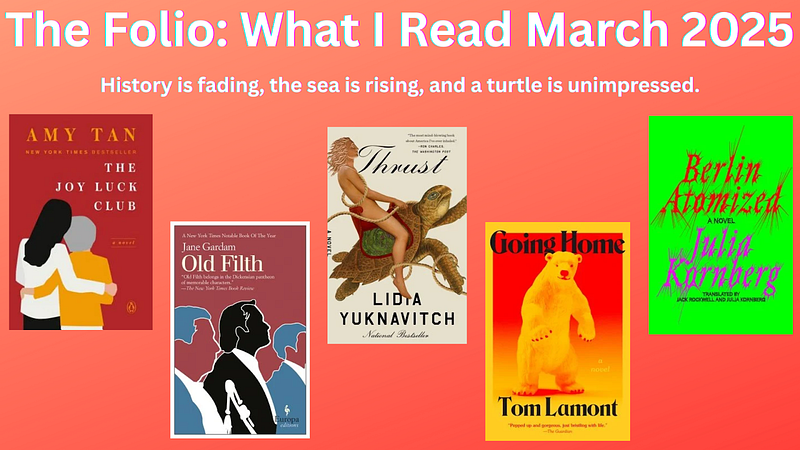
Thrust by Lidia Yuknavitch
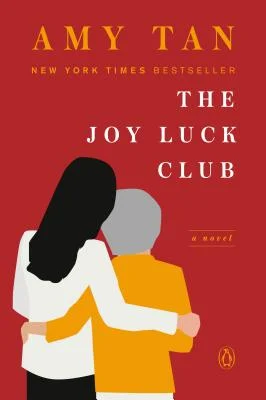
The Joy Luck Club by Amy Tan
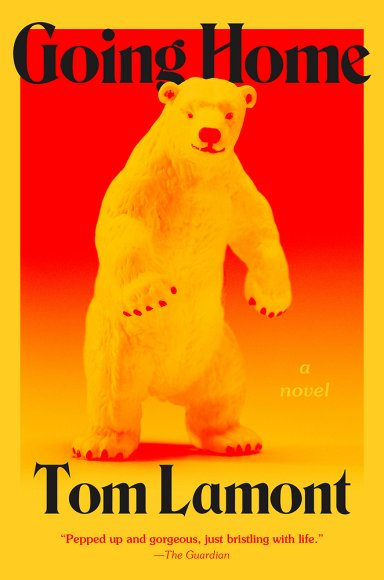
Going Home by Tom Lamont
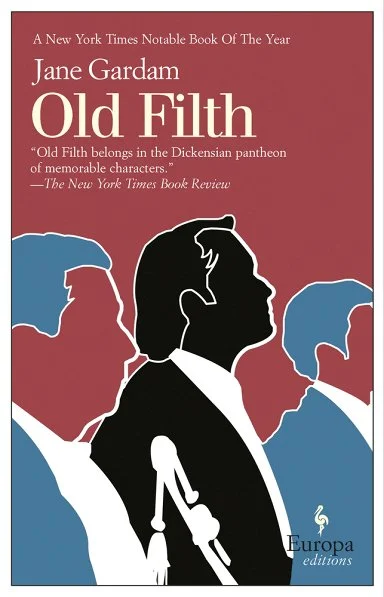
Old Filth by Jane Gardam
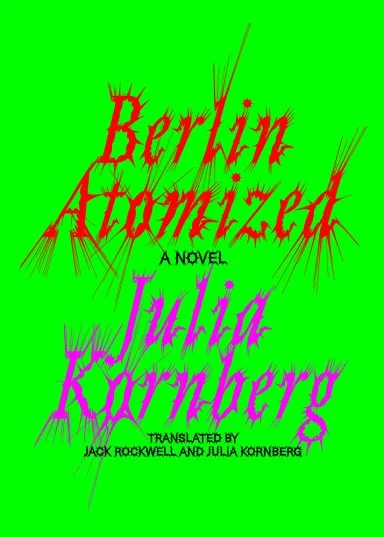
Berlin Atomized by Julia Kornberg

Let’s begin.


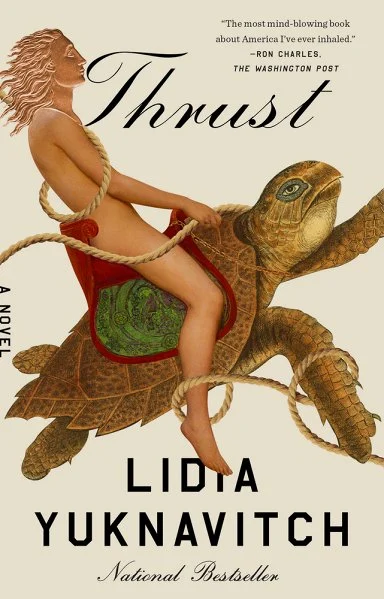
Thrust by Lidia Yuknavitch

Beautiful, brutal, and shouldn’t make sense, but does

If you pick up a novel hoping for relaxation or comfort, you might want to reconsider Thrust by Lidia Yuknavitch. This is not comfort reading. It’s barely even comfortable reading.

HOWEVER, Thrust is a tsunami wrapped in poetry. Beautiful, brutal, and shouldn’t make sense, but does. Yuknavitch does not shy away from complexity or discomfort, and here she plunges us headlong into narrative that defies ease. It’s a story full of place and people dissolving and somehow still fighting to create something that feels like home and family.

I began Thrust without realizing it was set in a future defined by climate catastrophe. It took a bit of time to get my bearings with the structure of the book and the fantastical elements, but somewhere around page 48, I stopped trying to grip the story and let it carry me. I did not so much sink into this book as hover over it, skeptical and fascinated and ultimately won over.

The story centers on Laisvė, a young girl gifted/burdened with the ability to glide across water and time. She slips between timelines from the Statue of Liberty’s assembly on America’s shore to an America drowning beneath rising seas and its own humanity. Society, it turns out, was always built on shaky ground, half-broken and desperate. Animals speak with her, and unsurprisingly, they have more sensible things to say about humanity than humans do. (Largely that humans may not have ever had our acts together.)

Structurally, the novel loops and swirls through time, memory, and identity with a complexity reminiscent of Cloud Atlas. Just…wetter.

Yuknavitch writes about characters who are lost in one way or another. Those who exist in the kinds of spaces society has reserved for those it cannot properly categorize or who it can categorize a little too glibly. She reminds us that identity, names, and history are slippery things. “I think humans are comforted by names isn’t that right?” a whale asks young Laisvė. “I think names and naming do matter a lot,” she replies. “Also, I think names can slip their meanings.” Profound, although not necessarily cheerful in or out of context.

It’s almost unfair how good Yuknavitch’s prose is. Lines such as, “She slept in pieces,” or “David let out the heaviest breath I’d ever heard, as if he were releasing a long, thick, coiled rope” hit in that way that can make a reader take a deep, respectful breath.

In the end, Thrust isn’t a snuggly read. It’s unsettling, powerful, and almost obnoxiously good. Yuknavitch writes like a time traveler with a flare gun.

“You will all die, too, is the thing. But you haven’t figured out how to make death-stories, and death-places, that have generative power.” And yet, Thrust is exactly that: a death-story, a life-story, and a hell of a ride.


The Joy Luck Club by Amy Tan

A Master Class in Writing the Unresolved

The Joy Luck Club is like being invited to someone else’s emotionally loaded family dinner. One minute you’re trying to stay out of the competition over the side dishes, the next you’re knee-deep in decades-old grudges, unspoken secrets, and love wrapped in miscommunication. Tan serves carefully balanced portions of humor and tragedy, and before you know it, you’ve ingested more insight about your own family than you ever intended to when you told your friend you’d love to go.

I think I’ve exhausted the food metaphors for now. We’ll see.

The novel centers on four Chinese immigrant mothers and their American-born daughters as they work through and/or avoid tangles of memory, identity, and cultural translation. Told through interwoven stories, The Joy Luck Club shows how silence travels through generations just as surely as genetic or cultural traits. The mothers carry unspoken griefs and brutal histories; the daughters try to decode them while managing their own anxieties about expectations.

Tan’s prose is graceful and wry, lulling you in then quietly wrecking you with an underlying throb of the unsaid. Generational connection doesn’t always come from words, it comes from tone, from gesture, from knowing which part of a story was left out. This takes the characters (and, you know, folks in real life) sometimes decades to unravel, if they do at all.

I’m embarrassingly late to reading this. Tan writes with empathy and precision, and there’s a warm familiarity to each character. It’s as though you’ve met them before. Or maybe like you are one of them, depending on the day.

Tan is particularly good at capturing the vibrations between people who love each other but don’t quite know how to show it. It reads beautifully like a sort of emotional translation error. These mothers and daughters are just as estranged by their own efforts to protect, preserve, or forget as they are by language or culture differences. Tan doesn’t tidy that up, thankfully.

What’s striking is how much the book holds at once: war, motherhood, survival, pride, superstition, and kitchen-table psychology. The silences are golden. Not for the characters, necessarily, but definitely for the reader. The silences are earned and enhance rather than frustrate the reading.

The Joy Luck Club is about the things we carry, even when we don’t realize we’re carrying them. It’s a book built on rituals of care and memory. There is also no small amount of the kind of maternal judgment that reads like poetry when you’re ready for it but ooof, does it hit.

You’ll find a lot to love here, especially complicated family dynamics and deeply emotional prose with a light touch.

A lot to love.


Going Home by Tom Lamont

Relationships: Some Assembly Required

Tom Lamont’s Going Home opens so quietly you might think you’ve wandered into a long meditation on unrequited love and youthful navel-gazing. For a few early pages, I feared a descent into melodrama. But then the book begins a gentle and precise shift, and what emerges is something tender, funny, and clear-eyed: a lovely debut novel about surprise parenthood, fractured friendships, sandwich generations, and the quiet work of becoming someone others can count on.

The setup sounds like the first half of the first line of a joke — three men, a toddler, and a rabbi — but Lamont sidesteps trashy sitcom impulses. Téodor Erskine returns to his childhood town to care for Joel, the two-year-old son of his late friend (and unrequited love), Lia. Joel isn’t precocious, saccharine, or a plot device meant to teach a man how to feel. He simply exists, which makes him and the novel believable.

Téodor’s orbit includes three characters who, in lesser hands, would’ve been cardboard cutouts. His father is occasionally obstinate and struggles with aging. His friend Ben is impulsive and underbaked. And then there’s Sibyl, the newly arrived rabbi who faces particular challenges in her new community. She could have been reduced to the wise outsider trope, but Lamont gives her space and dignity, even if this is ultimately a story about men, and the emotional labor they’re rarely taught how to do.

Lamont writes male friendship without irony or overcorrection. There are no big ol’ bro-hugs or teary confessions under stadium lights. Just the quiet, complicated beauty of men trying, and sometimes failing, to show up.

The book shifts between perspectives, offering characters from the inside and the outside. This adds texture without feeling gimmicky. And while I didn’t tear through it, I didn’t want it to end either.

Most telling: I rooted for every single character. Even the ones who screwed up. Especially them. That’s rare. And while reading about parenting can be brutal (hello self-comparisons and quiet self-judgement!), Going Home reminds us that effort counts and that being trustworthy — or even just wanting to be — is a kind of grace.

Sure, a few threads tie up a little too neatly, but it’s a small quibble for something this warm, intelligent, and human.

Going Home is a gentle hand on the shoulder and a lovely read, but take note that there are moments of hardship and grief that are honestly portrayed.


Old Filth by Jane Gardam

Things dismantle properly and still fall apart.

When a friend (Hi Sadie!) recommends a book, one does not simply stroll to the library. One launches to the library like a caffeinated muppet, arms windmilling, breathlessly asking “DO YOU HAVE THE ONE WITH THE SAD BRITISH JUDGE.” And that is the story of how Jane Gardam’s Old Filth got into my grubby, windmilling, muppety hands. And then I sat with it. And reader, it sat back.

Old Filth reads not with a bang but with the heavy sigh of someone who’s seen too much war, too many port cities, too many fools, and at least one ghost of Empire. It is emotional shrapnel in a teacup and some witty conversation.

On the surface, it’s the story of a retired British barrister looking back on his life, but to leave it at that is like calling the ocean “damp.”

“Old Filth” stands for “Failed In London, Try Hong Kong.” A joke, sure, but also a code. Sir Edward Feathers is Old Filth. A widowed barrister and borderline representative of British restraint. But Gardam gives us the man: a Raj orphan shipped off to England, broken early, bandaged with decorum, built entirely out of Empire and repression. He is a lot. And a little. Mostly lonely.

The novel moves fluidly between past and present timelines. There’s class tension humming throughout, understated but sharp. At the end of his life, Feathers is a bookmark of another world.

Fear not, though, this story isn’t a slow-motion tragedy, thanks to British wit that slips in right when you think the whole scene might tip into something overwrought.

Feathers himself is a marvel of a character: infuriating, endearing, proper to the point of parody, and desperately alone. Through him, themes of closeness, intimacy, and patient survival ripple through the novel. There’s illness (Fevers! Bad bananas!) but it’s not a Victorian swoon-fest. It’s atmospheric dislocation and quite necessary.

Gardam’s prose is spare but piercing, and occasionally devastating. It’s not entirely a breezy read, but it’s generous. It reads like a Saturday afternoon on PBS, all history, dignity, a touch of mothballs and some sepia-toned scandal.

Maybe I’m too twitchy these days, what with *indicates the world with the muppet wildness engaged when first getting the book.* So I am a little restrained in my adoration, although unhesitant in my enjoyment. Maybe this book is an October book. Or an August-in-a-Hammock book. I’ll revisit it. And when I do, I’ll likely be the windmill-armed version of myself, full of adoration. This one will stand up to a second date, I am certain.

This is a grown-up, thoughtful, quietly brilliant novel, and it rewards a grown-up, thoughtful reader. This book doesn’t grab you by the eyeballs and scream “LOVE ME!” But it will move something in you that you didn’t know was still tender. It’s full of nuance and memory and wit so dry it could start a small fire.

Thanks, Sadie! Good call!


Berlin Atomized by Julia Kornberg

Heat and Static.

The word atomized, once largely in the realm of physics or dystopian sci-fi, now feels like the most honest way to describe moving through the world. Not exploded, just broken down into parts. Julia Kornberg’s Berlin Atomized embodies it. Families are scattered, identity is poofed away, and narrative floats about and is pieced back together if you can trap it at all.

Berlin Atomized follows Goldstein siblings Nina, Jeremías, and Mateo, children raised in the unnervingly pristine gated community of Nordelta outside Buenos Aires. The novel opens in a world already broken. The poor have been politely removed, the landscape reshaped, and the wealthy moved in to build something that metaphorically functions like a luxury scented candle “Only those who were invited were allowed to enter,” we’re told. It’s a perfect setting for dislocation.

The siblings scatter eventually and in their own ways. Nina rituals her way through bathtubs and language; Jeremías seeks refuge in music; Mateo turns toward fire. Each is lost, or lawless, or both. All seem allergic to stability. All feel uncomfortable in their own skin.

The novel itself feels hot and unsettled, even though the whole thing is framed from the future. In 2063, childhood friend Angélica Oshiro is trying to reconstruct their lives from notes and fragments. The whole premise renders the story slightly and deliciously unreliable as she attempts this archival experiment from the kind of scraps that usually end up in a recycling bin or memoir.

Kornberg’s sentences are strange, straightforward, and sometimes slippery. The world may be falling apart (and yes, it’s another climate disaster novel), but these characters still try to exercise control in the way they know how: by naming, remembering, forgetting, floating, burning and bathing.

And underneath it all lies the question of Jewish identity. Berlin Atomized doesn’t put Jewishness at the forefront, but it’s there. All of the siblings are tinged by something ancestral, something broken and half-remembered. In an interview with the Los Angeles Review of Books, Kornberg said, “There’s a messianic aspect to Judaism that I really appreciate; the idea that you have to work to make the future better is very appealing and real to me.” The novel wrestles with that drive. It’s a kind of generative eschatology — what happens after the world ends, when you still have to get up and figure out who you are.

This is not a warm novel. But it isn’t cold, either. It’s precise. It’s not trying to be overly charming. Instead, it is deeply suspicious of comfort.

Berlin Atomized is beautifully and strangely built and slightly haunted. It’s a novel about people trying to assemble themselves from the pieces left behind. If you’ve ever wondered what’s holding your fragments together, this one is a must-read.

It’s messy in the way that trying to survive a world that doesn’t know what to do with you is messy.


Read any good books lately?

Ruminative, Wine-Soaked, and a Little Bit Murdery


What I Read February 2025

What was I thinking with this month’s reading list?

No idea, but I appear to have created a series of weird, unintentional book pairings like a deranged literary sommelier. (Ah yes, sir, for your main course of existential dread, might I recommend a light, fizzy side of diary-based romantic shenanigans?”)

Bridget Jones’s Diary and The Buddha in the Attic are vastly different in tone but both offer takes on the complexities of being a woman in the world: one through a haunting chorus of immigrant voices, the other through wine-soaked self-sabotage. Somehow they’re both about trying to make a life in a world that won’t always let you. Othello (going solo in this intro because why not) has some views on womanhood that don’t hold up. But the drama? High. The murder? Plentiful. And the moral? Still a banger, applicable to everything from Real Housewives to the most poorly lit, overly expensive HBO premium drama. Rounding things out, Seventeen Spoons and Novelist as a Vocation form a ruminative duo, each lingering on meditation, purpose, and the weight of words, urging a reader to curl up on a window seat, sip tea, and, I don’t know, make some sourdough starter.

Did I plan this sort of pairing? Of course not. Did it work? Also of course not, but also maybe a little bit?

Which is all just to say these are the books that I enjoyed enough to finish in the last month.

  • The Buddha in the Attic by Julie Otsuka
  • Othello by William Shakespeare
  • Seventeen Spoons by Esther Goldenberg
  • Novelist as a Vocation by Haruki Murakami
  • Bridget Jones’s Diary by Helen Fielding

The Buddha in the Attic by Julie Otsuka

Murmurs and Accumulates

Cover of the book The Buddha in the Attic by Julie Otsuka

Julie Otsuka’s The Buddha in the Attic is not a standard novel. There is no single protagonist. No clear plot arc. No dramatic twists where someone uncovers a shocking secret that changes everything. Instead, there is we and us and our.

Using first-person plural, the slim novel weaves together the voices of Japanese “picture brides” who immigrated to the United States in the early 1900s, carrying the sweet perfume of anticipation, believing they were stepping into a future shaped by letters and photographs of men they had never met. But the life that awaited them was not what they had been promised.

The novel moves in rhythm with their journey. They arrive in America expecting prosperity and romance. They get a much harsher reality. Grueling field labor, cramped houses, husbands who are older, poorer, and significantly less charming than they appeared in their photos. They work and raise children who are often caught between cultures and seen as outsiders in both. Then the war erupts, and the internment orders are carried out. Finally, they disappear, first from the towns they lived in, then from the pages of the novel itself. It is unsettling. It is brutally effective storytelling. It is deeply intimate and tragically expansive.

Otsuka writes in a lyrical, first-person plural voice. The effect is hypnotic and completely immersive, until suddenly, it isn’t, and you realize you are desperately craving a single proper name to hold onto. The style blurs the lines between individual and communal, underscoring how these women’s struggles were not singular tragedies but part of a larger system.

I had the great fortune of hearing Julie Otsuka speak several months ago. She writes “by ear,” listening for the rhythms in words and phrases, shaping them into something essentially musical. This is made clear from the first lines of this book.

Structurally, the novel is a slow build to the final section, which removes the women’s voices entirely, shifting to the perspective of those left behind: neighbors who meant to ask where they went, teachers who noticed something seemed off, shopkeepers who assumed they would come back eventually. It’s quietly devastating and it lingers.

Some readers may find the lack of individual character arcs frustrating. However, I contend that the novel’s greatest strength is its refusal to play by the usual storytelling rules. This is not about one person’s suffering. It is about a pattern, a system, recurrence of history’s slow relentlessness. The Buddha in the Attic is about disillusionment, survival, and invisibility. The women exist in a country that never fully sees them, and their story is one of both resilience and loss. The novel speaks to broader questions of immigration, assimilation, and the ease with which people can be discarded when they are no longer convenient to the American narrative.

The Buddha in the Attic is a novel you sink into, slowly, until you realize it won’t let you go. Spare yet evocative, richly inventive yet restrained. A knockout.


Othello by William Shakespeare

Cover of the book Othello by William Shakespeare

Trust No One, Especially That Guy

Othello, classic tale of love, jealousy, and how one man’s career frustrations escalate into full-scale tragedy. It has everything: deception, a well-placed handkerchief, and a sobering reminder that if you want to live, you should probably not be a woman in a Shakespeare play.

This isn’t just a play about trust gone wrong. It’s about misogyny. And racism. And classism. And the Elizabethan equivalent of toxic workplace dynamics. In other words, a play that has aged well.

You know this story. Othello, a brilliant general, marries Desdemona, but his right-hand man, Iago, decides to stir up some recreational evil. Cue a spiral of manipulation, jealousy, suspicion, tragic misunderstandings, and several dick jokes.

Othello is about how quickly power and respect are revoked when the person holding them doesn’t fit the mold. Othello is Black in a white society, and nobody lets him forget it. He’s admired, sure, but the moment there’s a hint of scandal, that admiration vanishes. Brabantio, Desdemona’s father, assumes Othello must have used witchcraft to win her love, because the idea that she made a rational choice to marry him is simply inconceivable. Iago plays into this, feeding Othello’s insecurities until Othello begins to believe them himself.

And so a brilliant, accomplished man is destroyed not just by jealousy, but by a society that is quite willing to see him as a villain the second it suits them.

Not to mention, Othello is not subtly misogynistic. It is aggressively misogynistic. Desdemona is treated like an expensive handbag, her father appalled that she eloped without his permission. The mere suggestion of infidelity transforms her in Othello’s eyes. And poor Emilia (arguably the only woman in the play with a backbone) gets stabbed for telling the truth, while Iago at least gets to see his nasty handiwork before facing consequences.

Speaking of Iago — If he had internet access, he’d be the guy writing long-winded articles with titles like “Define a Woman, Especially in the Workplace.”

The eternal Shakespearean question pops up: Is he critiquing these systems, or condoning them? On one hand, the play makes it clear that these forces are destructive. On the other hand, Desdemona’s suffering exists largely to give Othello a big emotional moment, and Othello’s Blackness is emphasized mostly as a way to set up his downfall. Shakespeare holds up a mirror to society, but he is also, perhaps uncomfortably, reinforcing some of the very ideas he’s exposing.

Othello functions on human folly, and none more glaring than how quickly Othello buys into Iago’s lies. The play hinges on the speed at which Othello believes Iago. But where reputation is everything, trust isn’t built on deep personal connection. It’s built on what other people say. Iago plays on this expertly, proving that sometimes, all it takes to destroy a person’s life is a well-timed whisper.

Just why does Iago do any of this? His reasons shift constantly: he wanted a promotion. He thinks Othello slept with his wife. He’s bored. He’s like a Shakespearean Joker, except instead of “some men just want to watch the world burn,” it’s “MEN ARE NOT EMOTIONAL!!!11!!”

And then there’s Desdemona. Shakespeare wrote some excellent female characters (Beatrice, Lady Macbeth, Viola.) Desdemona, however, is frustratingly passive. It almost makes you want to say, “At least ask to speak to the manager!”

Did I respect Othello? Sure. Did I dig it? That’s complicated. The themes are powerful. The language is stunning. The tragedy is tragic. But the next time someone whispers that my best friend is betraying me, I will be double-checking my sources before sharpening my blade.


Seventeen Spoons by Esther Goldenberg

Cover of the book Seventeen Spoons by Esther Goldenberg

Yearning and Dreams

The biblical story of Joseph is a wild ride from favored son to Egyptian vizier. Betrayal! Prophetic dreams! A famine-induced family reunion! Ancient cattle herds! Naturally, one might expect a novel retelling of his life to be just as dramatic. But Esther Goldenberg takes a different approach, leaning into the slow, contemplative, deeply introspective side of Joseph’s journey. Anchored in the biblical text yet rendered with a dreamlike smoothness, it transforms familiar history into something immersive and intimate.

Goldenberg’s Joseph is both a golden child and an outsider, a man marked by divine destiny and semi-dysfunctional family dynamics. He’s naive in his youth, so much so that you want to shake him and say, “Please, for the love of God, read the room.” And that’s part of the charm: Goldenberg makes him endearing, even as he floats through life making choices that range from “wise beyond his years” to “spectacularly oblivious.”

The book’s pacing is a nod to the pace of life of that era. Long stretches of time unfold in spongey, atmospheric detail. Then, suddenly, decades pass in a sentence. Blink and Joseph has gone from “pensive teenager” to “deeply pensive middle-aged man.” The effect is a literary embodiment of how life rarely proceeds at a reasonable speed.

Goldenberg explores the themes of duty and expectation (and boy, how exhausting it must be to be perceived as special!) Joseph isn’t just a guy trying to make it in the world, he’s the guy, the chosen one, the standard-bearer. His interactions with Esau crack open some of the novel’s most poignant moments, highlighting the pain of being either too favored or not favored enough (a reminder that biblical families often struggled with “healthy communication”). Meanwhile, his relationships with his father, with Deena, with his brothers, and with Potiphar paint a picture of a man searching for connection, but never quite finding where he belongs.

And then there’s the longing. Goldenberg does not shy away from Joseph’s desire for love and companionship. His sexuality is explored, his divine destiny never presented as at odds with his human needs. It’s tastefully done, but if you prefer your biblical fiction without surprises in the romance department, just a heads up.

For readers of Goldenberg’s first book in the series, Deborah returns (!), linking the novel to broader conversations about patriarchal narratives and the role of women in biblical history. It’s a lovely reminder that while the focus may be on Joseph, the lives of the women around him are just as rich and complex.

Is Seventeen Spoons a pulse-pounding odyssey? No. But it is a thoughtful, deeply immersive novel that takes a legendary figure and turns him into a living, breathing, yearning human being. Goldenberg proves that biblical fiction can be an excavation of emotions, faith, and the ways we are shaped by the weight of expectation.

I had the pleasure of reading an early copy — look for it on March 18!


The Novelist as Vocation by Haruki Murakami

Do the Work, Stay a Little Strange

Haruki Murakami’s Novelist as a Vocation isn’t a how-to book. It is not a craft manual. It is not an MFA-in-a-box syllabus where you walk away armed with techniques and exercises that offer the thrilling certainty that you will be a novelist! Instead, it is Murakami sitting across from you, sipping his coffee, casually saying, “Yeah, I just kind of started writing one day and kept going.”

Murakami, famously an outsider to the literary establishment, did not spend years refining his voice or agonizing over whether he had what it took to be a writer. No tortured coming-of-age story, no years of rejection, no life-changing mentorship from a crusty old professor who saw something in him. He was at a baseball game and thought, “Maybe I should write a novel.” Then he went home, sat at his kitchen table, and did it.

This book is a loose collection of essays about writing, which is to say, Murakami thinking out loud about his career, his habits, and his approach to making words appear on a page.

A key takeaway: novelists should be slightly boring. Murakami writes every day, avoids literary parties, and does not regularly engage in public intellectual debates. His philosophy? Conserve your energy. Be steady. Be disciplined. Stay weird, but not too weird.

In “When I Became a Novelist,” Murakami shares how wrote his first novel, Hear the Wind Sing. Since he had no formal training in writing, he figured he’d just make something up and see how it went. In a move that will make all aspiring writers either wildly inspired or deeply resentful, he sat down, wrote his book in simple English sentences, then translated them back into Japanese. This helped him develop his signature style.

Murakami is refreshingly unbothered by literary conventions. In “What Kind of Characters Should I Include?” he explains that he doesn’t base his characters on real people. He believes fiction should come from deep within, not be a reflection of the outside world. His process is to follow his instincts, let the story unfold, and trust that it will all make sense eventually.

In Are Novelists Broad-Minded? Murakami explores the balance between ordinariness and eccentricity. Writers, he argues, should be just strange enough to create compelling stories but not so strange that they lose all connection to reality. Too normal? Boring. Too weird, no one will understand you. (Note to self: Be less weird).

Murakami’s approach to writing is refreshingly devoid of tortured-artist tropes. He doesn’t believe in suffering for the craft. He doesn’t claim to have unlocked cosmic truths of literature. He just writes methodically, joyfully, and without overcomplicating it. Part memoir, part reflection, part casual shrug in the face of literary convention, it champions intuition, persistence, and the art of just sitting down and doing the work. And honestly? It’s a damned delight.


Bridget Jones’s Diary by Helen Fielding

The cover of the book Bridget Jones’s Diary by Helen Fielding

Charming. Maddening.

Yeah, I’m late to the party. Just surfing the zeitgeist, finally getting around to this one after more than two decades.

Bridget Jones’s Diary is, indeed, a diary of a year in the life of Bridget Jones, a single, 30-something Londoner who is trying (and often failing) to pull herself together. She wants to lose weight. She wants to drink less. She wants to quit smoking. And, most importantly — at least according to literally everyone in her life — she wants to find a man. Surprise! That last part is not as easy as people keep making it sound.

It’s a strange thing, the way we tell stories about women and frame their lives as a sequence of certain types of goals. That’s how I read this book: Bridget is fighting for joy, autonomy, and meaning in a world that wants her to focus on the scale and a boyfriend. Sometimes, she resists; other times, she buys in.

She is funny, though. She’s charming, chaotic, and constantly caught between what she wants and what society keeps telling her she should want. She’s got a wildly inappropriate, emotionally unavailable boss (Daniel Cleaver: human red flag), a mother with strong opinions, and a “perfect on paper” suitor, Mark Darcy, who has all the personality of a tax audit. Hijinks, misunderstandings, and diet-obsessed monologues ensue.

And okay, it’s a Pride and Prejudice riff (hence Mark Darcy). Bridget’s voice is undeniably hilarious, which is why I kept reading. The book is clever and keenly observant.

But I struggled with this book. The food/weight obsession is relentless. Bridget spirals about five pounds like she’s one croissant away from ruin. And the find-a-man-or-die-trying plot? I’m not in that stage of life. I don’t want any woman or girl to be in that stage of life. Then there’s the bigger question: Is Bridget showing us the absurdity of society’s expectations, or is she just another victim of them? She’s allowed to be funny and flawed, but is she free? Are any of us? DO I NEED TO JUST CALM DOWN?

Satire is a slippery thing.

Bridget Jones’s Diary is about indulgence — how we allow it, how we punish ourselves for it, and who gets to decide what’s too much. It’s also about control. Who has it. Who loses it. Who dictates the rules of relationships. And, quite frankly, bad communication isn’t charming after a while. The misunderstandings, the endless will-they-won’t-they…sometimes it’s cute, but sometimes you want to grab these people by the shoulders and yell, “USE YOUR WORDS.”

Some readers’ feminist critique might rightfully come in hot. Where is Bridget’s actual independence? She’s constantly looking for validation, if not from a man, then from a boss, a mother, a bathroom scale. The book sells itself as a fun, feminist, modern story, but does it ever let Bridget just be?

That said, she is hilarious. And the book is weirdly comforting, like junk food you both love and regret eating. But now? I’m jonesing for Pride and Prejudice.


So…read any good books lately? 

Awkward Times Call for Awkward Scientists (and a Ghost and Possible Nuclear Winter)

The Folio: What I Read in January 2025

Before we begin, quick question: Should I stick with monthly roundups of books, or post reviews as I finish them? Let me know in the comments!

Before I REALLY begin, I want to say that I’m acutely aware of what’s happening in the world right now (and, honestly, whenever you’re reading this, something is happening). Books are my lifeline in times like these, as are the arts in general. Maybe these reviews will help you discover something that locks the monsters in the closet, even if just for a few hours.

Anyhoodles, this month’s accidental theme was SCIENTISTS! (MOSTLY!) Three books feature fictional, socially awkward scientists. One features real-life scientists scaring the crap out of me. And then there was a book with a ghost who was far less frightening than the whole nuclear war scenario and was also not a scientist.

It all made me want to make a “ties that bind, ties that break” chemical bond pun, but that’s wordplay I haven’t earned this early in a post.

These books share an underlying question of respect. Just a little bit. Just a little bit.

I made the questionable choice to read Lessons in Chemistry and The Portable Veblen simultaneously, a juggling act that requires finesse. “Finesse” is not ever associated with me, so that little experiment had some issues. Both books feature untraditional female protagonists grappling with thorny relationships and mixed feelings about marriage, sharp critiques of societal norms, deliciously eccentric side characters, razor-sharp humor, partners who thrive (sometimes smugly) in more traditional spaces, and brilliant animal companions. Given the current firehose of everything, tackling these two literary powerhouses together was, in hindsight, a terrible idea. Definitely. But also worth it. Fire hoses sometimes clarify things. Or get the dirt out. Look, I don’t know. I don’t have the finesse for this paragraph.

I also freely admit that science is not my lane. What I know about it could fit in a 10 ml Erlenmeyer flask. But that was not prohibitive at all in reading this odd collection.

Which is all just to say these are the books that I enjoyed (?!) enough to finish in the last month:

  • The Sentence by Louise Erdrich
  • Nuclear War: A Scenario by Annie Jacobsen
  • The Rosie Project by Graeme Simsion
  • The Portable Veblen by Elizabeth McKenzie
  • Lessons in Chemistry by Bonnie Garmus

The Sentence by Louise Erdrich

A woman makes mistake after mistake and struggles to forgive herself. It makes so many of us ache, especially when she hits middle-age and is still trapped in the cycle. Relatable to far too many of us.

The Sentence is a book about the pandemic, yes, but also about books — their power to make or break a person. It’s about love, about how pain can carry us far from ourselves. It’s about ghosts, it’s about place and time, it’s about living through history and not having a guidebook even when you are literally surrounded by books.

It’s about a lot.

What a world, what a world.

The Sentence isn’t what I’d consider a beach read. It’s phenomenal in its own deep, murky way. Louise Erdrich is a master at letting readers fill in the gaps. Her storytelling is dense, funny, sad, and sweet, skimming past exposition when needed but occasionally lingering on a breathtaking paragraph about a home, a community, or a character’s history.

This novel is packed with 2020 zeitgeist and a sprinkle of the paranormal. Not the kind of ghost story that screams “Take that book off the shelf and a Spirit Halloween will pop up in it’s place,” but one that’s almost natural, woven into the fabric of time, history, and a year where every boundary blurred: between the living and the dead, the personal and the political, the individual and the collective.

At The Sentence’s heart is Tookie, a Native American woman with a chaotic past. She spent ten years in prison for a crime so absurd it feels like a cosmic joke, one she committed because of trust and love. Now, she’s clawed her way back, finding solace at Birchbark Books, a sanctuary and second chance, but literal and figurative ghosts linger.

The story wrestles with identity, cultural appropriation, belonging, justice, redemption, grief, and the life-saving power of literature. It can feel unwieldy, like, “Which of these threads are we following now?” But that’s life. Especially in 2020, when everything happened at once, and there was no time for careful analysis never mind catching our breath. The ghost story sometimes feels like an escape hatch, but it’s symbolic and a beautiful shelf-companion to Beloved.

Erdrich balances humor and seriousness beautifully. Tookie is a vivid, unforgettable protagonist, and the secondary characters feel alive, created in a few key strokes and living fully in the pages (MORE POLLUX, PLEASE!). The pacing takes some adjustment: zippy at first, then nutrient-dense and slow before speeding up like a second draft overtaking the first. But I liked that. It mirrors how time warped and twisted during the pandemic.

The story’s threads tangle and fray, and Erdrich doesn’t tie them all neatly together. That’s life, too.

Would I want to work in a haunted bookstore? Probably. But having worked retail, I know how that world can get. There can be a gaping chasm between what’s on the shelves versus what’s in front of them.

Maybe, just maybe, the answer to what we do while the world burns is in places like this. Haunted, chaotic, full of books, and yet, still, simmering with hope.


Nuclear War: A Scenario by Annie Jacobsen

Hey, how’s your adrenal system? Because Annie Jacobsen’s latest will stress-test it. This may not be the book for you at this moment. That’s okay. Put it on your TBR pile if you need.

The reality, the looming dread, and the anxiety of nuclear war didn’t vanish along with Smurfs, Teddy Ruxpins, or the extremely-80s-even-for-the-80s Chess King store. Much like Teddy Ruxpin, Annie Jacobsen beautiful work will haunt you. She’s here to grab you by the shoulders and remind you explicitly, directly, vividly, and with a mountain of receipts that nuclear war remains a terrifyingly real possibility.

Nuclear War: A Scenario is not speculative fiction, though it reads like it should be. It’s not science fiction, though the premise feels catastrophically implausible until you realize it isn’t. Jacobsen walks us through a nuclear conflict initiated by a North Korean missile strike, minute by horrifying minute. This is a reality check.

Drawing from declassified documents and insider interviews, Jacobsen meticulously reconstructs the minutes, hours, and years after such an event, leading to one grim conclusion: the systems we rely on to prevent catastrophe are fragile, and our fate lies in the hands of flawed, pressured, fallible people.

The “ticking clock” pacing gives the book the feel of a geopolitical thriller, but it hits harder than any fiction ever could. The prose, though occasionally heavy on description, remains accessible, ensuring this harrowing reality reaches a broad audience. And it should. The catastrophic harms Jacobsen outlines wouldn’t end in days or weeks — they’d linger for millennia. And yet, her novel-like pacing keeps you hooked and horrified, unable to look away even as the dread mounts. You know how this ends, but you can’t stop reading and wondering “Where could we stop this? This moment? That moment?”

This isn’t a book you enjoy so much as survive (and then, boy, are you grateful for any sense of survival). Equal parts “I had no idea” and “Oh God, why do I know this now?” it’s a full-body panic attack: sobering, terrifying, and essential reading for anyone willing to face the stakes of our world and consider in whose hands lies its fate.

Perhaps the best nuclear deterrence strategy is to read this book and hope its pages remain hypothetical.

Look upon our works, ye mighty, and despair.


The Rosie Project by Graeme Simsion

Ack. I‘m all over the place with this one. Yes, I just said “Ack.”

The Rosie Project is a rom-com that collides with wickedly sharp writing and starts smelling faintly of spreadsheets and awkward silences. Meet Don Tillman, a geneticist who approaches life with the precision of a lab experiment. Timetables, optimized meal plans (hello, Lobster Tuesdays*), and meticulously tested hypotheses keep his world running as smoothly as possible for a man who struggles to decode the nuances of human connections.

At 39, Don decides it’s time to find a wife so he institutes “The Wife Project,” which includes a lengthy, detailed, ridiculous screening questionnaire for potential mates. Don’s approach to finding a life partner works about as well as you’d expect, which is to say, not at all. Everyone in the book seems to know this. You know it. I know it. But Don? Don’s testing his theory, come what may.

Enter (breathlessly) Rosie Jarman, a free-spirited bartender and grad student on a quest to find her biological father. When Don gets roped into Rosie’s “Father Project,” their unexpected partnership forces him to step outside his comfort zone. Rosie’s spontaneity and warmth challenge Don’s rigid worldview, while Don’s quirks and brilliance unexpectedly win Rosie over. Rosie fails nearly every criterion of Don’s Wife Project questionnaire, yet somehow she delightfully disrupts his carefully calibrated world. From her entrance we can see where this relationship is headed.

Simsion writes with a sparkling wit and a knack for pacing that feels effortless, no doubt honed by the book’s origins as a screenplay. The dialogue crackles, the humor lands, and the depiction of academia is as brutal as it is hilarious. Watching Don apply logic to love is both hilarious and heartbreaking, highlighting not just his brilliance but also his interpersonal limitations.

While Rosie is vibrant and compelling, she occasionally feels more like a narrative device than a fully realized character. Simsion does work to avoid reducing her to an archetype, but at times she seems to function primarily as a catalyst to unravel Don’s rigid patterns and show that love defies logic. Their chemistry works, but I would have loved to get some more of Rosie’s depth. More dialogue from her about her attraction to Don could have enriched their romance, though the telling of the story from Don’s perspective understandably limits our insight into her feelings.

Then there’s Don himself. Simsion has said he intentionally avoided labeling Don’s behaviors, which strongly suggest neurodivergence, to allow readers to interpret him individually. While understandable, this choice leaves certain questions unresolved. Don’s social struggles often fuel the humor, but at times it wobbles between empathetic comedy and laughing at his expense. This tension may leave readers wonder if we are meant to laugh with Don, or at him? Is it a celebration of individuality, or does its pursuit of humor sometimes risk reducing individuality to a punchline?

Hence my “ack.”

Despite its flaws, I did happily read this book to the end. The contrast between precision and chaos underscores the love story. Simsion is a hell of a writer, and this book was a nice reset of my adrenals after reading Nuclear War: A Scenario.

A little messy, but worth it. Much like Lobster Tuesdays.

*lobster, mango and avocado salad with wasabi-coated flying fish roe and crispy seaweed and deep-fried leek garnish


The Portable Veblen by Elizabeth McKenzie

The Portable Veblen brings a chittering glitter cannon to a philosophy conference in the best possible way.

Elizabeth McKenzie wrote a playful, brainy novel packed with existential dread, and big questions about modern life. It’s not your typical lit fic, contemporary fic, romance, magical realism lit, or humor, and honestly? Bless it for that.

The Portable Veblen dissects absurdities of contemporary existence through Veblen Amundsen-Hovda and her fiancé, Dr. Paul Vreeland, a neurologist whose clinical precision doesn’t always extend to human relationships. Veblen, named after the anti-consumerist economist Thorstein Veblen, is a free-spirited woman whose quirks are more survival mechanism than affectation. A point made crystal clear once we are introduced to her parents.

Veblen’s approach to life doesn’t challenge Paul outright, but it quietly forces him to confront the contradictions in his ambition-fueled, family-fractured existence. Their relationship teeters under the weight of family baggage, corporate greed, and the chaos of wedding planning.

There’s a squirrel. Possibly sentient, functioning either as Veblen’s life coach or doorman (door-rodent?) to some sort of dissociative state. The squirrel’s role as both a confidant for Veblen and a burr in Paul’s proverbial sock adds another Wes-Anderson-esque layer to an already offbeat story. Eccentric side characters pop in and out, adding humor and pathos as Veblen and Paul try to figure out whether their love can survive their vastly different worlds.

With dry, delicious humor, McKenzie tackles big themes (capitalism, ambition, family dysfunction) while maintaining emotional heft.

The quirk factor is dialed up. The squirrel subplot is either charmingly surreal or distractingly odd, depending on your tolerance for whimsy. Paul is fine. His and Veblen’s dynamic works, but Paul occasionally feels more like a foil than a true partner. Veblen’s mother? Definitely a foil and quite frankly, if she were my parent, I’d be talking to squirrels, too.

The book does meander, much like the titular squirrel darting around a tree. Some detours into Veblen’s family history and philosophical musings are worthwhile while others stretch the story thin.

All that said, The Portable Veblen is a delightfully weird little book — smart, funny, inventive, and completely unafraid to be its peculiar self.

(Fun Fact: I apparently read this book nine years ago. I didn’t remember it, so it was like reading it for the first time. The first time, I was neutral on it, but now not so much. So, in book selection as in life — and pinball — timing is everything.)


Lessons in Chemistry by Bonnie Garmus

I didn’t pick up Lessons in Chemistry because of the buzz — because, let’s face it, buzz has burned me before. I picked it up because women I adore and respect raved about it. Oh, Lessons in Chemistry, you bold, fiery little book. You walk into the room, dressed like an unserious vixen, grab a lab coat, and proceed to calmly and brilliantly roast systemic sexism over a Bunsen burner.

This is the story of Elizabeth Zott, a chemist too fiercely brilliant for the cigar-smoke-filled labs of her time. Elizabeth doesn’t “lean in”; she kicks the door off its hinges — except the world keeps bolting new ones in her way. She’s got a fiercely loyal dog named Six-Thirty, a precocious daughter, and the love of her life in Calvin Evans, an equally brilliant scientist whose unconventionality somehow fits him better than it fits her. Still, Elizabeth fights on, armed with blazing beakers and a spatula, turning a cooking show into a feminist manifesto that teaches women chemistry and challenges the suffocating norms of the era. A+ for gumption and execution.

Bonnie Garmus writes with enough heat to turn the patriarchy into a puddle of goo. The book is laugh-out-loud funny, but it has real teeth, too. It tackles big, hairy topics — sexism, ambition, motherhood, love — with style and smarts. It’s no wonder Lessons in Chemistry has earned its beloved bestseller status. I get it. It’s deep yet accessible, sharp yet breezy, a balancing act that feels effortless.

I’ll admit, though, I’m a sucker for secondary characters, and I wanted more Harriet Sloane. Harriet’s the kind of person I need in my life — or, more realistically, the kind of person I aspire to be (minus the unhappiness). The language throughout is playful, but the mix of quirk and trauma can be tough at times. Elizabeth is sidelined, dismissed, and deeply traumatized, and the hardest part is seeing how much we’ve two-stepped back into those same dynamics today.

Elizabeth is amazing — almost too amazing. She’s so extraordinary that she teeters on the edge of perfection. Yes, she’s flawed, but those flaws feel faint, like a distant planet we’re told exists but can’t quite see. And the villains? Fun to hate but a little cartoonish, twirling their mustaches on the way to oblivion. One “villain,” however, managed to surprise me, which was a welcome twist. Occasionally, the book holds its themes up like a megaphone in your face — effective, sure, but not always subtle.

Then there’s Six-Thirty, Elizabeth’s dog. The switch to his point of view was jarring at first (he’s a dog, after all), but not enough to take me out of the story. And honestly, if you’re going to have a canine narrator, Six-Thirty is the one to have. If my own dog were narrating a story, it would be a series of broken thoughts, endless neediness, and occasional pauses to sniff his own butt.

But subtlety is overrated when you’re taking a flamethrower to societal norms. Lessons in Chemistry is big, bold, and unapologetically feminist, with a beating heart and enough laughs to carry it. It’s the kind of book that grabs you by the collar and shouts, “You’re better than this world lets you be!” And honestly, we probably all need that right now.

Let this one light your inner Bunsen burner of righteous indignation. While its cover might suggest a romance novel — which it’s not — you’ll fall in love with it all the same.

And to the women I adore who recommended it: thank you.


That was a lot (ACK!)

Did you read anything this month that made your neurons fire or your heart rate spike? Share your findings!