What I read Mid-May through Mid-June 2024

Media prophecies! Brutal yet tender intersections of life and art! Grief! Explorations of fractured long-term relationships!
And some laughs along the way.
These are the books that I enjoyed enough to finish in the last month:

Amusing Ourselves to Death by Neil Postman
Written during the Reagan era and possibly channeling the Psychic Friends Network, Amusing Ourselves to Death covers the oft-unholy marriage of politics and the media, detailing how television scrambled public discourse. Fast forward to now, and Postman’s insights remain spot-on, especially with the social media monster rampaging through our daily lives.
Does American culture still value critical thinking? A high literacy rate in the USA once enabled ordinary folks to follow and enjoy (!) complex political debates (see: Lincoln-Douglas). Eventually, television became King of Cheap Thrills and Information Sharing. Postman doesn’t fret over TV’s trivial content; he knows entertainment is its bread and butter. The problem is that television treats everything as entertainment, trivializing it. He points out that watching people think, let alone debate, is not good television. When entertainment leads, we gut desperately needed critical engagement.
Yes, content is still king, and Postman’s warning about the erosion of public discourse still tolls. Amusing Ourselves to Death probes the grim spaces created by media — more “danger zone” than town square. As TV and the internet are the current dominant information sources, the places where deep thinking and meaningful conversations used to thrive are now haunted houses. The book is a brutal reminder of how the places we give and take information can shape — and sometimes wreck — our best parts.

100 Essays I Don’t Have Time to Write: On Umbrellas and Sword Fights, Parades and Dogs, Fire Alarms, Children, and Theater by Sarah Ruhl
It’s all there in the title. From the opening essay, “On Interruptions,” Sarah Ruhl considers the interplay of reality and illusion in parenting and theater, and the pleasures and pains inherent in both.
This book makes me wish I’d taken the playwright path. Ruhl’s observations on the immediacy of theater: its transient nature, the ticking clock, the presence of a living audience, and the juxtaposition of joy and absurdity with deadly seriousness are seductive.
The intersections of theater and parenting are where Ruhl truly shines. Her essays, smart quick hits, are marked by a free-form, freewheeling fun, yet are meticulously crafted, each word deliberate and essential. Much like the Ovidian style she discusses, Ruhl’s writing is lighthearted and embraces chaos — or at least attempts to.
Ruhl finds magic in the mundane acts of parenting and the ephemeral moments of theater (and vice versa), avoiding the cliché “just be grateful” mindset. The work of parenting interrupts and is interrupted; it’s hard, hilarious, and sweeping in its scope. “I found that life intruding on writing was, in fact, life. And that, tempting as it may be for a writer who is a parent, one must not think of life as an intrusion. At the end of the day, writing has very little to do with writing, and much to do with life. And life, by definition, is not an intrusion.”
Ruhl’s work is far from precious, brimming instead with unsentimental affection for her own life, examined without flinching. We are meant to face the world with full attention and curiosity if we are to create art and live fully. If we’re lucky, we appreciate. If we’re talented, we inspire that appreciation in others.
And did I mention she’s hilarious?

1984 by George Orwell
Another classic that seemed like a good idea to reread in 2024. “Good idea” in the same way that checking expiration dates before eating questionable cheese is a good idea. Or double-checking your parachute before jumping out of a plane is a good idea. A modern rereading is time well spent, (noted here). Also good would be reading it when it came out in 1949, if time travel is your thing (here).
The places are uncomfortably familiar, and the spaces are ones we dare to enter, the ones that are forbidden, the ones we think are impenetrable until they’re not. Including, but not limited to, those corners of our brains we think are private.
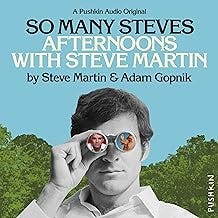
So Many Steves: Afternoons with Steve Martin by Steve Martin and Adam Gopnik
Answer: Steve Martin
Question: Who is the celebrity you’d most like to have dinner with?
Steve Martin has an insatiable insane drive to learn and, importantly, thoughtfully apply that newfound knowledge to his work. The man’s mind is a maze of thoughtful spaces he curates. It’s why the wacky stuff works, and the less wacky stuff is still side-splittingly funny.
In the audiobook, interviewer Adam Gopnik muses that Steve likes to conquer new territories but doesn’t stick around to be king. And…I get that. Not the conquering part, but the learning-to-(as close to) mastery part.
Gopnik and Martin’s conversations are a spectrum of insights — brilliant, intellectual, wistful, and often serious. They discuss the the irony, philosophical foundation, and dadaism in Steve Martin’s standup, the sincerity in his banjo (which I mistyped as “banjoy” and that works), and the studiousness in all his work.
It’s no secret Steve Martin is a polymath and one of my great inspirations across literature, art, music, and comedy. I will forever press a copy of Picasso at the Lapine Agile into the hands of anyone seeking something different to read.
It may be a secret that, also like Steve Martin, I am an introvert. And I also want to conquer multiple forms of art then move on. Life is short and filled with interesting things to learn. And I also taught myself to play banjo. That’s almost definitely a secret. Of course, I barely play. He, on the other hand, plays well.
Steve Martin’s creative spaces are places of evolution and curiosity. There is something not-quite-agony (perhaps a soulful nagging) that seems to be an undercurrent stemming from the challenge of moving between these varied domains.
We are the beneficiaries.

Where Reasons End by Yiyun Li
“Haunting” gets tossed around a lot in literary circles, but in Yiyun Li’s Where Reasons End, it hits the mark. This isn’t just experimental fiction, it’s autofiction, it’s elliptical, it’s a velvet-gloved punch in the solar plexus. (Check out the NYT review. They don’t mention solar plexuses. They should, though.)
In this novel, a mother grapples with the recent suicide of her child, Nikolai, (though that’s not his real name). By creating a space “of words” to have imagined conversations with him. There, thoughts and words and time mingle, blur, and twist reality. No easy answers in this space, just raw, unfiltered grief. “I had but one delusion, which I held on to with all my willpower: We once gave Nikolai a life of flesh and blood; and I’m doing it over again, this time by words.”
This space, drenched in conversation and grief, is a medium for connection, farewell, punishment, love, and agony. We’re left wondering, of course, how much of this is truly Nikolai and how much is the narrator stumbling through her anguish. And then we realize it doesn’t matter. We go back to
The agony hits harder knowing it’s based on Li’s own loss of a child to suicide. The line, “What kind of mother would consider it a burden to live in the vacancy left behind by a child?” is a dagger to the heart. This space the narrator created (and the book itself) acts as a return-to-the womb of sorts, where we are connected and we aren’t. Where children are safe, and they aren’t. Where we know what is happening and who is in there and we absolutely don’t.
Where Reasons End is also a commentary on the limitations of language. The imagined exchanges with Nikolai reveal his sharp, youthful perspective, critiquing her sentimental word choices as they retreat to old patterns and the safety of dissecting language while also trying to find all the ways to express love and tenderness, confusion and pain.
Li stubbornly refuses to separate the intellectual from the emotional. Her exploration of memory, pain, and love is conveyed without a hint of mawkishness.
By far my favorite this month. If you are of tender heart or have experienced anything remotely similar to the narrator, please proceed with caution.
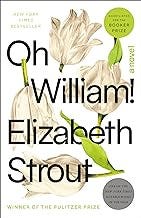
Oh William! by Elizabeth Strout
First off, let us celebrate the exclamation point. I hate when people get unnecessarily stingy with them.
Oh William! by Elizabeth Strout, a tender and humorous exploration of family, regrets, and secrets, reunites us with Lucy Barton as her first husband, William, seeks her support during a period of late-life upheaval.
Old wounds inevitably resurface. Equally inevitable is the resurfacing of the small kindnesses, conditioned responses, remembered favorites, and cruelties accumulated over the marriage and divorce. Long relationships have a way of wearing us threadbare.
Their physical journey necessarily parallels an emotional odyssey. Hotel rooms, cars, and other transient locations dislodge memories and buried feelings, creating arenas where small agonies and current confusion each tug. Lucy also inhabits the challenging space many of us women older than, say, 30, do. The “invisible” one which can create an inner space of loneliness and introspection, highlighting her personal agonies.
Lucy’s spaces — shared or solitary, physical or emotional — become crucibles for pain and healing.
Strout is a master of language and character. Don’t miss this. It’s the third book in a series, but you can jump in with this one and not miss a beat.
What are you reading and enjoying?
 Jackie Pick